
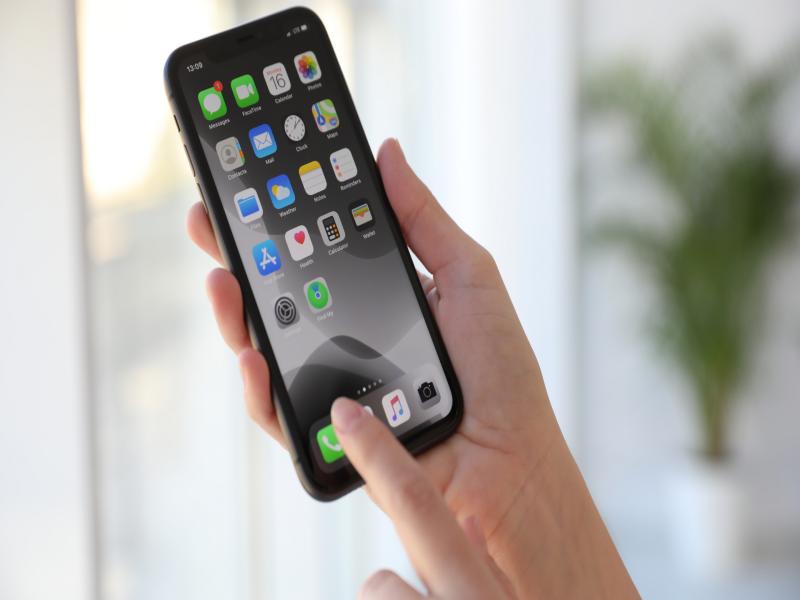
In this world of instrumentation, the kind of display technology you choose for your device, whether phone or TV, makes the difference in how it’s presented. Everyone wants a premium look, right but some also consider their budget. Although there are many screen displays available but LCD and OLED are on the minds of every person. So, whether you are running a business of phone repairing or wholesaling, you might be wondering LCD vs OLED, which is better.
If so, then you are at the right place, here we’ll provide you a detailed comparison of both technologies, so you may choose the one that gives you profit or also meets the customer satisfaction.

1) What’s the Difference Between LCD and OLED Displays?
LCD and OLED are both indeed flat display optical devices, but the way they work makes all the difference. Here is a quick comparison of both technologies used in screen media for better understanding!
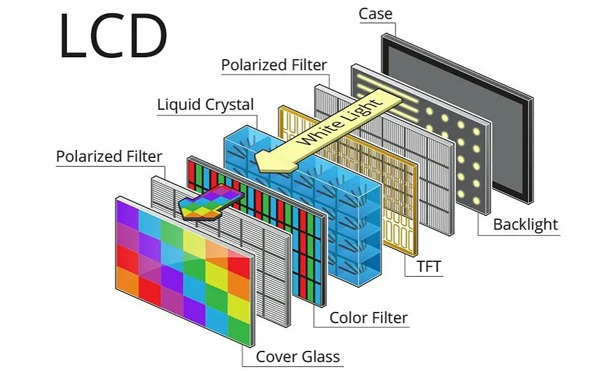
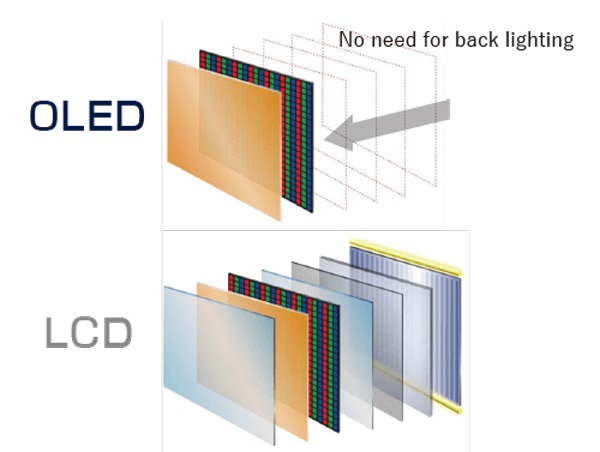
- LCD (Liquid Crystal Display): LCD screens basically use the liquid crystals, usually placed between layers of glass or plastic. Well! This crystal material can’t emit light on its own as it simply acts like a mini filter that can just manipulate light. That’s why LCD usually use the backlight to produce images.
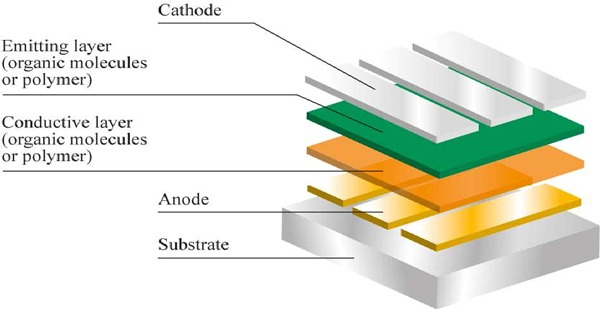
- OLED (Organic Light Emitting Diode): On the other hand, OLED screens are made up of carbon-based (organic) compounds that emit light when electricity passes through them. This means each pixel generates its own light without relying on a separate backlight, thus producing images with high display quality.
- Quick visual comparison table: LCD vs OLED
| LCD | OLED | |
| Light Source | Uses backlight | Self-emitting pixels lighting |
| Contrast | Limited | Deep blacks, high contrast |
| Power Use | Higher | Lower on dark visuals |
| Thickness | Thicker | Thinner, flexible |
| Resolution | Lower | Higher |
| Cost | More affordable | More expensive |
2) How LCD and OLED Work (Technical Overview for Professionals)
If you are a wholesaler or repair professional, then understanding how both LCD and OLED technologies work would really help a lot in accurate diagnostics or efficient sourcing.
- Working of LCD: The Role of Backlighting
If we talk about the LCD, then do remember it has a multilayered design consisting of different components like liquid crystal, backlight, polarizer, diffuser, color filters, etc. As mentioned earlier, LCD doesn’t produce light on its own; instead, it relies on the external light source, like a backlight.
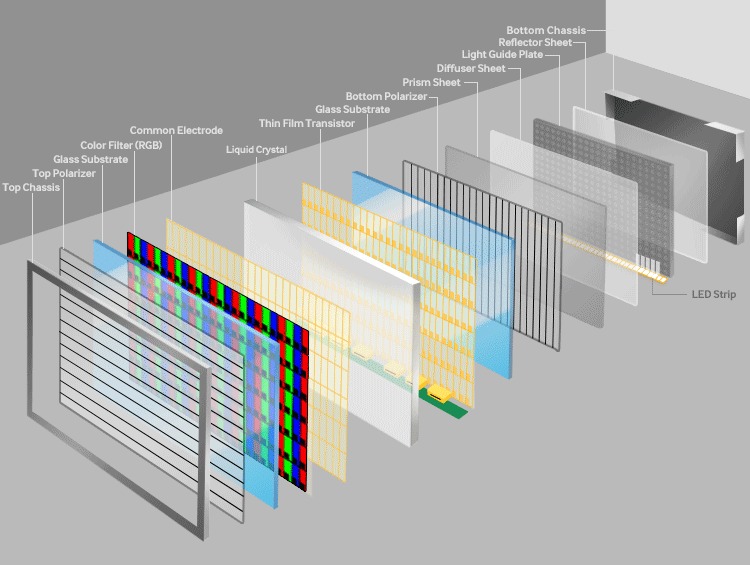
Well! The backlight in an LCD is usually a cold-cathode fluorescent lamp (CCFL) or an array of light-emitting diodes (LEDs). It basically gives light to the liquid crystal from behind. So, when an electric current is passed, then these liquid crystals change their alignment to control amount of light passes through each pixel.
Since LCD screens have separate components, which makes it overall thicker or durable. As a result, these can easily be serviced or replaced individually.
- Working of OLED: Pixel-Level Control
In contrast, in OLED (Organic Light Emitting Diode), each of the pixels contains carbon-based compounds. As a result, when an electric current is passed, these organic layers become energized and emit energy in the form of visible light. This process is called electroluminescence. That’s why each pixel of OLED screens glows by itself without eliminating the need for a backlight.
However, there is one drawback for repair professionals that becasue of the lack of a backlight, their OLED are thinner but more fragile. Thus, it requires more precise handling, increasing the repair costs. Also, the OLED displays integrate all lighting within the pixels, so replacement usually means swapping the entire screen assembly which increases the cost.
Alright! If you want more technical insights on display calibration and performance testing, then you can refer to DisplayMate ( for screen analysis) and iFixit (for teardown and repair details).
- Insights for Repair Experts: Key Technical Considerations
| LCD | OLED | |
| Connector Type | Separate for backlight & data | Integrated power & data |
| Fragility | More durable | More delicate; pixel damage risk |
| Calibration | Rarely needed | Often needed for color and brightness |
For iPhones, you can know about their display technical specifications by visiting Apple’s website, so it really helps a lot while repairing or replacing.
3) LCD vs OLED: Visual and Performance Comparison
i) Brightness & Color Accuracy
LCD: Since LCDs have a strong backlight source that evenly pushes the brightness across the screen. Backlights (LED) always remain on in the back so the screens look brighter even in direct sunlight or certain outdoor conditions.
OLED: On the other hand, in terms of brightness or colour accuracy, OLED is are winner. This is becasue each pixel ( made up of organic compounds) produces its own light, so to produce the perfect black screen, its pixels are completely trun off, thus giving the high contrast ratios. As a result, it also produces vibrant colors, thus perfect for high-end devices.
ii) OLED vs LCD: Energy Efficiency
OLED: Again, their high pixel-level control makes them energy efficient. Since the pixels producing black screens are completely turned off, hence reduces overall energy consumption. This also clarifies why the dark mode in OLED screens consumes less battery power. Okay!
LCD: In contrast, LCDs usually consume more power because their backlight always remains on, even in a darker environment. So, the devices with LCD screens have brighter or darker modes, which would consume the same energy, clear?
iii) Viewing Angles & Responsiveness
OLED: Such display screens show the same colours or contrast even when you look from the side, as each pixel produces light independently. Furthermore, OLED pixels can turn on and off faster; as a result, you’ll see the clear transitions among the pictures without delay. Thus making them ideal for gaming and moving visuals.
LCD: However, in the case of LCD’s the response time is very slow as they depend on the liquid crystal to control the light from the backlight. Also, their viewing angles are limited, so when you see from, you mostly observe a shift in brightness and colors.
iv) Screen Thickness & Flexibility
Last but not least, OLEDS, compared to LCDs, lack a backlight, allowing the manufacturers to produce ultra-thin or foldable screens. Thus, you can use them for premium screen media products or innovative devices.
4) LCD vs OLED Lifespan — Which Lasts Longer?
If you are a professional repairer or wholesaler then do remember knowing the longevity of screens helps you to manage the warranty claims, or in turn your customer satisfaction.
That’s why here we’ll provide a brief overview of OLED vs LCD screen durability, highlighting that each technology has its own strengths and weaknesses.
OLED: Although the OLED screens produce sharper or higher contrast images but as compared to the LCD’s they have shorter lifespans. This is because their pixels are made up of organic compounds, so repeated electrical excitation causes them to gradually break down.
Moreover, you know if there is an image like logo or navigation bar, etc for a longer time, then their pixels age faster compared to the surrounding ones. Thus, owing to this uneven degradation, the screen may burn-in, okay!
LCD: In contrast, if we talk about LCDs, then they take the lead in terms of durability. This is becasue here there is no risk of burn-in. But there are chances that the backlight my dim over time which basically reduces the colour accuracy & brightness.
- Comparison Chart: LCD vs OLED Lifespan
| LCD | OLED | |
| Average Lifespan | Longer (up to 60,000–100,000 hours) | Shorter (around 30,000–50,000 hours) |
| Degradation Type | Backlight dims over time | Organic material degrades |
| Burn-in Risk | ✖ | Possible with static images |
| Color Stability | Stable over years | Can shift with aging |
| Repair Relevance | Backlight replacement possible | Burn-in not repairable |
5) Advantages of OLED vs LCD
Now, let’s explore the OLED display advantages!
+ Efficient power usage, especially with dark themes
+ Thinner & more portable screens because of the lack of backlight.
+ Quick pixel response for smoother motion, ideal for premium devices
+ Deliver higher contrast visuals, making dark themes appear deeper & more vibrant
So, if you have made up your mind and want to get high-quality and cost-effective OEM OLED parts for iPhone series 12-16, then you can visit our website SQLCD.com and shop.
6) Advantages of LCD vs OLED
Here we’ll highlight the benefits of LCD vs OLED for phone screens, so you may make a better decision!
+ you can easily replace or repare it owing to its thicker screens and durability.
+ It’s much affordable and widely accessible
+ You can use it for a long time without burn-in issues
+ It’s also considered a practical choice for cost-effective repairs & large-scale wholesale
7) LCD vs OLED: Cost & Replacement Considerations
You know the LCD screens are much affordable as compared to OLED panels. The reason is that LCD uses simple materials like liquid crystal and also use older, well-established technology. Thus reducing the overall cost and making them budget-friendly for bulk orders & budget-conscious repairs. If you want customizable LCD assembly solutions for various mobile brands, then you can explore our product catalogs.
- Profit Opportunities with OLED replacements
Since OLED screens are of high quality, this makes the phones look premium. So, when you repair or replace a screen with OLED, then you can charge the customer more than you would for an LCD screen, thus increasing the profit margins. Lik, expensive OLED → premium repair → higher selling price → more profit.
If you want to learn more about iPhone screen replacement costs, then you can read about this here.
- OEM vs Aftermarket Quality Differences
Since we are talking about the replacement of screens, you should also be familiar with the OEM (Original Equipment Manufacturer) and aftermarket panels.
| OEM (Original Equipment Manufacturer) Panels | Aftermarket Panels | |
| Manufacturer | Original device manufacturer or approved supplier | Third-party manufacturer |
| Quality & Performance | High | Varies |
| Compatibility | Perfect fit and functionality | May have minor compatibility issue |
| Price | Higher | Lower |
| Best use | Premium repairs, high-end devices | Budget repairs, bulk replacements |
8) Which Is Better for Your Business — LCD or OLED?
Finally, if you want to know which display technology is best for your business, then we would say that it clearly depends on your business and customer needs. For instance;
| Why LCD | Why OLED | Best Choice | |
| Repair Shops | Low-cost, easy to replace | Premium quality for top devices | Both — LCD for budget, OLED for high-end |
| Wholesalers | Cheap, easy bulk sourcing | Higher profit on premium phones | Both — LCD for volume, OLED for value |
| B2B Marketers | Easier to promote for mass-market appeal and cost advantage | Attracts attention with superior visuals and modern tech appeal | Both — based on target audience |
If you are looking for screen solutions for iPhone, then you can learn about their display compatibility at SQLCD. Here, you’ll find detailed options for both LCD and OLED replacements.
9) Frequently Asked Questions
i) What’s better, LCD or OLED?
Well! The ultimate choice depends on your business or customer needs. This is becasue LCDs are proven to be budget-friendly and durable. On the other hand, OLED, although expensive, offers high contrast images and high refresh rates, thus making it a good option for premium devices.
ii) Do OLED screens last longer than LCDs?
Honestly speaking, then the answer is now as OLED screens are made up of carbon-based compounds can degrade becasue of repetitive electrical excitation. Although it’s true that LCDs have a longer lifespan, but may experience backlight dimming, affecting the brightness and colour accuracy.
iii) Why are OLED replacements more expensive?
OLED replacements are actually more costly compared to LCDs becasue first they are made up of expensive organic materials and second they use advanced manufacturing.
iv) Can OLED displays be refurbished?
Off course! You can, but it needs careful consideration, as OLEDs are more delicate as they have no backlight support and are made with ultra-thin organic compounds.
v) Which screen type do iPhones use?
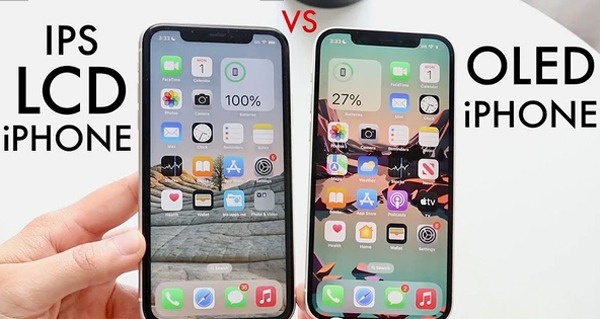
iPhones use both type of screens depending on the models and screen size. So, in the debate of LCD vs OLED for iPhone, do remember! Recent iPhones (iPhone X and later) use OLED panels for premium models, while LCDs for budget-friendly versions.
10) Conclusion
In a nutshell, LCDs and OLED’s both types of screen displays, have their own strengths and weaknesses. For instance, LCDs actually come out as a more durable and budget-friendly option. On the other hand, OLEDs are best for the premium components because of their high performance.
However, we would say that the final decision is actually based on your customers’ satisfaction and of course your own profit margins. So, if you want a reliable manufacturer for phone screen replacements or repairs at affordable prices, then we have some good news. You can get high-quality LCD & OLED screens for all major iPhone models at SQLCD.com for iPhone.