

Are you a professional mobile repair or wholesaler looking to understand OLED screens and their impacts on repairs and resale? If so, you have come to the right place. In this guide we’ll discuss in detail what OLED screens are and also cover the most common question: how do OLED screens work?
Trust me, knowing this would help you in diagnosing the OLED screen issues, and you can better advise your customers. So keep reading!
1) What is an OLED Screen?
“An OLED screen is basically a modern form of display technology that produces higher resolution or better contrast images using millions of light-emitting pixels”.
It’s worth noting that OLEDS don’t need any separate backlight layer instead each pixel produces its own light. This allows the manufacturers to produce ultra-thin or foldable screens. Due to their slimness and visually impressive designs, they are commonly used in premium mobile devices, smartwatches, large display TVs, and laptops.
Meaning of OLED
The term OLED usually stands for “organic light-emitting diode”. Here, the word ‘organic’ doesn’t mean they are eco-friendly, natural or whatsoever. Actually, it means such screens are made up of carbon-based compounds (organic compounds) placed between conductive layers.
As a result, when an electric current is passed, these organic layers become energized and emit energy in the form of visible light. This is the reason that each OLED pixel produce own light without requiring a backlight source, making it different from LED screens.
OLED vs Traditional LCD Screens
Similarly, if talk about the LCD screens, these indeed use the liquid crystal material that can’t emit light on its own. It can just manipulate light; this is why LCDs usually use the backlight source to produce images.
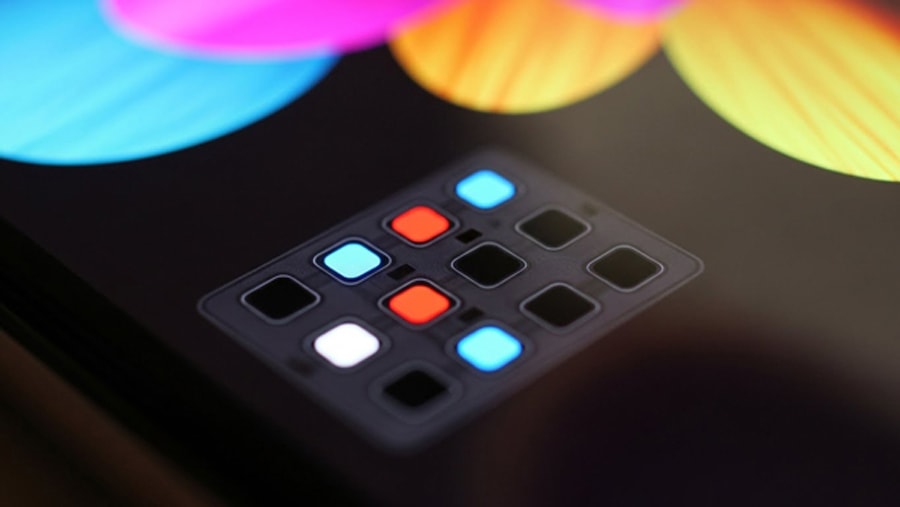
In contrast, OLED because of their organic material composition, have light-emitting polymers pixels). This way each pixel can light up independently or turn off completely. For instance, when you enable the dark mode OLED displays produce deeper blacks where black pixels emit no light at all.
2) How do OLED screens work? (Step-by-Step Explanation)
Now let’s come to the main focus of this article like how these OLED screen do work that they becoming a strong choice for premium devices especially cell phone.
i) OLED Pixel Structure: Understanding the Layers and Sub-Pixels
Red, Green, and Blue (RGB) Sub-pixels: For your information, a pixel is indeed a color palette consisting of three sub-pixels like Red colored, Green & Blue.
By adjusting the intensities of each subpixel, millions of different colors are produced. For instance, Red + Green pixels= Yellow; Green + Blue subpixels = Cyan; Red + Green + Blue at full brightness = White and so on.
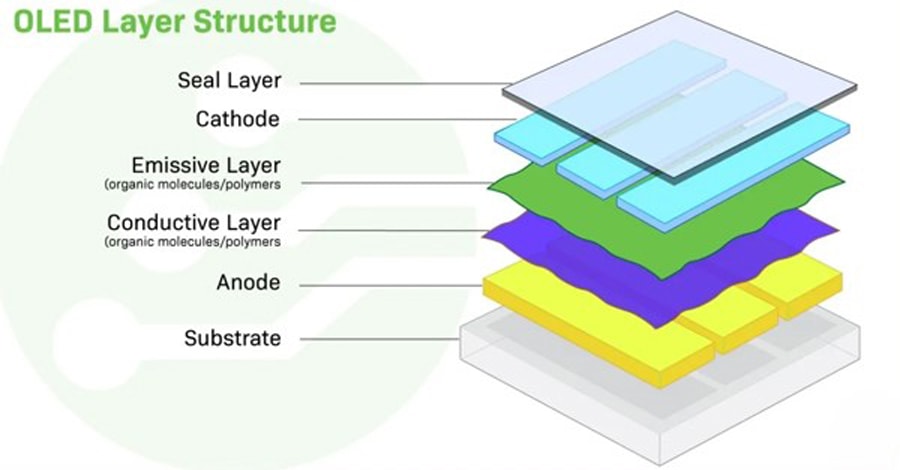
Organic material layers: In addition, inside each sub-pixel are indeed the various thin films of organic molecules. As mentioned earlier, upon receiving current, these carbon-based compounds, being good conductor get energized and emit light.
Anode and cathode roles: Inside each pixel, there are two electrodes: Anode (supplies a positive charge) and a cathode (supplies a negative charge). These are built on opposite sides of the organic layers, making the pixel light up. Let’s see how these play this role:
ii) How OLED Pixels Produce Light: Electrical Activation and Brightness Control
Compared to the traditional screens, Organic light emitting diode screens indeed undergo a special electric process called electroluminescence to produce light. It’s a basically a mechanism of emission of light caused by an electric current passing through a material. Let’s see how it happened!
Electric current activation: First of all, when an electric current passes through the organic semiconductor layers, a voltage difference occurs between the anode and the cathode (electrical contacts). This voltage difference pushes electrons from the cathode toward the anode. Simultaneously, the anode injects holes (treated as positive charges) toward the cathode.
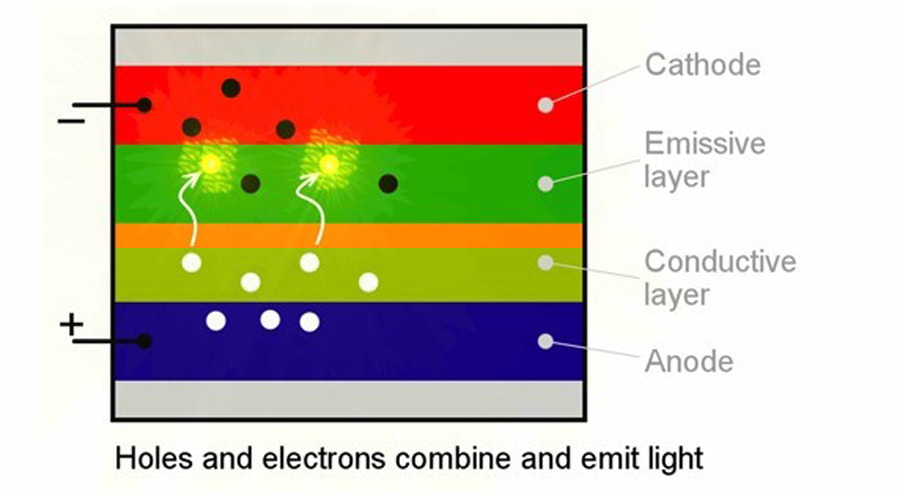
When electrons (high-energy state) fill the hole, they drop to the lower energy level. This energy difference is basically released as a photon as visible light, which is what you see on the screen. The above mentioned electric process occurs in almost every OLED pixel.
Pixel-level brightness control: Now because each pixel emits light independently, its brightness can be controlled individually. As a result, you see images with more vibrant colors, smooth gradients and true blacks.
3) How do OLED smartphone displays work in real use?
i) Color Accuracy and Contrast: Vivid and vibrant oled displays
High Contrast Advantages: If you use the traditional screen smartphones in dark, the colour accuracy of bright objects gets disrupted right? Well! While using OLED screen smartphones, you’ll enjoy the high contrast ratio. It means that even at dark backgrounds, the bright objects pop up at full intensity, causing colors appear richer and images to be more realistic in apps, videos, or games.
HDR Performance: Similarly, because of pixel-level brightness control, the OLED screen shows bright and dark areas simultaneously giving your smartphone an HDR content. It’s just like you take a photo of a sunset with shadows in the foreground. A smartphone with OLED makes sure you can see both the bright sun and the details in the dark shadows in real life.
ii) Power Consumption in Smartphones: Efficient Displays
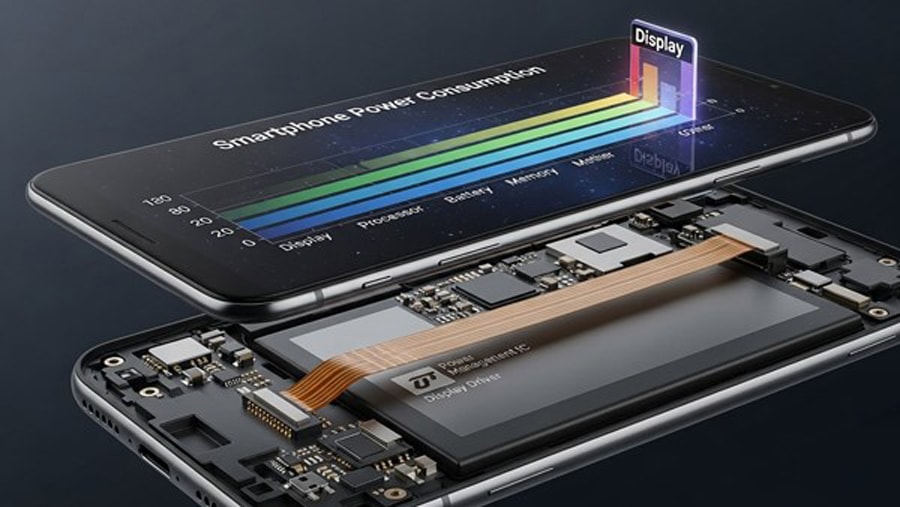
Dark mode benefits: Similarly, using the dark mode on your OLED smartphone gives you the biggest advantage benefit in terms of less power consumption. This is because in Dark Mode, all the pixels are completely turned off, consuming no power at all.
OLED vs LCD Battery Usage: Do remember! The LCD screens usually rely on a constant backlight source which always remains on even in the dark rooms. Thereby, your smartphone battery gets drained quickly.
In contrast, OLED use power only for lit pixels, which means that dark modes would save power. Overall, we can say that smartphones with OLED screens are more power-efficient than LCD devices. That’s especially true if you use dark-themed apps, watch videos with dark scenes, or enable system-wide dark mode.
iii) Refresh Rate and Display Smoothness: Fluid Performance
For your information, a refresh rate is a property of screens telling the number of times a screen updates the image. And OLED display has a high refresh rate givng a fast response time. This way, scrolling through apps, watching videos, or playing games appears more smooth.
For more insights into the technical insights of OLED screens for various smartphones, you can read this article.
4) Phone Flexible OLED Technology Explained
You might have heard about the phone flexible OLED technology; however, at that time you might remain confused about what this means. Well! Keep in mind that it’s actually responsible for changing the way smartphones are designed, making features like foldable phones and curved screens possible.
What Is Flexible OLED displays?
“Flexible OLED is indeed a type of OLED display in which all the OLED components are held together on a flexible substrate.”
Plastic Substrate vs Glass: Traditional LCD screen components or amoled displays usually use glass as their base layer. However, this proves to be a downfall since plastic is very rigid and breakable. As a result, such screens are unable to fold or bend.
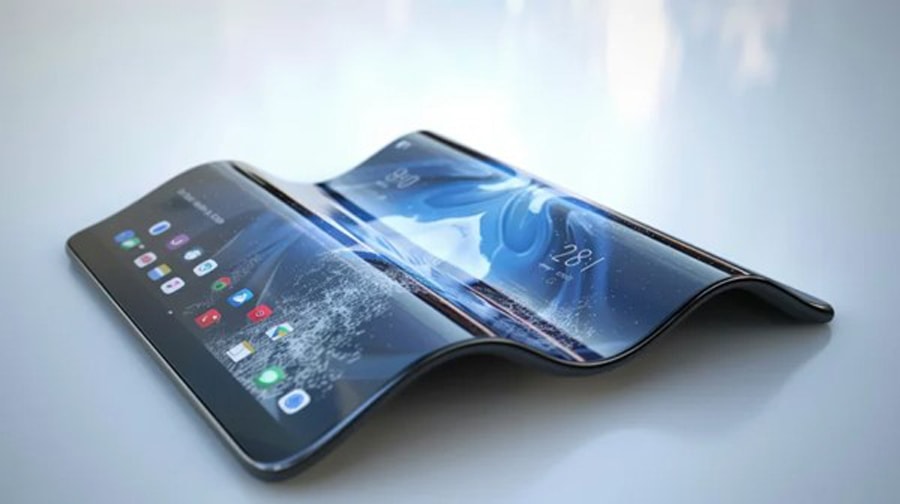
On the other hand flexible OLEDs are built on a plastic substrate, usually polyamide ( commonly known as nylon), which being bendable let the screen fold without cracking. In addition, the ultra-thin light-emitting layers with no rigid backlight will give it the advantage of maintaining display quality and brightness even when the screen is bent.
Curved, Foldable, and Edge Displays
OLED screens because of lighter weight and being flexible ones and, there are no more flat panels; users can enjoy multiple modern designs each serving a unique purpose. For instance;
- Curved Displays: Cause the screen to wrap even at the sides of the display instead of stopping at the edge. This not only creates a sleek design rallows extra functionality, like showing notifications, controls, or shortcuts along the curved edges.
- Foldable phones: The OLED screens usually bend along a hinge, creating a book-like structure. This way, when closed, gives you a compact structure while upon opening creates a large view just like a tablet.
- Edge displays: Some smartphones even have an elongated edge (usually 0.5 inches wide) allowing users to see the notifications, shortcuts, etc without touching the main screen.
Flexible OLED vs Rigid OLED displays
| Flexible OLED displays | Rigid OLED | |
| Cost | More expensive due to advanced materials and manufacturing | Generally less expensive; standard production methods |
| Durability | More resistant to shattering; can bend or flex | Brittle; can crack easily if dropped or stressed |
| Repair Difficulty | Harder to repair; requires specialized techniques | Easier to repair; standard replacement methods |
5) OLED vs LCD – Technical Comparison Table
Let’s have a quick glance at the technical details that cause the difference between OLED and LCD, this way, you can make an informed decision.
| OLED displays | LCD displays | |
| Backlight | ✖ (self-emissive pixels) | ✔ |
| Black Level | True black | Grayish black (backlight leaks) |
| Power Efficiency | Higher when using dark UI | Stable, constant consumption |
| Thickness | Thinner due to no backlight | Thicker because of the backlight |
| Flexibility | ✔ (can bend/fold) | ✖ (rigid glass substrate) |
| Burn-in Risk | Possible (static content can persist) | ✖ (no permanent image retention) |
To get customizable OLED screen parts, you can visit our product catalogs.
6) OLED Lifespan, Burn-In, and Aging
Although the OLED smartphone displays like Samsung displays produce sharper results, however they have to pay fr this in terms of longevity. This is because the buyers always remain worry screen lifespan and potential image issues like burn-in. Whether you are a professional repairer or wholesaler undersanding this would help diagnose issues, manage the warranty claims or even bettter advice your clients.
What Causes OLED Burn-In?
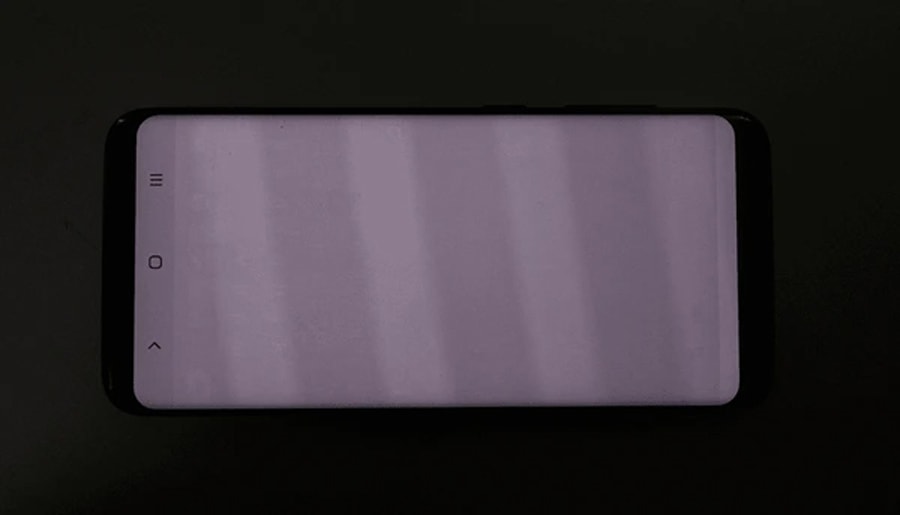
Static Images: First of all, if there is an image like a logo or navigation bar, etc for a longer time, then its pixels age faster compared to the surrounding ones. Thus, owing to this uneven pixel degradation, the screen may burn-in, okay! That’s why whenever the customers buy the OLED devices, guide them avoid making such mistakes.
OLED Aging in Smartphones
As discussed previously, pixels are made up of RGB subpixels, right? Here one thing to note is that blue pixels, compared to the other two has shorter wavelength; as a result, it would require high energy (voltage) to attain the same brightness. This makes their organic layer less stable, causing it to degrade faster. Over time, the blue pixels lose brightness, and this shifts the overall color balance of the screen.
Owing to above issues, the modern OLED screens or OLED Tvs usually last 5-8 years, that’s why its advisable to write the realistic life span in the warranty, helping customers understand what to expect and reducing potential complaints.
7) OLED Replacement Screens – What Repair Shops Need to Know
If you are a professional in phone repair stores and refurbishment businesses, understanding the difference between OLED replacement screens is really essential. So, lets get started!
Original vs Aftermarket OLED Screens
Original OEM OLED screens are the ones that are produced by the manufacturer who has produced that model phone. However Aftermarket OLED screens are one which are manufactured via third-person having no link with the official brand.
| Original OEM OLED | Aftermarket OLED | |
| Display Quality | Higher quality and consistency | Can vary in color balance, brightness & uniformity |
| Brightness & Color Accuracy | True-to-life colors/ consistent brightness | May appear dimmer |
| Touch Response | Precise & smooth | Slightly slower or less accurate touch sensitivity |
Flexible OLED vs Hard OLED for Replacement
Keep in mind that not all OLED screens are foldable the one with built on plastic substraet like flexible OLED can only bend. Howevre the hard OLED also based on the glass subsrate making them prone to cracking.
| Flexible OLED (Plastic Substrate) | Hard OLED (Glass Substrate) | |
| Failure Rate | More resistant to bending or cracking | More prone to cracking during installation |
| Replacement Cost | Higher | Lower |
| Customer Satisfaction | Higher | Lower |
| Warranty & Repairs | Reduces repeat claims | Higher chance of warranty issues or client complaints |
Common Issues with Low-Quality OLED Screens
! Green Lines: With low-quality OLED screens, buyers mostly report that their device has appeared green vertical lines o the display. Do remember! These usually occur because of defective pixel layers or poor manufacturing quality.
! Touch Lag: Similarly, aftermarket OLED screens usually cause taps or swipes to feel delayed. This happens because manufacturers might have used an uncalibrated or low-grade touch sensor layer or controller chip
! Short Lifespan: As mentioned earlier, the OLED screen usually faces burn-in or aging issues. However, what if the OLED screens are of low quality? Definitely the lifepang gets further reduced. This way you can advise clients on expected longevity and prevent repeat repairs.
8) How OLED Technology Affects Phone Repair & Refurbishment?
? Higher repair costs: Repairing of OLED screens usually cost higher because of their structure is technically complex. For instance, each OLED panel contains multiple ultra-thin organic layers, integrated touch sensors, and precise driver circuits. These all require advanced manufacturing.
? Handling & installation risks: In addition, compared to LCD, OLED panels are extremely thin, and even more sensitive to pressure and heat. This way, any little mishandling during installation may damage the organic layers or even cause complete screen failure.
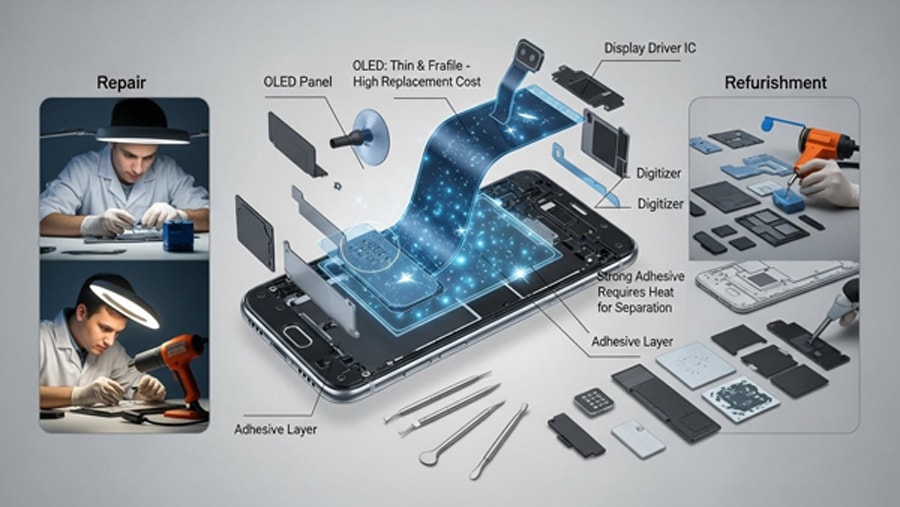
? Importance of supplier quality: It’s noteworthy that the performance of OLED screens heavily relies on the quality of manufacturing pressure. That’s why if you are a wholesaler or running a repair business, contacting a reliable manufacturer is really essential.
? Reducing return rates: If you have noticed, you’ll know that most of the OLED screens return because of early screen failure, burn-in, touch lag, or color shifts. However, all such occurrences are especially with low-quality aftermarket panels.
We at SQLCD specialize in manufacturing high-quality OLED screens designed for reliability & performance. Contact us to get superior quality products to enhance your customers’ satisfaction and reduce return rates.
9) Why OLED Screen Quality Matters for B2B Buyers?
If you are a B2B buyer reading this blog, do remember one thing that screen quality would directly impact the cost control and also your brand’s credibility. That;s why selecting the right option isn’t just a technical decision but it’s indeed a business-critical tactic.
? Panel grading: While buying OLED panels whether for apple, lg etc, keep in mind that these are graded based on their display uniformity, brightness, color accuracy, and defect levels. Here is a brief analysis of some common grades so you may better understand how quality varies!
| Grade A | Grade B | Grade C | |
| Quality | Excellent, uniform display | Minor variations | Inconsistent quality |
| Defects | None visible | Small cosmetic flaws | Visible defects |
| Best use | Premium repairs | Budget repairs | High return risk |
? Yield rate: In addition, you must keep note of the yield rate of OLED manufacturing units. It’s actually the number of usable panels that come out after manufacturing. If the company has high yield rate, it means the company has high-quality machines and stricter controls, so fewer panels fail. This way it allows mass production and you would get large order at affordable prices.
? Long-term reliability: Similarly, you must ensure that OLED screens must withstand daily brightness cycles, touch input, and thermal stress. Thats only possible if they are made up of high-quality organic materials & stronger encapsulation layers. You can check this via the following methods!
| Testing method | Results | Benefits for B2B buyers | |
| Aging Resistance | Long-hour brightness test | Minimal burn-in or dimming | Longer resale lifespan |
| Encapsulation | Moisture & air sealing check | No spots or pixel decay | Prevents early failure |
| Heat Tolerance | High-temperature operation | Stable colors & touch up to 60°C | Safe during charging/use |
| Touch Durability | Repeated touch cycles | No lag or dead zones | Fewer customer complaints |
10) Why Repair Shops & Wholesalers Choose SQLCD
So, if you have made up your mind and want to get high-quality and cost-effective OEM OLED parts for your smartphones, then look no further than SQLCD. We are China’s trusted manufacturer specializing in supplying the mobile phone screen parts for repair shops, wholesalers & e-commerce sellers with low-defect, and high-compatibility tailored to your needs. By collaborating with us you’ll get several advantages
- OEM-grade OLED replacement screens that match original display performance and reliability
- Flexible and hard OLED options to suit different phone models/repair scenarios
- Strict quality control (QC) testing to ensure uniform brightness, accurate colors and reliable touch response
- Stable bulk supply to support large orders and consistent inventory need.
- Professional technical support to assist repair businesses with installation and troubleshooting
11) FAQs – How Do OLED Screens Work?
i) Do OLED screens need a backlight?
Absolutely No. OLED screens don’t need any backlight because they consist of millions of self-emitting pixels that glow up independently.
ii) Why are OLED screens more expensive?
OLED screens are actually more expensive becasue of their complex manufacturing and high-cost organic materials. Also the yield rates are low, and together all these factors increase the overall cost.
iii) Does OLED always save battery?
Well! Saying OLED always saves battery would be an exaggeration. This is because it mainly does so when its dark mode or using dark themes in the mobile phone. Do remember in a bright screen, it consumes power even greater than LCD.
iv) Are OLED screens easier to break?
OLED screens are indeed thinner or sensitive to pressure, thereby increasing the chances of breakage. However, whether it’s LCD or OLED, once dropped get cracked depending on the build quality and protection.
v) Can OLED be replaced with LCD?
From a technical point of view, then yes you can replace OLED with LCD. However its not advisable to do because LCD concsume mor epoer and also there would be touch or compatibility issues in phones designed specifically for OLED.
12) Conclusion – How OLED Screens Work and Why They Matter
In summary, OLED screens usually work by using organic materials, which upon getting an electric current get energized and release energy in the form of visible light. This process occurs in every pixel, making each pixel glow independently without requiring any external light source. Thus making OLED screens thinner to be used in premium devices.
So, if you want to make your brand trustworthy, then getting OLED screens would be a smarter choice. We at SQLCD produce high-quality LCD & OLED screens for all major mobile phone models. So get in touch with us today!