
When comparing Apple vs Samsung phones, display technology is one of the most important differences to consider. iPhone and Samsung Galaxy devices use advanced display technologies, but their screen designs, specifications, replacement assemblies, and repair requirements can vary significantly by model.
For phone repair stores, wholesalers, and mobile phone parts buyers, understanding these differences is especially important when sourcing replacement screens and evaluating screen quality.
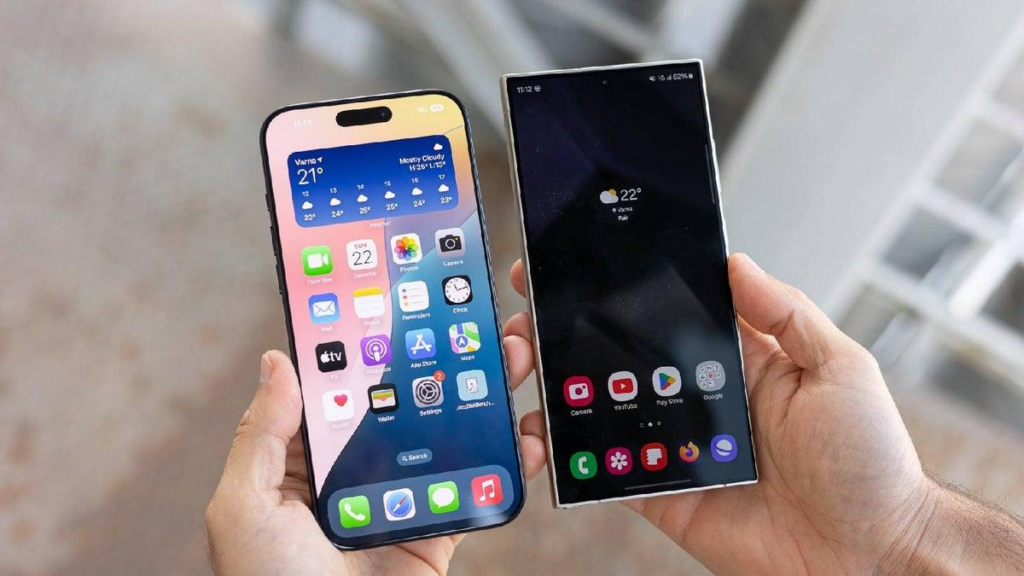
Apple vs Samsung Phones: Key Screen Differences
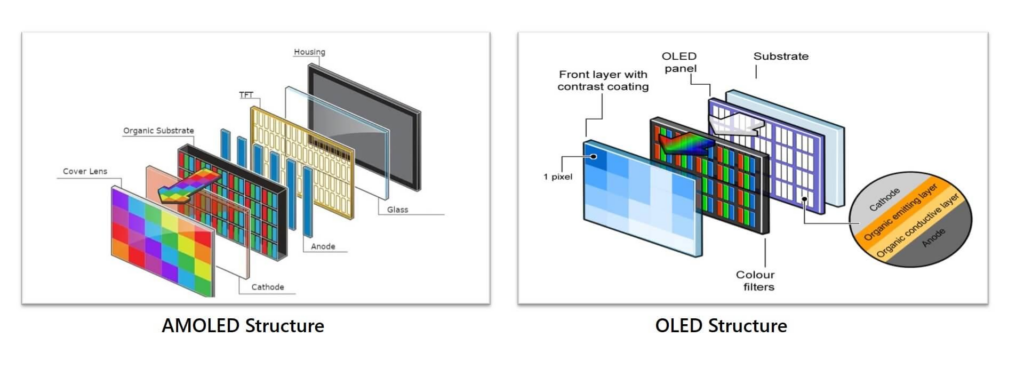
Modern iPhones commonly use OLED displays, while Samsung Galaxy smartphones widely use AMOLED-based display technology. Both can deliver deep blacks, high contrast, excellent color reproduction, and thin display construction.
However, OLED and AMOLED should not simply be treated as completely different technologies. AMOLED is a type of OLED display that uses an active matrix to control individual pixels.
Display size, resolution, refresh rate, brightness, touch performance, and physical construction can differ considerably between individual iPhone and Samsung models.
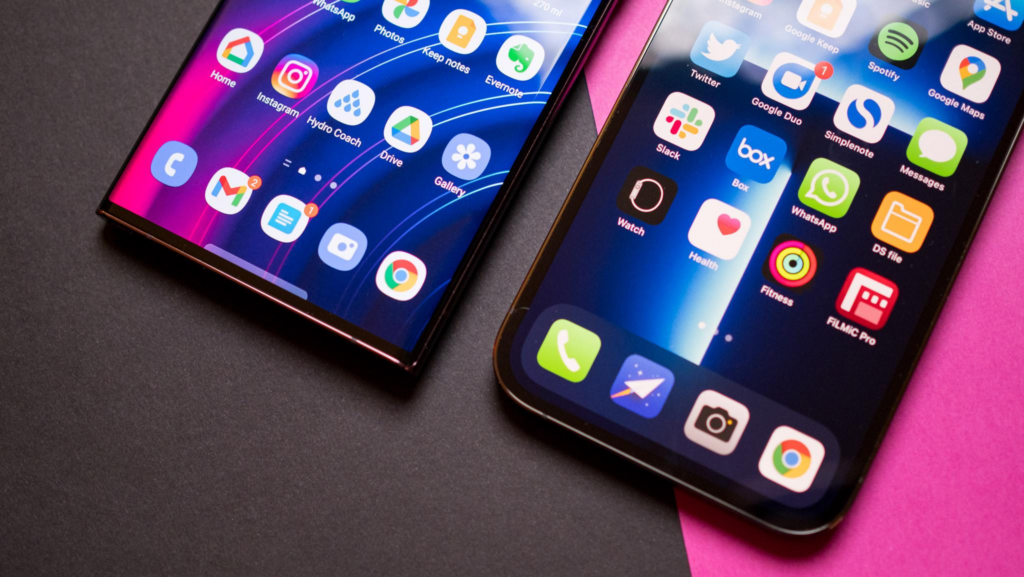
iPhone vs Samsung Screen: OLED vs AMOLED
For repair professionals, the technology name is only one part of the evaluation. A replacement screen should also be assessed for brightness consistency, color accuracy, touch sensitivity, viewing performance, and overall assembly quality.
When comparing an iPhone screen with a Samsung screen, technicians should also consider whether the original device uses a flat or curved display and whether the replacement is supplied as a complete assembly.
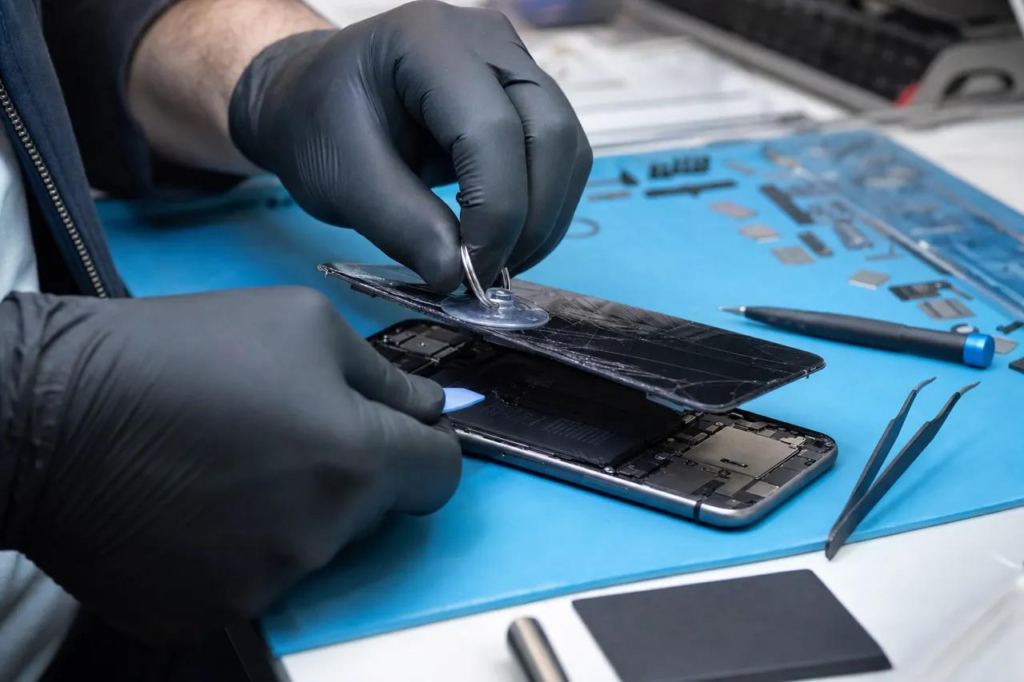
iPhone vs Samsung Screen Replacement
Screen replacement is highly model-specific. Two phones with similar screen sizes are not necessarily compatible.
Before ordering an iPhone or Samsung replacement screen, repair shops should verify the exact model number, screen size, resolution, connector, flex cable, frame dimensions, display technology, and mounting structure.
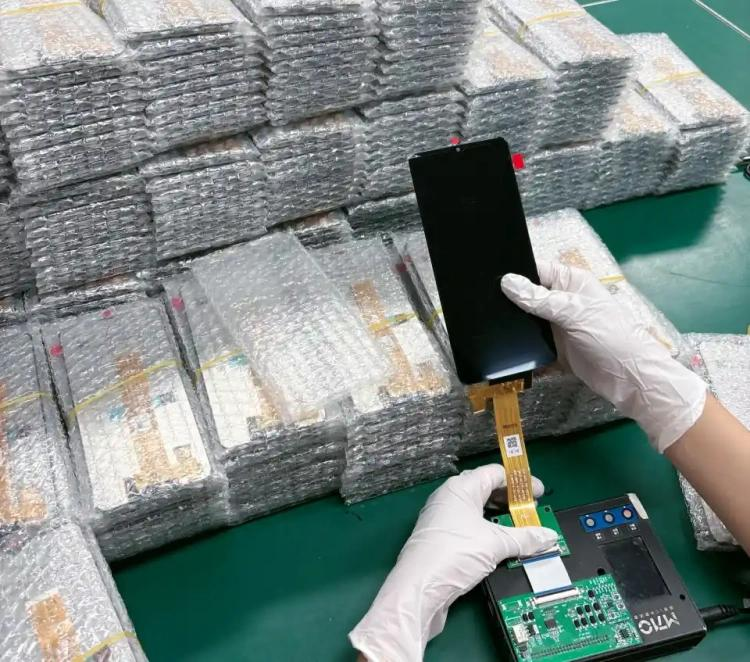
A professional pre-installation test should check display output, touch response, brightness, color, and connector stability.
Choosing Replacement Screens for Wholesalers
For wholesalers, screen quality should be evaluated beyond a single sample. Batch consistency, dead-pixel testing, touch testing, frame fit, flex quality, packaging, and return rates are all important purchasing considerations.
For repair businesses, reliable replacement screens can improve installation efficiency and reduce unnecessary customer returns.
Conclusion
The comparison between Apple vs Samsung phones goes beyond operating systems and hardware features. Their display technologies and replacement assemblies create important considerations for repair professionals.
Whether sourcing iPhone or Samsung replacement screens, accurate model verification, technical compatibility, and consistent quality control should remain the foundation of professional phone repair.