
The cost to replace an iPhone battery usually ranges from $40 to $100, depending on the iPhone model, battery type, and repair service. Apple Stores typically charge more, while independent repair shops may offer lower-cost alternatives.
For most users, replacing the battery is far more affordable than buying a new iPhone. However, pricing can still vary based on labor costs, battery quality, warranty coverage, and device condition.
Signs You Need an iPhone Battery Replacement
Fast battery drain, unexpected shutdowns, overheating, and slow performance are common signs of battery degradation. As lithium-ion batteries age, their maximum capacity gradually decreases, reducing overall battery life.
iPhones with battery health below 80% may experience performance throttling, slower charging, and shorter screen-on time. In some cases, the device may shut down unexpectedly during heavy use.
For repair shops, identifying battery wear early helps reduce customer complaints and improves long-term device performance after replacement.
How Much Does it Cost to Replace an iPhone Battery?
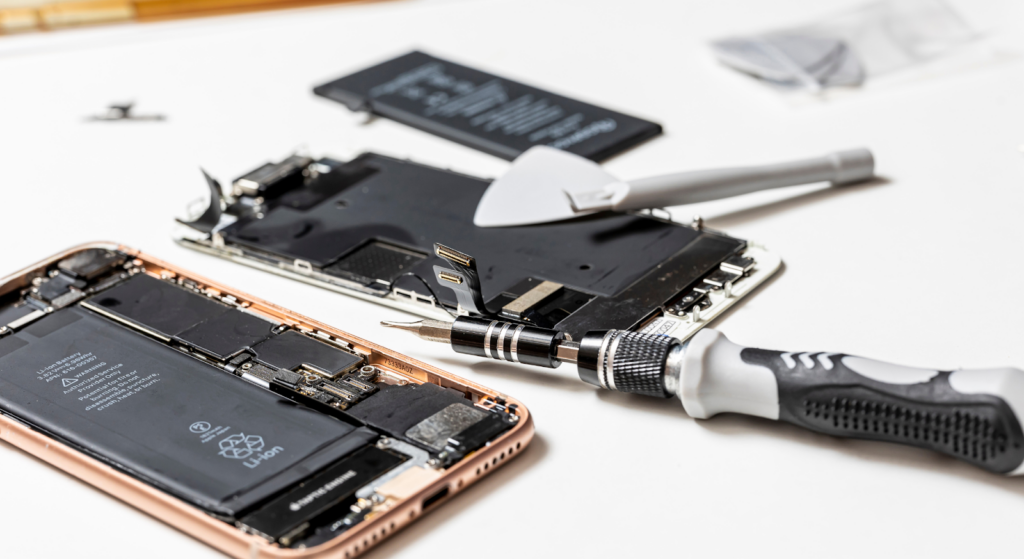
If your iPhone battery isn’t holding up as well as it used to, you’re likely wondering: How much does it cost to replace an iPhone battery? Over time, all batteries lose their capacity, causing your phone to drain faster and struggle to hold a charge.
The cost to replace an iPhone battery can vary depending on the iPhone model, repair service (Apple Store, Apple Authorized Service Provider, or independent shop), and whether the replacement includes official parts or warranty coverage. Some services may offer a cheaper option, while others focus on higher-quality, longer-lasting repairs.
This guide will break down the cost of replacing an iPhone battery, give you price ranges for different models, and explain the factors that affect the cost. We’ll also help you decide whether replacing the battery is worth it, or if upgrading to a new iPhone might be a better choice.
Phone Battery Replacement Cost by Repair Option
The cost of an iPhone battery replacement can vary based on where you get it done. Some users prefer the official Apple service, while others opt for more affordable independent repair shops or even choose a DIY approach. Each option has different pricing, turnaround times, and risks.
Apple Authorized Service Cost
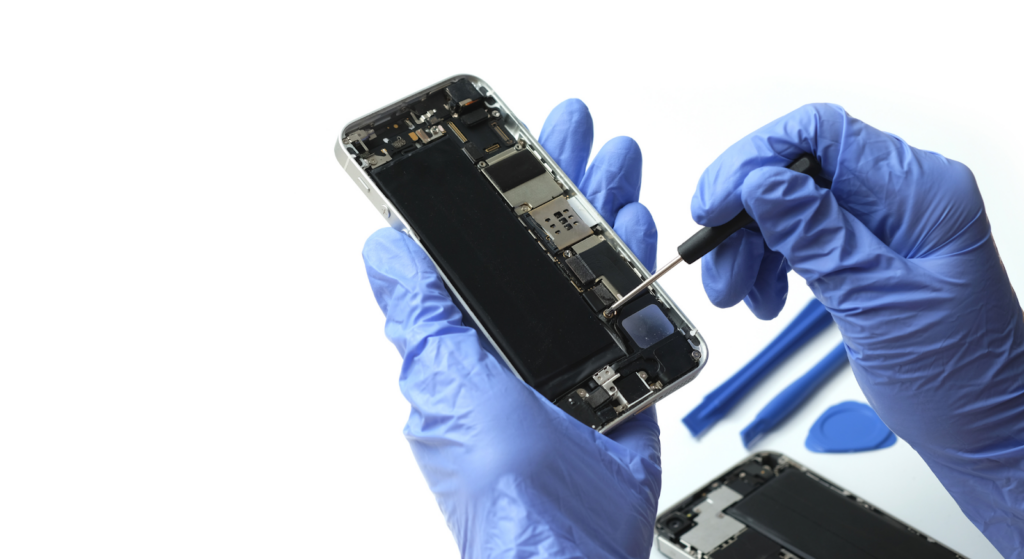
The most reliable option is replacing the iPhone battery at an Apple Store or with an Apple Authorized Service Provider. If your device is still under Apple warranty or AppleCare+, and the battery health falls below 80% of its original capacity, Apple may replace the battery for free.
For out-of-warranty devices, the replacement typically costs $69 to $99, depending on the iPhone model. Newer iPhones may be more expensive due to advanced internal designs and larger battery capacity.
Turnaround time can also vary. In-store repairs can often be completed in about an hour, provided parts are in stock. However, mail-in service may take several days, as the device needs to be shipped for processing before the repair.
Independent Repair Shop Cost
Many users prefer independent repair shops because they tend to offer cheaper and faster service. The cost to replace an iPhone battery at a third-party shop typically ranges from $40 to $90, depending on factors like the battery type and labor costs.
Independent technicians usually bundle both the labor and battery price into a single fee. In many cases, repairs can be completed the same day, especially for popular models like the iPhone 11, iPhone X, or iPhone 12.
For repair businesses, this option is often more cost-effective than Apple’s official service. Shops can source high-quality OEM batteries that restore battery life while keeping the overall cost lower for the customer.
DIY Battery Replacement Cost
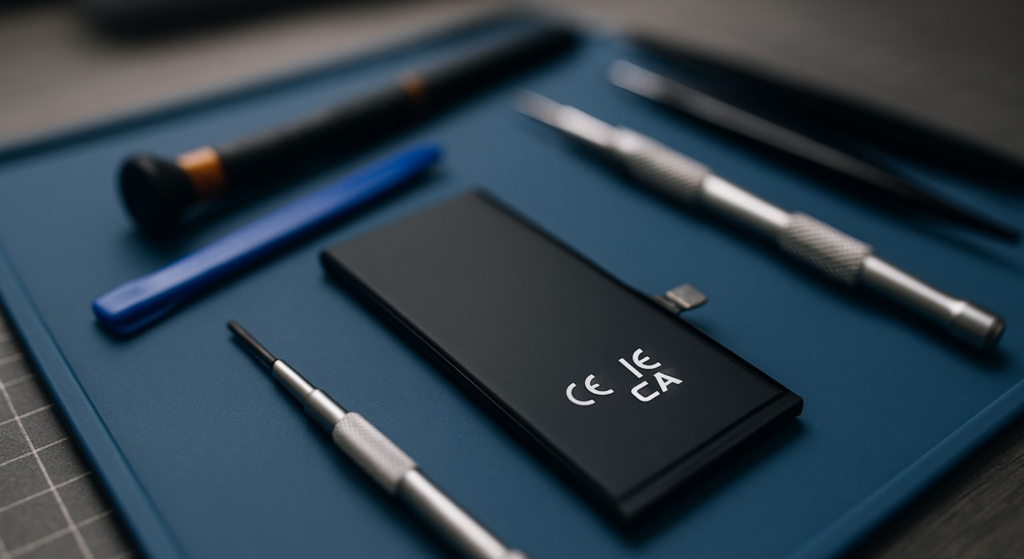
Some users opt for DIY battery replacement as a way to save money. DIY replacement kits are widely available online, such as on eBay, and typically cost between $25 to $60, depending on the iPhone model and the quality of the battery. These kits usually come with the necessary tools, including screwdrivers, adhesive strips, and opening tools.
However, the real cost can rise if things go wrong. Improper handling may cause damage to the screen, camera connectors, or other sensitive internal components. Additionally, DIY repairs may void the Apple warranty, making future repairs more expensive.
Although DIY may seem like a cheaper option, many users still choose professional replacement services to avoid mistakes and ensure the new battery functions properly.
Cost to Replace iPhone Battery by Model
The cost of replacing an iPhone battery depends on the model, battery size, and repair complexity.
Older iPhones are generally cheaper, with smaller batteries and simpler replacement. Newer models have stronger adhesive and tighter construction, increasing labor time and overall cost.
Below is a general overview of typical market prices for common repair services, based on Apple’s official pricing structure.
iPhone 11 Battery Replacement Cost
The iPhone 11 battery replacement cost is usually in the mid-range compared to older and newer devices. On average:
- Apple Store or Apple Authorized Service Provider: about $89 for out-of-warranty service.
- Independent repair shop: typically $50–$80, depending on battery quality and labor.
The iPhone 11 uses a 3,110 mAh lithium-ion battery, which is larger than those in earlier models. This slightly increases the labor required for battery replacement compared to older phones. However, the repair is still relatively straightforward, and most shops can complete it in about an hour.
For many users, installing a new battery in an iPhone 11 can restore its battery life to near its original capacity, making the device feel faster and more reliable again.
Older iPhones (iPhone 6–8 Series)
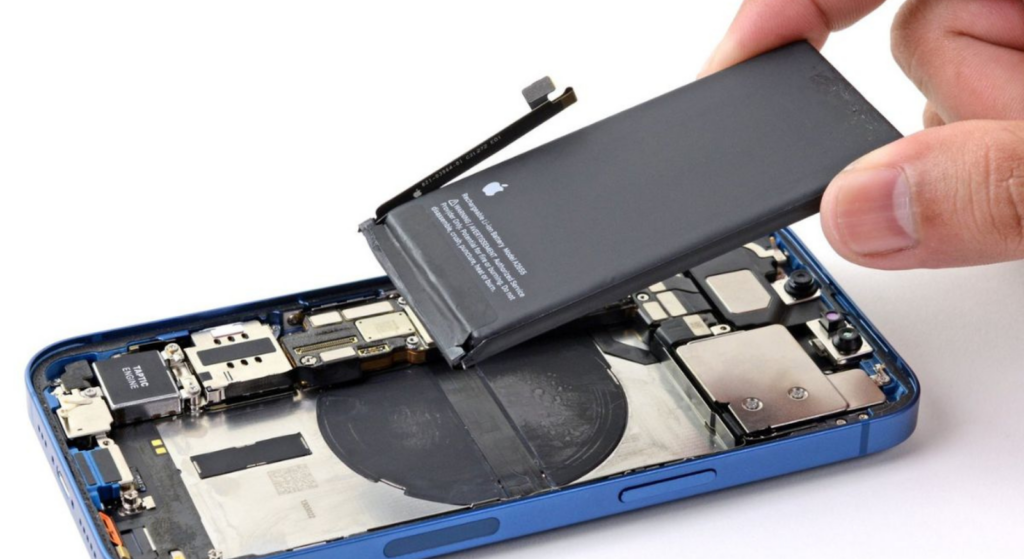
Older models such as the iPhone 6, 7, and 8 usually have the lowest iPhone battery replacement cost. Typical pricing ranges include:
- Apple service: about $69 for out-of-warranty battery replacement.
- Independent repair shops: around $30–$60, depending on battery quality and labor.
These phones are easier to repair because their internal layout is simpler and adhesive sealing is less complex than on newer models. Technicians can usually replace the battery quickly, keeping labor costs lower.
For people using an older iPhone model as a secondary or used phone, replacing the battery can be a cheap way to extend the phone’s life rather than buying a new one.
Newer iPhones (iPhone X–14 Series)
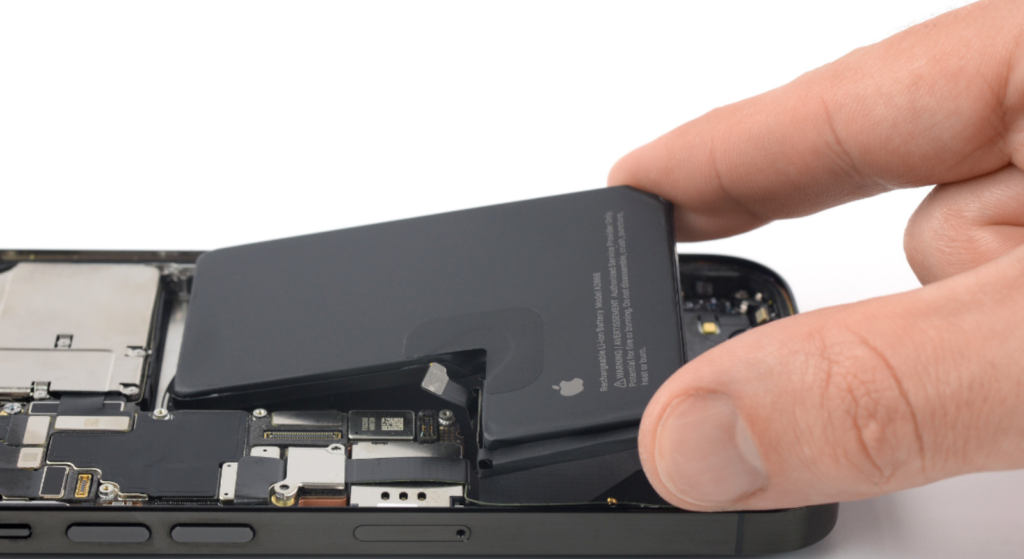
Newer devices such as the iPhone X, iPhone 11, iPhone 12, iPhone 13, and iPhone 14 typically cost more to repair. Prices usually fall within this range:
- Apple Store battery replacement: around $89–$99, depending on the model.
- Independent repair shop: roughly $60–$100, depending on battery type and service quality.
These phones are more complex internally. Strong adhesive strips secure the battery, and technicians must carefully open the screen and disconnect several connectors before the battery replacement process begins. Some models also require resealing the device to maintain water resistance.
Because of this added labor and higher battery capacity, the total cost for replacing the battery is usually higher than on older devices. However, in many cases, replacing the old battery is still worth doing if the phone is otherwise working well and the battery health has dropped below 80%.
For repair shops and refurbishment businesses, understanding model-based pricing helps with service planning, inventory management, and offering competitive battery replacement service options.
What Affects the Cost to Replace an iPhone Battery?
The cost of iPhone battery replacement varies, even for the same model, depending on battery type, technician skill, and device condition. Shops assess these factors before giving a final quote.
Knowing these factors helps users choose between replacing the battery or upgrading to a new iPhone.
Battery Type (Original vs OEM vs High-Capacity)
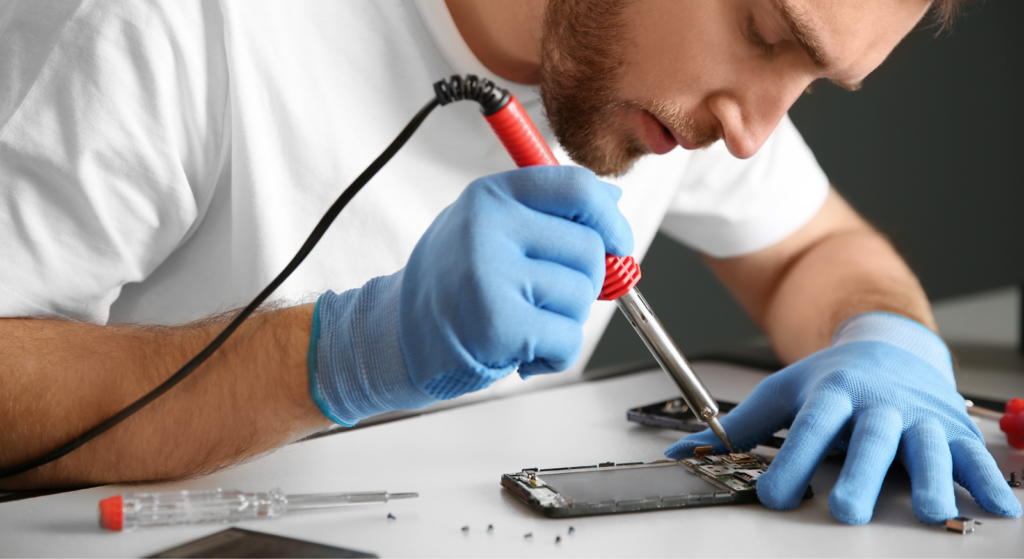
One of the biggest factors affecting the cost of an iPhone battery replacement is the type of iPhone battery used during the repair.
Original Apple batteries are installed at an Apple Store or an Apple Authorized Service Provider. They usually cost more but maintain full iOS compatibility, support system diagnostics, and meet warranty conditions.
OEM batteries are produced by the same manufacturers that supply parts for smartphones, but are sold through independent repair channels. Many repair shops prefer OEM batteries because they offer reliable performance, stable maximum capacity, and lower replacement costs than official Apple service.
High-capacity batteries sometimes offer slightly longer battery life, but they can also cost more depending on the brand and quality.
For repair businesses, choosing the right battery type is a balance between cost, performance, and customer expectations. High-quality OEM batteries are often the best option because they keep the total cost reasonable while still delivering good performance.
Labor Cost and Technician Skill
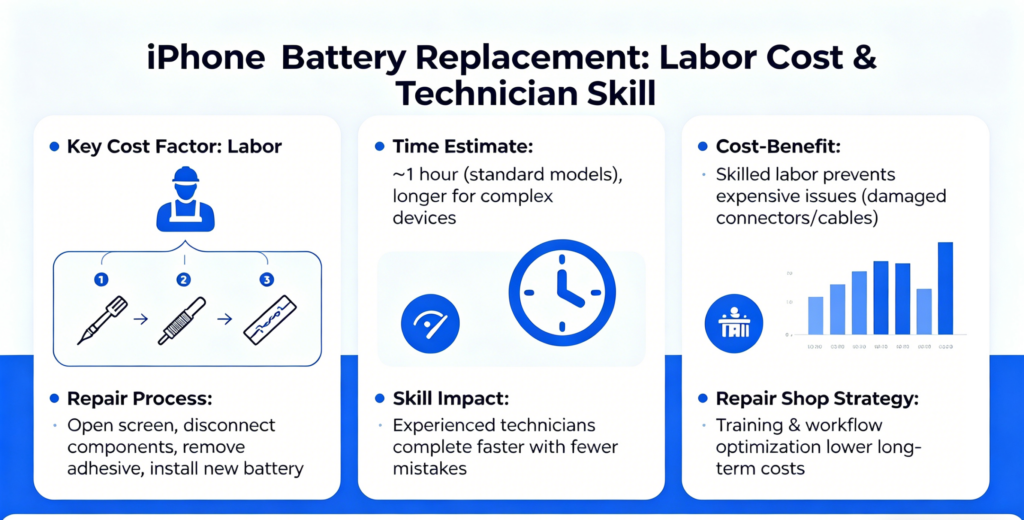
Labor is another key cost of replacing an iPhone battery. Even though the battery replacement itself is a common repair job, the process still requires skill and the right tools.
Technicians must carefully open the screen, disconnect internal components, remove adhesive strips, and install the new battery without damaging other parts. On some models, this job can take around an hour, but complex devices may take longer.
Experienced technicians can complete the repair faster and with fewer mistakes. This reduces the chance of issues such as damaged connectors or display cables. Skilled labor may cost slightly more, but it usually prevents expensive problems later.
For repair shops, technician training and proper workflow can lower long-term costs and improve overall battery replacement service quality.
Battery Condition and Internal Damage
Battery Condition and Replacement Costs
- Degradation over time: As lithium-ion batteries age, their maximum capacity decreases, affecting battery life and performance.
- Swollen battery: A swollen battery can push against the screen or internal frame, complicating the replacement process and increasing costs.
Swollen Batteries and Internal Damage
- Safety risks: Swollen batteries pose safety hazards and must be handled carefully during removal to avoid damaging connectors or internal components.
- Potential damage: If parts like the camera, screen, or cables are damaged during battery removal, it will raise the overall repair cost.
Repair Complexity and Costs
- Cost increase: Any damage to internal components (like the screen or connectors) during removal requires additional repairs, leading to higher costs.
- Repair difficulty: The complexity of the repair depends on the battery’s condition and the internal damage of the device.
Risks of Low-Quality Replacement Batteries
Cheap replacement batteries may reduce repair costs initially, but they often lead to unstable performance, inaccurate battery health readings, overheating, or rapid capacity loss.
In some cases, low-quality batteries may also cause random shutdowns, charging instability, or shortened battery lifespan. For repair shops, poor battery quality increases return rates and warranty claims.
Is it Worth Replacing an iPhone Battery?
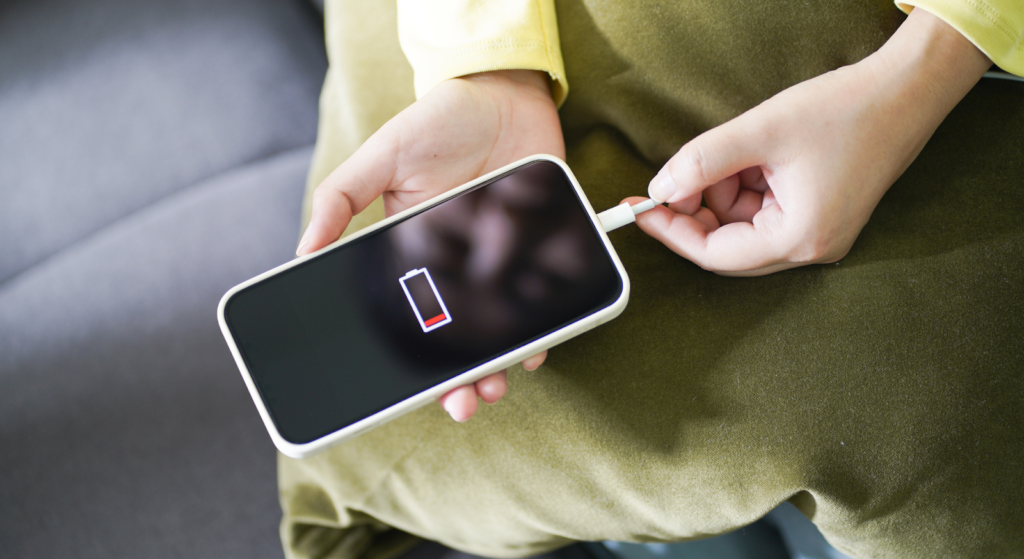
Many users wondering about iPhone battery replacement costs are actually asking if it’s worth it. In most cases, a new battery is an affordable way to restore battery life and boost performance.
However, the decision depends on the iPhone model, the current battery health, and whether the device has other issues that could increase the repair cost.
When Is Battery Replacement Worth the Cost?
Replacing your iPhone battery is often a cost-effective option, particularly if the device itself is still functioning well.
Cost comparison: With battery replacement costs ranging from $50–$100, it is often a far cheaper option than buying a new phone, making it a practical way to extend your iPhone’s lifespan.
Battery health under 80%: If your battery health falls below 80%, you’ll likely notice faster battery drain, shorter battery life, and slower performance. A new battery can restore a significant portion of the original capacity, improving daily usage.
Performance throttling: As the battery ages, iOS may reduce system performance to avoid unexpected shutdowns. Replacing the battery can remove this limitation and make your phone feel faster again.
When Replacement Is NOT Cost-Effective?
There are times when replacing the battery may not be worth it:
- Severe hardware damage: If your device has significant issues like a broken screen, damaged camera, or motherboard problems, the repair costs can quickly add up, potentially nearing the cost of upgrading to a new device.
- Age of the iPhone: Older models that no longer receive iOS updates may suffer from reduced security, performance, and app compatibility. Even a new battery won’t fix these issues, and the overall experience may feel outdated.
In these cases, upgrading to a newer iPhone could be a better option. However, for devices still running well, a battery replacement is a cost-effective way to extend the phone’s lifespan.
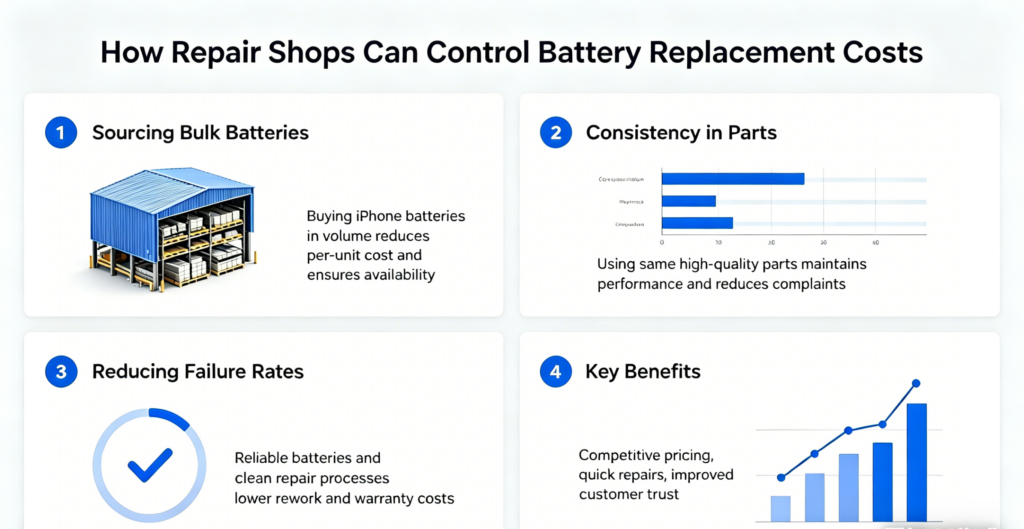
How Repair Shops Can Control Battery Replacement Costs?
For repair shops, managing iPhone battery replacement costs means controlling the entire process from sourcing to installation, keeping costs low without sacrificing quality.
Bulk battery purchases lower per-unit costs, help shops stay price-competitive, and ensure parts are always in stock for fast repairs.
Using consistent high-quality parts maintains stable performance and reduces customer complaints, while low-grade suppliers often cause poor battery life.
Real savings come from lowering failure and return rates. Reliable batteries and proper repairs avoid rework, extra labor, and warranty replacements, protecting profits and building customer trust.
Why Professional-Grade Batteries Matter for Cost Control?
iPhone battery quality impacts both performance and long-term costs.
Professional-grade batteries feature stable internal cells, ensuring consistent capacity, less degradation, smooth performance, and lower risks of overheating or sudden shutdowns.
Pre-applied adhesive speeds up installation, cuts errors, and boosts repair efficiency. Lower installation mistakes also avoid post-repair issues like poor connections or inaccurate battery readings, which raise costs and hurt satisfaction.
For consistent results, partnering with a reliable supplier matters. SQLCD offers OEM-grade batteries with stable quality, bulk supply, and repair-focused support, helping reduce repeat problems, control costs, and keep battery replacement services efficient.
Upgrade your repair service today and partner with us for reliable, high-performance iPhone batteries!
FAQs
Why does battery replacement cost vary so much?
The cost of an iPhone battery replacement depends on the iPhone model, battery type, labor charges, and whether you go to an Apple Store, an Apple Authorized Service Provider, or an independent repair shop.
How long does an iPhone battery replacement take?
Most professional repair shops complete iPhone battery replacement within 30 minutes to 2 hours, depending on the model and part availability.
Is the OEM battery cheaper than the original?
Yes, OEM batteries are usually cheaper than original Apple parts. They offer a good balance between cost, performance, and battery life, which is why many repair shops prefer them.
Can replacing an iPhone battery improve performance?
Yes. Older batteries can trigger iOS performance management, which slows down the device to prevent unexpected shutdowns. A new battery often improves speed, responsiveness, and overall performance.
Can a swollen battery damage the screen?
Yes. A swollen iPhone battery can push against the display and internal components, potentially damaging the screen or affecting touch functionality.
Is cheap battery replacement risky?
Yes, very cheap batteries can lead to poor performance, fast capacity loss, or even safety issues. Choosing a reliable battery replacement service helps avoid these risks.
Conclusion
The cost of iPhone battery replacement depends on the model, battery type, repair method, and labor. While cheaper options may lower upfront costs, poor-quality batteries often lead to unstable performance and higher long-term repair costs.
For both users and repair shops, reliable battery quality and proper installation help improve performance and extend device lifespan. Many repair businesses choose stable OEM battery suppliers such as SQLCD to reduce repeat repairs and maintain consistent service quality.