
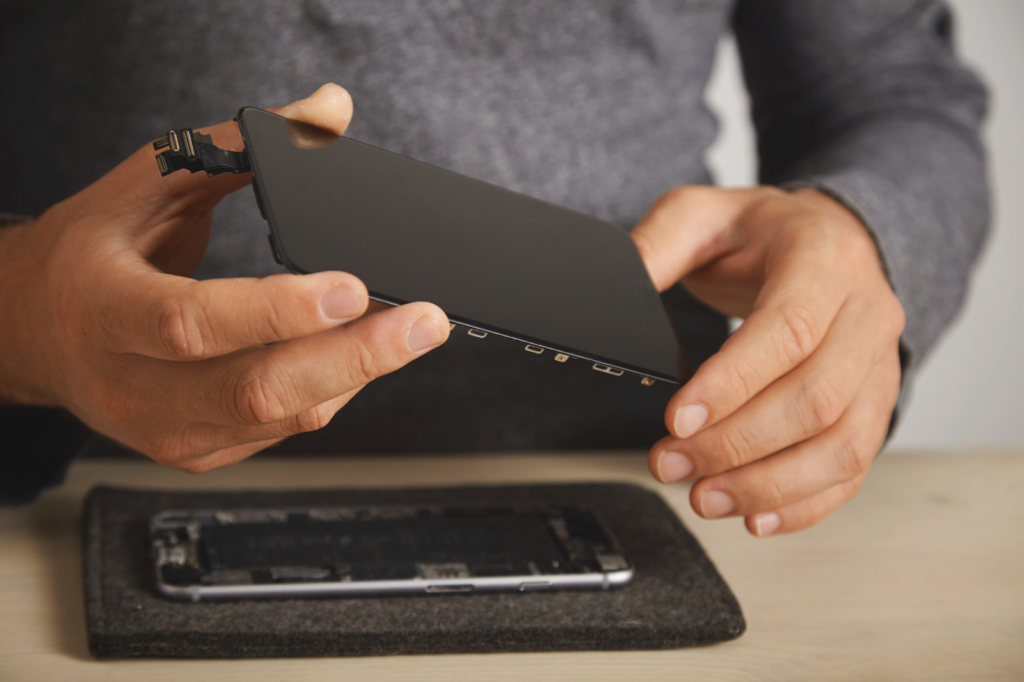
What happens when a customer walks into your repair shop with a cracked screen? Do they ask about liquid crystal display or organic light-emitting diode technology? There’s a great chance the answer is no.
They ask one simple question: Will it look the same as before? That moment defines your choice of mobile display types. The screen you install affects brightness, contrast ratio, battery life, and overall picture quality.
For repair shops and wholesalers, understanding mobile display technology is not optional. From LCD to OLED and AMOLED displays, selecting the right display type directly affects device performance, resale value, and long-term customer trust.
This comprehensive guide explains everything you need to know about choosing the right screen for repairs. Let’s dive in!
Overview of Mobile Phone Displays
A mobile display is the component that allows users to interact with smartphones, other mobile devices, and portable technology. It is more than just a screen. It is a complex display technology system that controls how light is produced, how pixels behave, and how images are rendered. Whether it is a liquid crystal display (LCD) with a backlight or an organic light-emitting diode (OLED) panel where each pixel emits its own light, the display directly shapes the user experience.
Key performance metrics define the quality of different screen types. This includes:
Brightness determines visibility in outdoor light.
Color accuracy and color reproduction affect how natural or saturated colors appear.
Contrast ratio influences deeper blacks and true black colors.
Refresh rates affect smooth scrolling and gaming performance.
Pixel density determines image sharpness.
Durability, especially in high-end phones and foldable devices, depends on materials such as glass or plastic substrates.
Together, these factors influence picture quality, battery life, and overall device performance.
Importance for Repair Shops and Wholesalers
For repair shops and wholesalers, understanding mobile display types is a business necessity. Stocking the correct LCD screens, IPS LCD panels, OLED screens, or AMOLED displays ensures compatibility with premium and budget smartphones alike.
Choosing the right display type reduces return rates, improves energy efficiency, and protects margins. When screen quality matches the original performance, customer satisfaction increases, and warranty risks decrease, leading to stronger long-term business growth.
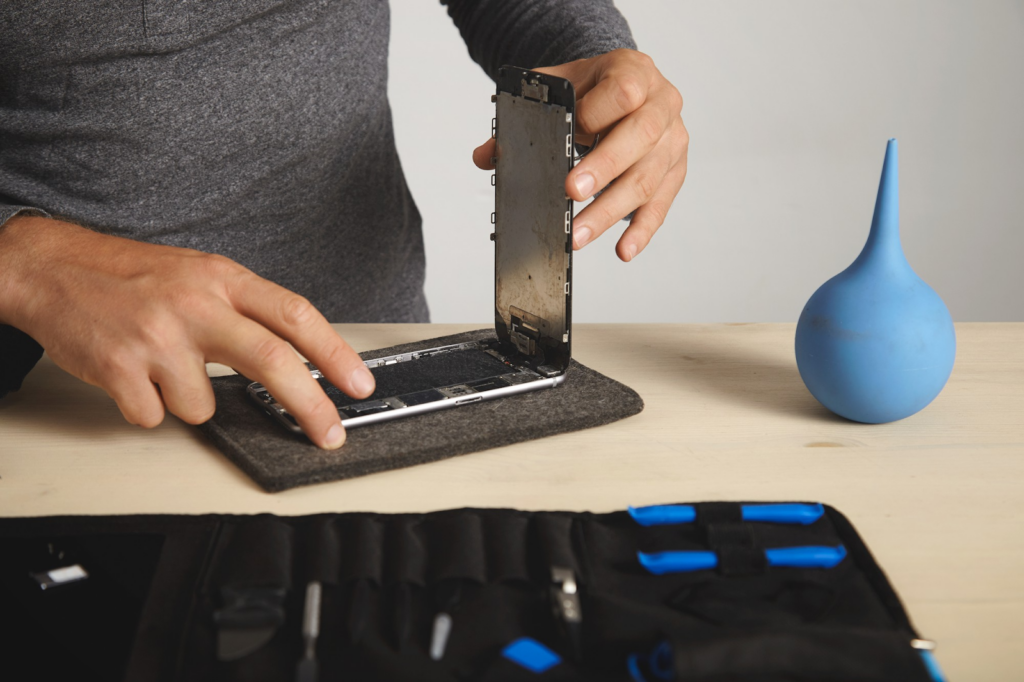
Types of Mobile Phone Displays
There are several types of mobile phone displays available in today’s market, each based on different display technologies. Common mobile screen types include LCD, OLED, AMOLED, and In-Cell, with variations such as Hard OLED and Soft OLED.
Understanding these mobile display types helps repair professionals choose the right screen for performance, durability, and pricing balance.
LCD (Liquid Crystal Display)
A liquid crystal display (LCD) uses liquid crystals to control light from a backlight. Traditional LCDs illuminate pixels rather than allowing each pixel to emit its own light. The two most common variants are TFT LCD (thin-film transistor) and IPS LCD (in-plane switching).
IPS LCD vs TFT LCD
- TFT LCD: Basic active matrix LCD technology, lower cost, moderate viewing angles.
- IPS LCD: Improved in-plane switching structure, better viewing angles, better color reproduction, and more accurate color accuracy.
Advantages include:
- Cost-effective for repair and wholesale sourcing
- High brightness levels are suitable for outdoor lighting
- Stable performance with minimal burn-in risk
- Ideal for budget and mid-range mobile phones (e.g., iPhone XR with Liquid Retina LCD)
Disadvantages include:
- Limited contrast ratio compared to OLED
- No true black colors due to the constant backlight
- Thicker panel design
- Higher power consumption than modern OLED technology
OLED (Organic Light-Emitting Diode)
An organic light-emitting diode (OLED) display allows each pixel to emit its own light. There is no backlight. This enables deeper blacks and higher contrast ratios.
Flexible vs Rigid OLED
- Rigid OLED: Built on a glass substrate, less flexible, typically lower cost than flexible variants.
- Flexible OLED: Built on a plastic substrate, supports curved and foldable screens.
Advantages include:
- Higher contrast and better contrast performance
- True black colors and vibrant colors
- More energy efficient in dark mode usage
- Thinner and lighter than traditional LCDs
Disadvantages can include:
- Higher cost than an LCD display
- More fragile, especially flexible panels
- Burn-in risk over time
- More expensive replacement for repair shops
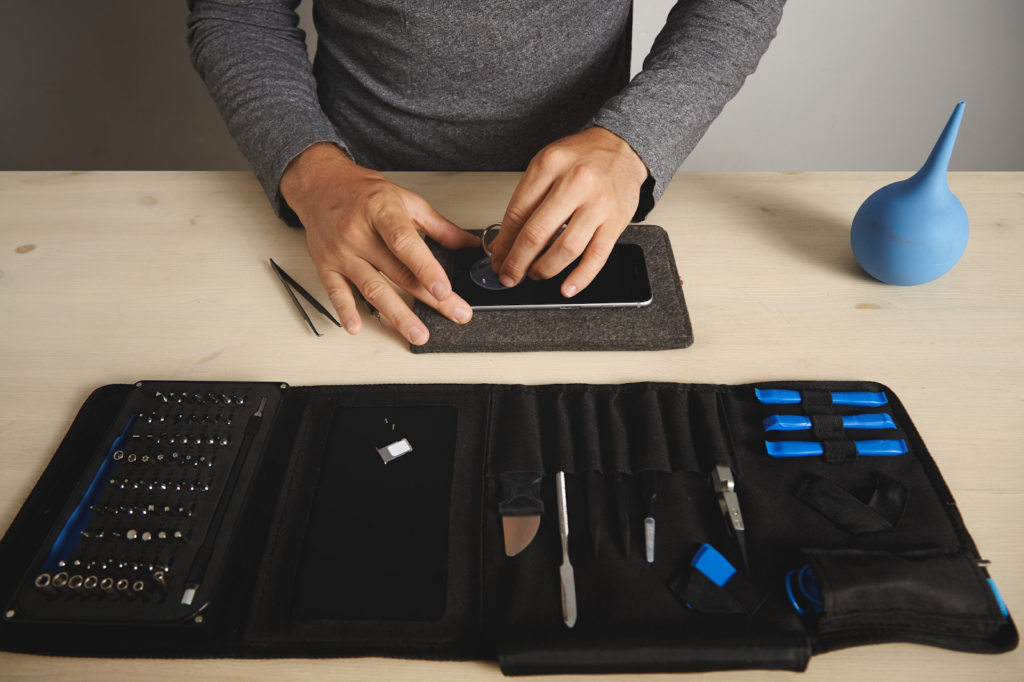
AMOLED / Super AMOLED
AMOLED (Active-Matrix Organic Light-Emitting Diode) is an advanced form of OLED technology that uses an active-matrix system for faster pixel control. AMOLED active-matrix organic light-emitting diode panels are widely used in premium smartphones.
Here’s how it differs from standard OLED:
- It uses an active matrix organic light-emitting structure for better refresh rates
- It has improved pixel control for higher pixel density
- It is often integrated with a touch layer (Super AMOLED by Samsung)
Advantages include:
- Superior picture quality and saturated colors
- Higher contrast ratios and deeper blacks
- Improved energy efficiency and power saving
- Ideal for high-end phones and premium smartphones
- Better performance when playing games due to higher refresh rates
Disadvantages can include:
- Premium pricing
- Complex repair process
- Higher sourcing cost for wholesalers
In-Cell and On-Cell Displays
In-Cell and On-Cell display types integrate the touch sensor within the display panel rather than as a separate layer. The mechanism is pretty straightforward. In-cell displays have touch sensors embedded inside the LCD or OLED panel. Whereas, on-cell displays have a touch layer placed directly on top of the display.
Advantages of in-cell and on-cell displays include:
- Slimmer screen structure
- Improved responsiveness
- Better light transmission for brightness
- Lighter design for modern smartphones
Disadvantages can include:
- More complex repair if touch fails
- Higher replacement cost compared to standard LCD screens
- Compatibility must match the exact device model
Hard OLED vs Soft OLED
Hard OLED and Soft OLED differ mainly in substrate material and replacement complexity. Hard OLED has a glass-based substrate. Whereas soft OLED has a plastic substrate. It is mainly used in foldable devices
Advantages of Hard OLED include:
- More affordable than Soft OLED
- Suitable for flat-screen devices
- Easier alignment during installation
Disadvantages of Hard OLED can include:
- Less flexible
- Lower durability under bending stress
Advantages of Soft OLED include:
- Supports foldable screens and curved designs
- Thinner and lighter
- Higher durability under impact in some designs
Disadvantages of Soft OLED include:
- Highest pricing among screen types
- Complex installation process
- Higher inventory investment for wholesalers
Understanding these different mobile display types allows repair professionals and B2B buyers to evaluate quality, cost, durability, and performance before making sourcing decisions.
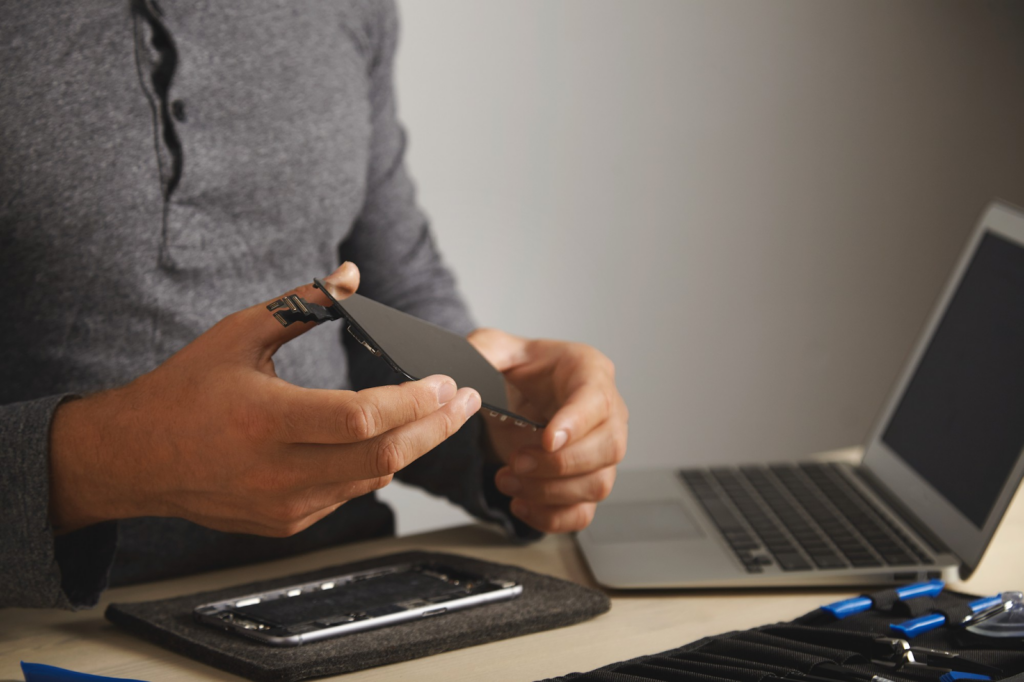
How to Choose the Right Mobile Phone Screen
Choosing the correct replacement display is not just about price. For repair shops, refurbishment centers, and wholesalers, knowing how to choose mobile phone screen options strategically can directly affect profitability, return rates, and long-term customer trust.
With so many mobile display types available—LCD, OLED, AMOLED, Hard OLED, Soft OLED, and In-Cell panels—the right decision depends on compatibility, performance requirements, cost structure, and repair workflow.
Consider the Phone Model
The first step in selecting the correct display type is understanding the specific smartphone model. Not all mobile devices support the same mobile display technology. Some models are designed for liquid crystal display panels, while others are built around organic light-emitting diode technology. Installing the wrong display type can affect brightness, touch response, battery life, and even software calibration.
For example, devices like the iPhone XR use a Liquid Retina LCD, which is based on IPS LCD technology. Replacing it with an incompatible OLED panel may create issues with color accuracy and system-level display optimization.
On the other hand, premium smartphones from Samsung often use Super AMOLED displays built on active matrix organic light-emitting diode (AMOLED) architecture. These panels are designed for higher contrast ratios and deeper blacks, and replacing them with a basic LCD screen would significantly reduce picture quality.
Compatibility also affects physical design. OLED screens, especially Soft OLED panels built on a plastic substrate, are thinner and more flexible than traditional LCDs. Some high-end phones and foldable devices rely on this flexibility.
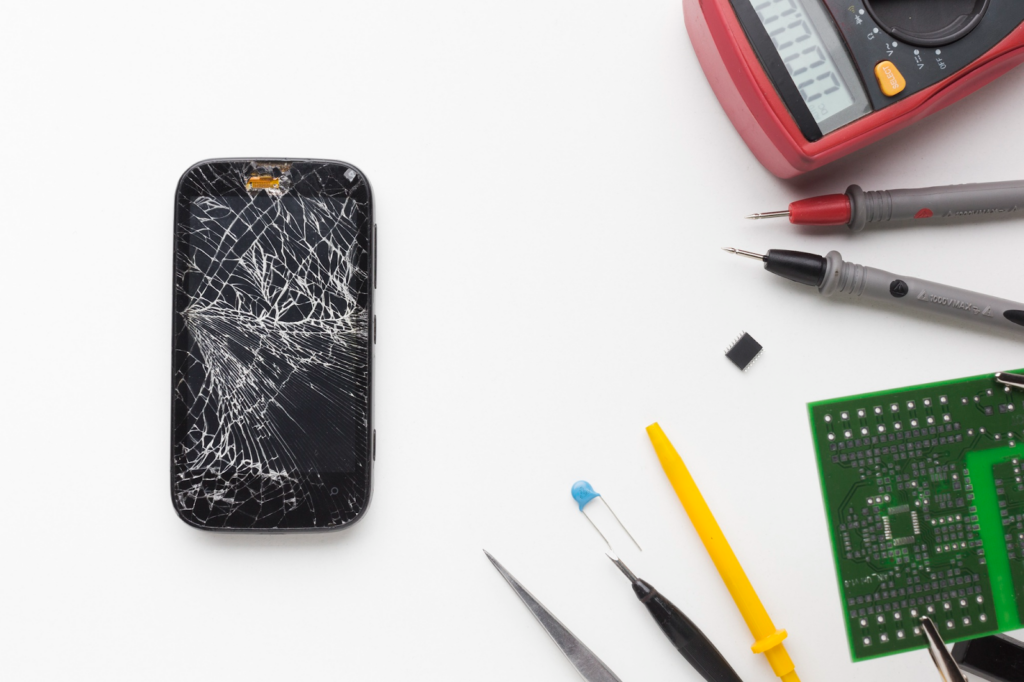
Replacement ease must also be considered. Traditional LCD screens with a backlight and a separate touch layer are generally more straightforward to install. AMOLED active-matrix organic light-emitting diode panels are thinner and more delicate, requiring careful handling to avoid damaging the pixel layer, where each pixel emits its own light. For repair businesses, understanding the structural design of each display type reduces installation errors and post-repair complaints.
Consider Screen Performance Requirements
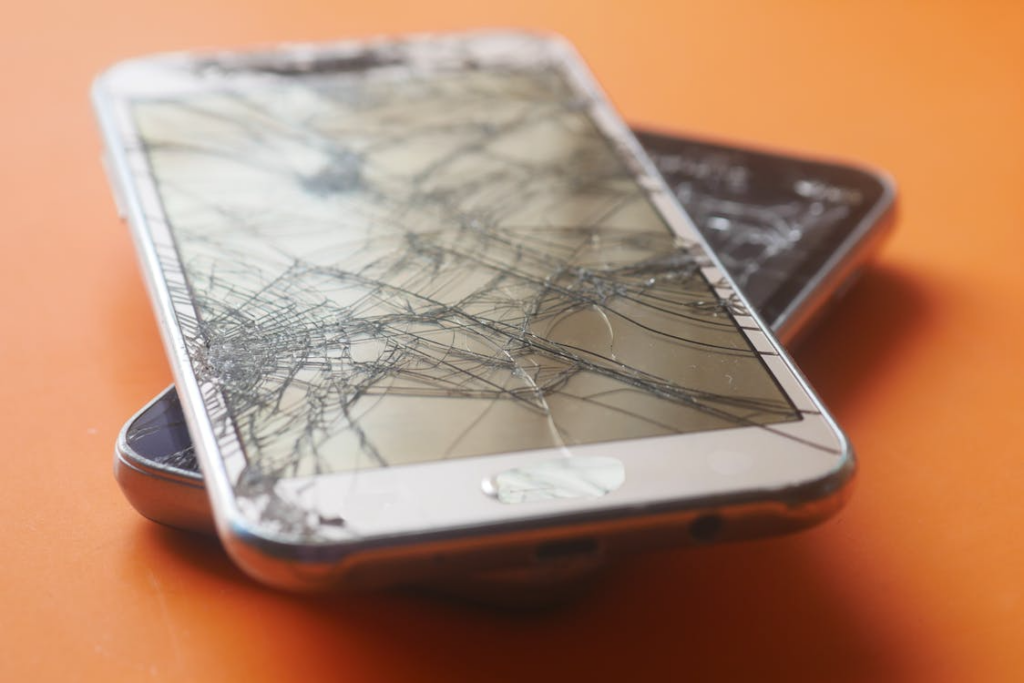
Screen performance is not only about making the device turn on. It is about maintaining the original user experience. Customers expect similar brightness, contrast, and color reproduction after a repair. This is where performance metrics become critical.
Brightness
Brightness determines outdoor visibility under strong light. LCD panels with strong backlight systems often deliver consistent peak brightness. However, OLED displays provide better contrast because each pixel emits its own light, allowing for true black colors and higher contrast ratios. This difference directly impacts picture quality.
Color accuracy
Color accuracy and color reproduction are also key factors. IPS LCD panels are known for stable viewing angles and reliable color accuracy. AMOLED displays, especially Super AMOLED used in premium smartphones, produce vibrant colors and saturated colors that appeal to users who enjoy playing games or watching media. However, overly saturated tones may differ from factory calibration in some aftermarket panels, which can affect perceived quality.
Refresh rates
Refresh rates are increasingly important in modern smartphones. High refresh rates improve scrolling smoothness and gaming performance. AMOLED displays with active matrix control often support higher refresh rates more efficiently than traditional LCDs. For customers using high-end phones, replacing a high-refresh AMOLED panel with a lower-spec LCD screen may lead to dissatisfaction.
Consider Cost vs Quality
Balancing cost and quality is central to every B2B purchasing decision. Wholesale buyers must evaluate whether to source OEM-grade panels or aftermarket alternatives. OEM-quality OLED screens and AMOLED displays maintain factory-level color accuracy, pixel density, and display technology performance. However, they come at a higher cost.
Durability must also be considered. Hard OLED panels, built on a glass substrate, may be more affordable than Soft OLED but less flexible. Soft OLED panels, made with a plastic substrate, are commonly used in foldable screens and curved smartphones. They offer structural flexibility but come at a premium price. For wholesalers, investing heavily in Soft OLED inventory ties up capital but may also yield higher margins in premium markets.
Mini-LED backlit LCD panels are another evolving option in certain mobile display applications. While not as common as OLED in smartphones, LCD displays aim to improve contrast and brightness.
Cost decisions should not focus solely on unit price. They must include return rates, warranty claims, and long-term customer satisfaction. A cheaper screen that increases return frequency ultimately reduces profit margins.
Consider Repair Workflow
Different mobile display types require different tools, skill levels, and installation time. Repair workflow efficiency directly affects operational capacity and daily revenue for repair shops.
LCD replacements are generally more forgiving. The structure includes liquid crystals layered above a backlight, and the assembly is thicker and more rigid. This makes alignment simpler during installation. The risk of damaging the display during handling is lower than with thin OLED panels.
OLED and AMOLED displays, especially Soft OLED variants, are thinner and more fragile. Since each pixel emits light individually, pressure damage or bending can permanently affect image quality. Technicians must use precise heating tools, controlled separation techniques, and careful adhesive application. The thinner structure increases the risk of tearing flex cables or damaging the display module during removal.
Repair time also varies by display type. AMOLED active-matrix organic light-emitting diode panels with curved edges or embedded fingerprint sensors require more precise alignment and testing. This increases labor time. In contrast, flat LCD screens in mid-range mobile phones are faster to replace, improving workflow efficiency.
Professional Tips for Repair Shops and Wholesalers
Repair shop owners and wholesalers can follow these tips for smooth screen replacement every time:
- Focus inventory on high-demand display types, such as IPS LCD and AMOLED. These two mobile display types cover the largest segment of mobile devices in circulation.
- Track brand-specific demand. Samsung devices frequently require Super AMOLED panels, while certain Apple models use IPS LCD or OLED screens like Super Retina display and Liquid Retina.
- Balance inventory between cost-effective LCD screens and higher-margin OLED screens. LCD display units move quickly in price-sensitive markets, while OLED technology supports better margins in high-end phones.
- Standardize testing procedures before installation. Check pixel density, refresh rate, touch sensitivity, and uniformity to ensure the actual display matches the expected performance of the display type.
- Train technicians specifically for Soft OLED and active matrix organic light installations. These thinner panels are more fragile and require careful handling to avoid damage.
FAQs About Mobile Display Types
What is the difference between OLED and LCD?
A liquid crystal display (LCD) uses a backlight to illuminate pixels controlled by liquid crystals, while an organic light-emitting diode (OLED) allows each pixel to emit its own light. OLED screens offer higher contrast ratios, deeper blacks, and better energy efficiency than traditional LCDs.
Which mobile display lasts longer?
LCDs generally have longer lifespan stability because they are less prone to burn-in. OLED technology can experience image retention over time, especially under high-brightness or static display conditions. However, modern OLED panels have significantly improved durability.
Can all displays be replaced interchangeably?
No. Mobile display types are designed specifically for each device model. Compatibility depends on display technology, connector type, frame thickness, and software calibration. Installing the wrong display type can affect brightness, battery life, and overall performance.
How do hard OLED and soft OLED differ in repair?
Hard OLED panels use a glass substrate and are slightly thicker, making them somewhat easier to align. Soft OLED panels use a plastic substrate, allowing flexibility for curved or foldable screens, but they are more delicate and require advanced repair handling.
What is the best display type for bulk replacement?
For bulk replacement in budget and mid-range smartphones, IPS LCD panels are often the most cost-effective and stable choice. For premium smartphones, AMOLED displays or OEM-grade OLED screens maintain original picture quality and higher resale value.
Conclusion
Understanding mobile display types is essential for repair shops, refurbishment centers, and wholesalers operating in competitive smartphone markets. From liquid crystal display panels to organic light-emitting diodes, each display type has clear advantages and limitations.
Professionally choosing the right screen means evaluating compatibility, performance requirements, durability, and repair workflow efficiency.
By sourcing professional-grade LCD, OLED, Hard OLED, and Soft OLED screens from trusted suppliers like SQLCD, businesses can ensure consistent quality, better customer satisfaction, and long-term operational success.