
A cracked screen can bring your entire day to a stop. Whether it’s a shattered iPhone screen or a broken Android phone screen, one question always comes up first: how long does it take to replace a phone screen?
In many cases, screen repairs are completed the same day. But repair time can range from under an hour to a few hours, and sometimes even a few days. It depends on the phone model, the severity of screen damage, part availability, technician skill, and whether replacement parts are in stock.
For repair shops and mobile repair businesses, understanding typical timelines isn’t just about speed. It affects workflow planning, customer expectations, cost, and overall service efficiency.
Overview of Phone Screen Replacement
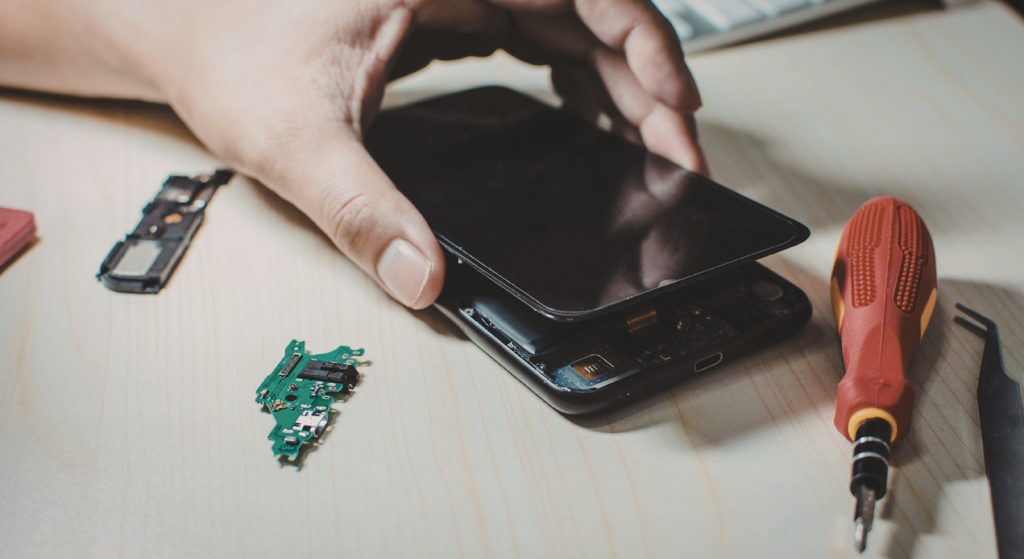
When someone asks, how long does it take to replace a phone screen, the honest answer is: it depends. Not every cracked screen or broken screen follows the same repair time. A simple screen damage case on common models may take under an hour, while complex repairs on newer iPhones or curved OLED devices can take several hours.
In rare cases, if replacement parts are not in stock, it may take a few days due to part availability. Professional replacement time varies because every phone model is built differently. Some devices are easier to open and are designed for complete repairs with a full-screen assembly.
Others require careful heating, adhesive removal, motherboard inspection, and data preservation checks before the repair is completed. Technicians must also run diagnostics to confirm there are no deeper issues beyond the phone’s screen.
DIY vs Professional Repair
There is also a major difference between DIY and professional repair. A first-time attempt to fix a cracked iPhone screen at home can take several hours and may risk additional damage, void warranty coverage, or affect AppleCare eligibility.
A trained repair shop with proper tools and stock replacement parts can often complete most repairs quickly and safely. Skill plays a big role in how long the process takes. For repair shops, workflow optimization is critical. Organizing tools, maintaining inventory for common models, and standardizing procedures significantly reduce repair time.
Efficient mobile repair operations focus not only on speed, but also on quality service, cost control, and customer satisfaction. In many cases, the difference between a same-day repair and a delayed one comes down to preparation, part availability, and technician experience.
Average Time to Replace Phone Screens
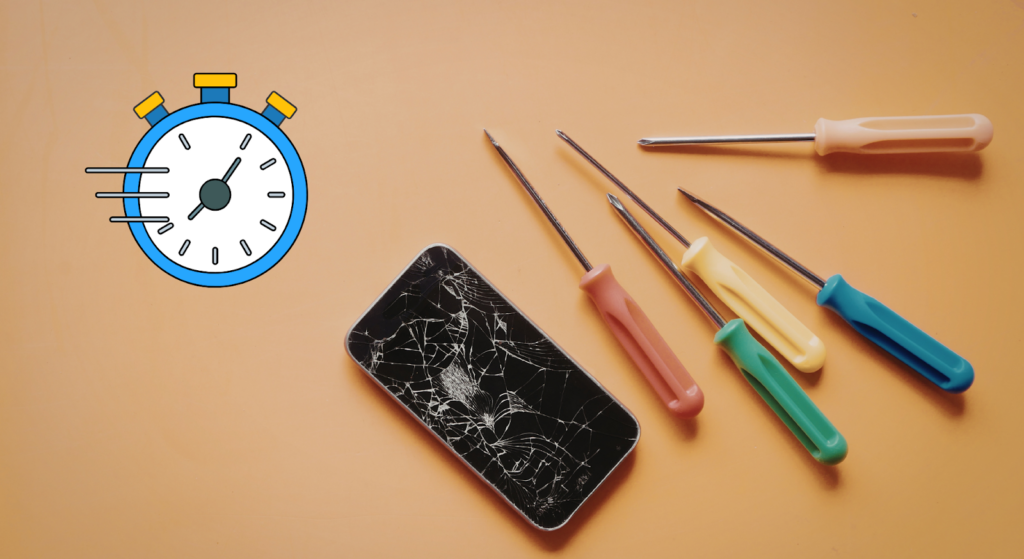
When customers ask how long it takes to fix a phone screen, they expect a simple number. In reality, typical timelines vary based on the phone model, screen type, and part availability. Most screen repairs for common models are completed within 30 minutes to 2 hours. However, more complex cases or limited stock can extend repair time to several hours or even a few days.
iPhone Screen Replacement
If you’re wondering how long it takes to replace an iPhone screen, here’s a realistic breakdown from a professional repair shop perspective:
- iPhone 8 / SE (LCD models): 20–35 minutes
- iPhone X / XR (LCD or early OLED): 30–45 minutes
- iPhone 11 / 12: 30–50 minutes
- iPhone 13 / 14 / 15 (OLED / advanced display assemblies): 35–60 minutes
Why the difference? Screen type plays a major role. LCD replacements are generally quicker because they are less fragile and easier to handle. OLED displays, especially soft OLED panels, require more care during installation. Frame complexity, adhesive strength, and Face ID component handling also affect the time required for the repair.
In many cases, professional technicians can complete most repairs the same day if replacement parts are in stock. However, if a rare iPhone model requires special ordering, the repair may be delayed by several days due to part availability.
Android Phone Screen Replacement
For Android devices, repair time can vary even more. Popular models such as Samsung Galaxy, Google Pixel, or Xiaomi devices usually fall within these ranges:
- Mid-range Android (LCD): 30–50 minutes
- Samsung OLED models: 45–70 minutes
- Curved or edge displays: 60–90 minutes
Android screen repairs often involve stronger adhesive bonding and sometimes require removing the battery before accessing the phone screen. Some models open from the back panel, which adds extra steps to the process.
The difference in screen technology also matters. Certain OLED panels are factory-bonded assemblies, while others require careful transfer of internal components. These factors directly influence how long it takes to replace a phone screen.
Factors Influencing Replacement Time
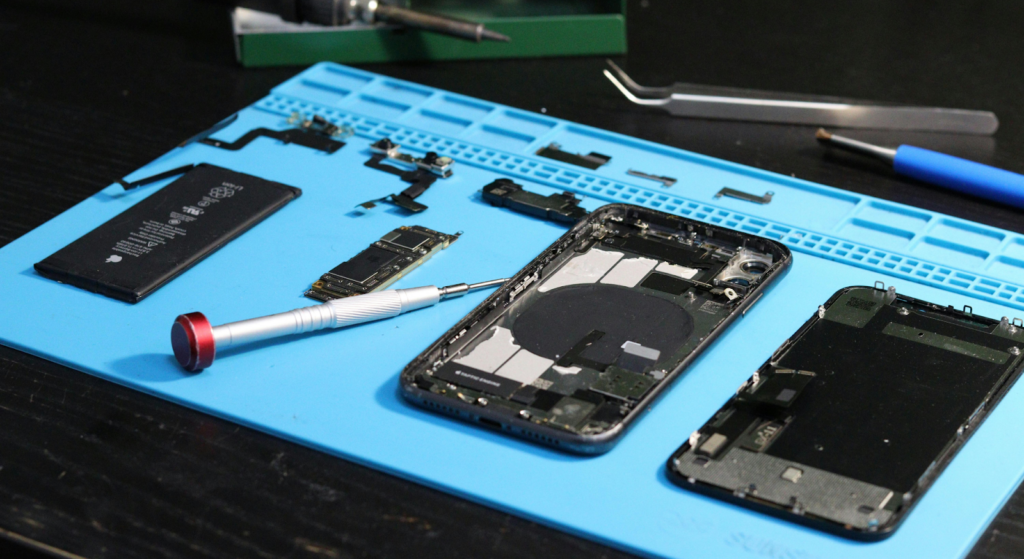
Several key factors determine whether a repair takes under an hour or stretches into several hours:
- Screen Type and Repair Difficulty: LCD screens are typically faster to replace than OLED assemblies.
- Battery Removal and Internal Components: Some devices require disconnecting or partially removing the battery before replacing the screen.
- Technician Skill and Experience: Experienced technicians complete repairs more efficiently while reducing the risk of additional damage.
- Tools and Workspace Setup: Organized workstations, heating pads, precision tools, and proper stock management significantly reduce downtime.
Other factors include the severity of screen damage, the condition of the motherboard, and whether additional diagnostics are needed. In many cases, the difference between a quick same-day repair and a delayed one depends on preparation, stock of replacement parts, and workflow optimization within the repair shop.
Tools Needed for Phone Screen Replacement
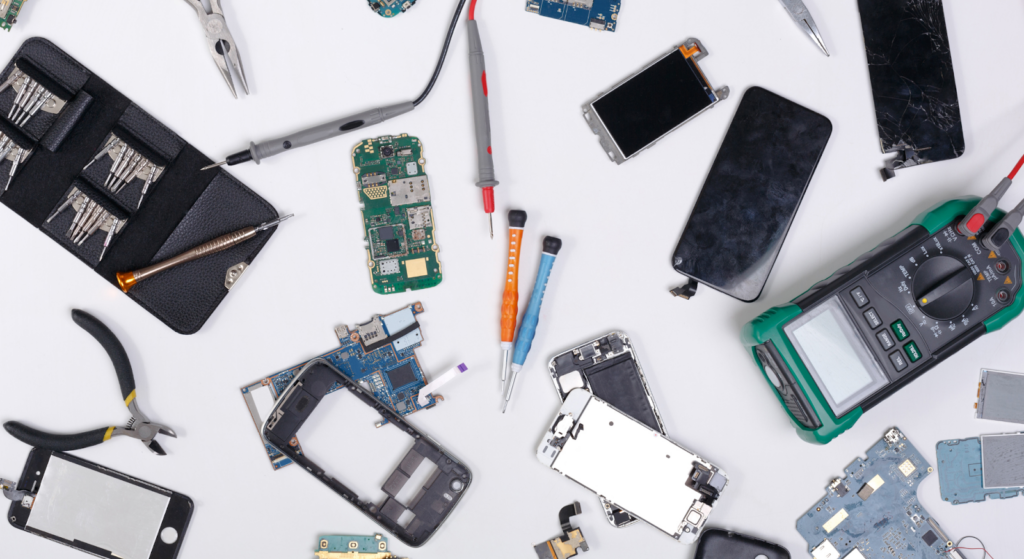
If you’re serious about reducing repair time and delivering consistent service, understanding the tools needed for phone screen replacement is critical. The difference between a 30-minute repair and a two-hour delay often comes down to preparation, tool quality, and part availability.
For professional mobile repairs, tools are not optional. They directly impact efficiency, safety, and the overall process. A cracked screen or broken screen might look simple from the outside, but modern iPhones and Android devices are tightly assembled with adhesive, delicate flex cables, and sensitive motherboard components.
Using the right tools protects the device, speeds up the replacement process, and prevents additional damage that can increase cost or void warranty coverage.
Essential Tools
Every repair shop performing screen repairs should have a standard toolkit ready for common models. These tools form the foundation of most repairs:
Precision Screwdrivers
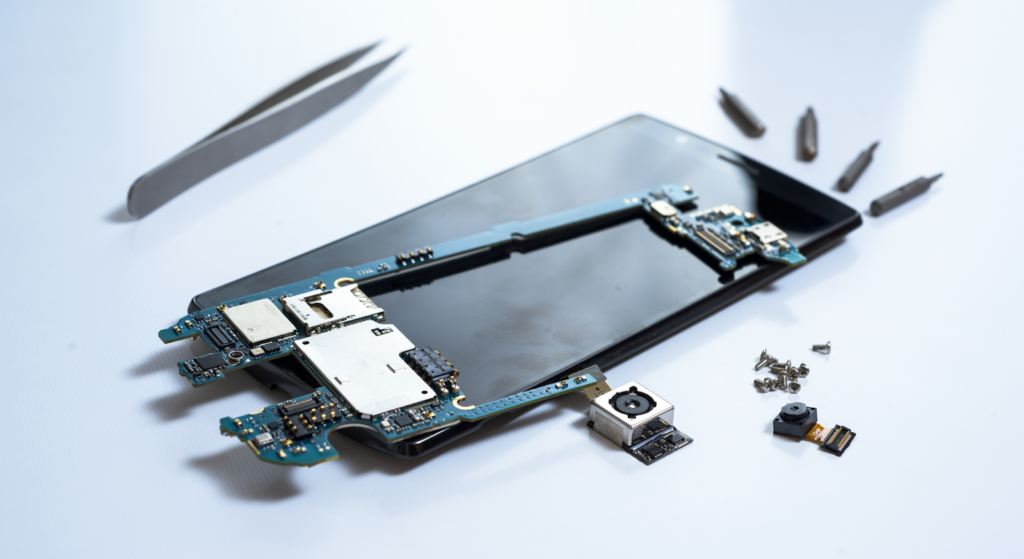
Modern phones use tiny screws in multiple sizes. Apple devices use specialized screw types, and other brands use proprietary formats. A complete screwdriver set ensures technicians can open the phone without stripping screws, which can add unnecessary repair time.
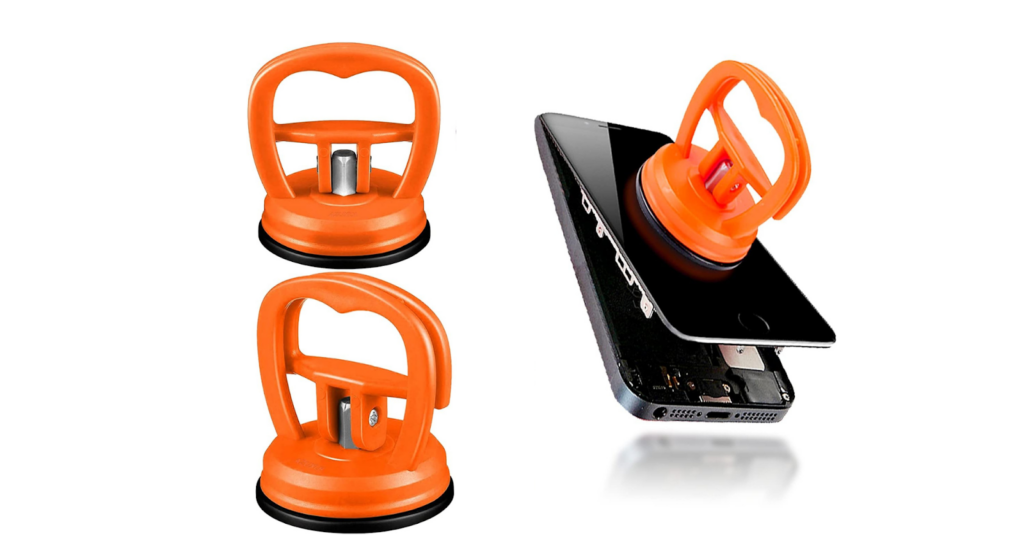
Suction Cups and Opening Picks
A suction cup helps safely lift the phone screen once the adhesive is softened. Plastic spudgers and opening picks allow technicians to separate the display without scratching the frame or damaging internal components. This step is especially important for iPhones, where display cables sit close to the edge.
Tweezers (ESD-Safe)
Anti-static tweezers are used to handle small screws and connectors. Static discharge can damage internal circuits, so proper tools protect both the device and the motherboard.
Heating Pads and Opening Tools
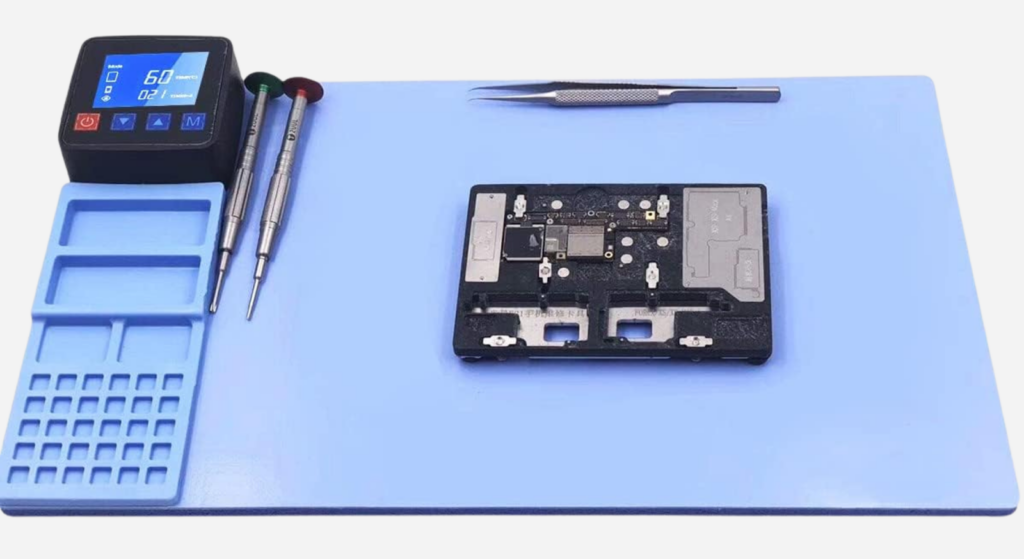
Most modern phones use a strong adhesive to seal the screen. Heating pads or controlled heat plates soften adhesive evenly, reducing the risk of frame bending or cracked glass during removal. Without controlled heat, a simple cracked screen repair can turn into a complex structural issue.
Anti-Static Mats and Safety Equipment
An anti-static work mat prevents electrical damage. Organized magnetic screw mats also help keep screws in order, reducing mistakes during reassembly. These tools improve consistency and reduce rework cases.
In many cases, properly organizing these essential tools determines whether the repair is completed the same day or delayed by minor complications.
Optional Professional Tools
High-volume repair shops often invest in advanced equipment to improve efficiency and handle more complex situations.
OCA Laminating Machines
For shops performing glass-only repairs instead of full assembly replacement, OCA (Optically Clear Adhesive) laminating machines allow technicians to bond new glass to the display. While this process can take longer than a full replacement, it reduces the cost of replacement parts for certain phone models.
UV Curing Stations
UV curing tools are used for glass bonding and frame sealing. They ensure proper adhesive curing, especially in curved OLED devices. Poor curing can lead to display separation days later, increasing return rates.
Diagnostic and Testing Equipment
Professional diagnostic tools verify that the new iPhone or Android screen is functioning correctly before final assembly. Testing brightness, touch response, and display output ensures the repair is completed properly. Quick diagnostics also help confirm that screen damage was not masking deeper issues.
Tool Impact on Efficiency
Many repair shops underestimate the impact of tools on repair time. Using proper heating equipment shortens the time required for adhesive removal. Organized screw management prevents reassembly delays. High-quality suction cups and opening tools reduce accidental breaks during installation.
Professional kits improve workflow optimization. When replacement parts are in stock and tools are pre-arranged for common models, most repairs can be completed within typical timelines of 30–60 minutes. Without preparation, even simple cases can extend to several hours.
Ultimately, how long it takes to replace a phone screen depends not only on the device but also on the tools and systems at the repair shop. Investing in proper equipment reduces errors, lowers labor cost per repair, improves service speed, and enhances overall customer confidence.
Professional Tips to Reduce Repair Time
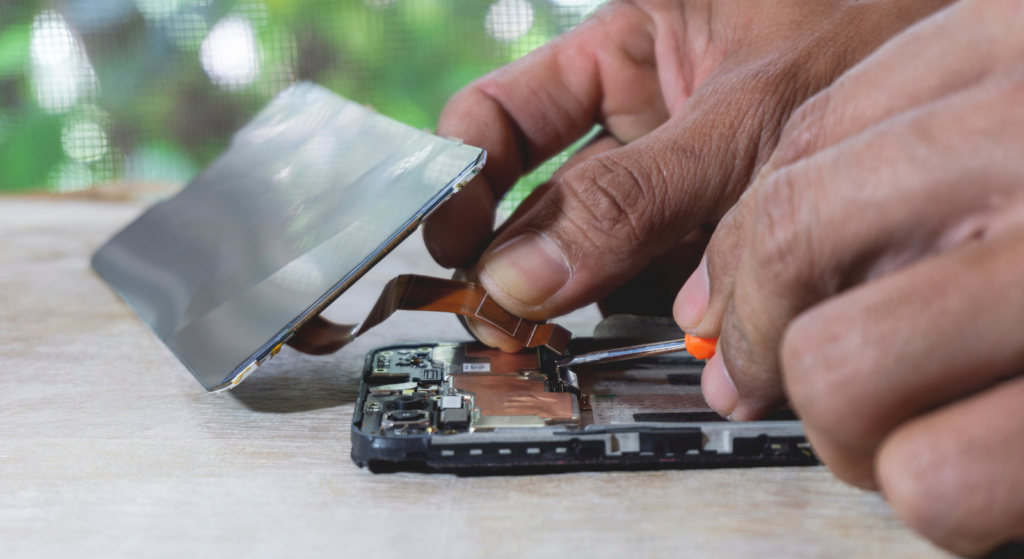
For a repair shop, answering the question of how long it takes to replace a phone screen is not just about giving customers a number. It is about controlling workflow, minimizing delays, and ensuring most repairs are completed efficiently. In many cases, reducing repair time comes down to preparation and process, not speed alone.
Below are proven strategies professional technicians use to handle cracked screen and broken screen cases more efficiently without sacrificing quality.
Pre-Check Battery and Internal Components
Before removing the phone’s screen, technicians should always perform a quick diagnostic check. A cracked display might not be the only issue. In some cases, screen damage can hide deeper problems, such as a swollen battery, loose connectors, or even motherboard stress.
A five-minute diagnostic check helps confirm:
- The device powers on properly
- Touch and display signals respond before full replacement
- There are no underlying issues that could extend repair time
If a battery must be disconnected or partially removed during the process, knowing that in advance prevents delays. Many iPhone and Android models require careful handling of internal components before the screen is replaced.
Organize Tools and Workspace
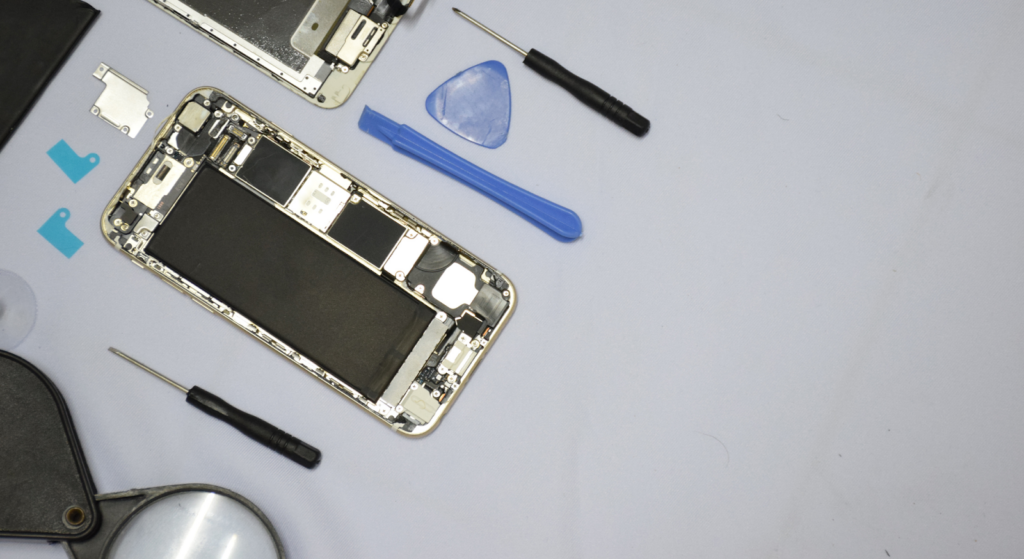
An organized repair shop significantly reduces the time required for the process. Professional technicians keep essential tools, replacement parts, and common model screens in stock and within reach. Magnetic screw mats prevent lost screws.
Heating pads are pre-set to proper temperatures. Screen assemblies for common models are labeled and ready. Small improvements in workspace setup can shave 5–10 minutes off each repair. Over the course of a day, that adds up.
Disorganized benches lead to:
- Searching for tools mid-repair
- Mixing screws between devices
- Increased risk of additional damage
- Extended repair time
For high-volume mobile repairs, efficiency is built into the shop’s layout.
Batch Replacement Strategies for Multiple Devices
When handling several cracked iPhone or Android screen repairs in a single day, batch processing can improve productivity. Instead of completing each phone from start to finish one at a time, technicians may:
- Open multiple common models together
- Soften adhesive in batches using heating pads
- Perform screen removal steps sequentially
- Complete testing and final assembly in grouped phases
This approach is especially effective when replacement parts are readily available. It reduces setup repetition and improves technician rhythm. For repair shops managing high traffic or same-day service expectations, batch strategies can significantly improve turnaround without sacrificing quality.
Training and Standard Operating Procedures
Skill plays a major role in how long it takes to fix a phone screen. Experienced technicians complete most repairs quickly because they follow a consistent process. Standard Operating Procedures (SOPs) should define:
- Opening sequence for each phone model
- Cable disconnection order
- Screen testing protocol before sealing
- Adhesive replacement standards
- Final inspection checklist
Clear procedures reduce guesswork and prevent mistakes that lead to rework or warranty claims. Ongoing training also matters. New iPhones and Android models introduce design changes that affect repair difficulty. Keeping technicians updated ensures repair time remains consistent even as device complexity increases.
FAQs
Does replacement time differ between OEM and aftermarket screens?
Yes. OEM screens usually fit better and install faster, while cheap aftermarket parts may require extra adjustments. Better-quality replacement parts reduce delays and repeat repairs.
How long does it take to repair a screen on a water-damaged phone?
Water-damaged phones take longer. Even if the cracked screen replacement is quick, technicians must inspect the motherboard and internal components first. In many cases, it can take several hours or a few days.
Can repair shops complete multiple replacements per hour?
For common models in stock, experienced technicians can complete multiple screen repairs per hour. Workflow setup, tool availability, and technician skill matter most.
Is it faster to replace the entire screen assembly or just the glass?
Replacing the full-screen assembly is usually faster and safer. Glass-only repair takes specialized tools and more time. Most repair shops choose full replacement for efficiency.
Do specialized tools significantly reduce repair time?
Yes. Proper tools needed for phone screen replacement speed up the repair process and reduce mistakes. Professional equipment improves consistency and overall service time.
Conclusion
Standard screen repairs take between 30 minutes and 2 hours. However, the actual repair time depends on several factors, including phone model, screen type, part availability, technician experience, and whether additional damage is present.
For iPhone screen replacement and Android devices alike, workflow plays a major role. Organized workstations, proper diagnostics, and quality replacement parts allow most repairs to be completed quickly and safely.
For repair shops and wholesalers, efficiency is not just about speed. It is about using the right tools, stocking reliable components, and following a consistent process. When those elements are in place, shops can confidently deliver same-day service while maintaining high-quality standards and customer trust.