

Your iPhone doesn’t slow down overnight. The battery does.
As lithium-ion batteries age, battery health drops, peak power delivery weakens, and performance management may step in to prevent unexpected shutdowns. For customers, this shows up as fewer hours on a single charge, performance issues, or an important battery message on the battery health screen. For repair businesses, it raises a different question. How long does an iPhone battery replacement really take?
The answer matters more than most people think. Replacement time affects customer expectations, store workflow, technician efficiency, and even battery sourcing decisions. While Apple promotes same-day service, real timelines vary by iPhone model, battery condition, service option, and whether a genuine Apple battery or third-party replacement is used.
This guide breaks down realistic replacement times and what factors impact them, and whether replacing the battery is worth it. Let’s get in!
Quick Answer – Average iPhone Battery Replacement Time
In most cases, an iPhone battery replacement takes 20 to 45 minutes when handled by a professional repair technician. This time frame applies to common models such as the iPhone X, iPhone XR, iPhone XS, and newer devices. Experienced technicians follow a standardized process, which keeps the repair fairly quick without compromising battery health.
That said, the process may take longer when dealing with older iPhone models or heavily degraded batteries. These exceptions show performance management issues due to repeated unexpected shutdowns.

Average Time to Replace iPhone Battery by Method
The average time to replace an iPhone battery depends on where and how the replacement is performed. Workflow structure, technician experience, and service policies all influence how quickly the device is ready. Below is a realistic comparison based on common service methods.
Battery Replacement at a Professional Repair Shop
Independent repair shops are optimized for speed. Technicians handle multiple iPhone battery replacements daily, which reduces handling time and errors. Most stores follow a repeatable process that includes checking battery health, replacing the battery, using high-quality iPhone repair parts, and confirming normal peak performance before returning the device.
This efficiency comes from experience and the right tools. Trained technicians know how different iPhone models behave, how strong the battery adhesive is, and how to avoid triggering performance management issues after replacement.
To sum up, the typical turnaround time is 20 to 45 minutes for most iPhone models. For repair businesses, this method offers predictable timing and smoother customer flow.
DIY iPhone Battery Replacement Time
DIY replacement takes significantly longer, especially for first-time attempts. Even with online guides, understanding internal layouts and connector placement requires time and patience. Small mistakes can lead to delays or device damage.
Tool preparation is another factor. Many users underestimate the need for proper screwdrivers, heat tools, and adhesive strips. Missing or incorrect tools can pause the repair entirely.
The following factors typically cause delay:
- Learning curve for safe screen removal
- Slower handling of battery adhesive
- Extra testing after reassembly
Most DIY replacements take 1.5 to 3 hours, and sometimes longer if issues arise.
Authorized Service vs Independent Repair Stores
Authorized service providers, including the Apple Store, follow stricter procedures. A Genius Bar appointment is often required, and diagnostics are performed before and after the battery is replaced. While this ensures a genuine Apple battery, it can extend the total time spent.
Independent repair stores, by contrast, prioritize turnaround speed. Walk-ins are commonly accepted, and battery replacement is often completed the same day without shipping delays.
Key time differences
- Authorized service: 1–2 hours or more, appointment-based
- Independent repair: under 1 hour, walk-in friendly
For many businesses, independent repair offers better time efficiency, while authorized service emphasizes brand-backed assurance.
Factors Affecting iPhone Battery Replacement Time
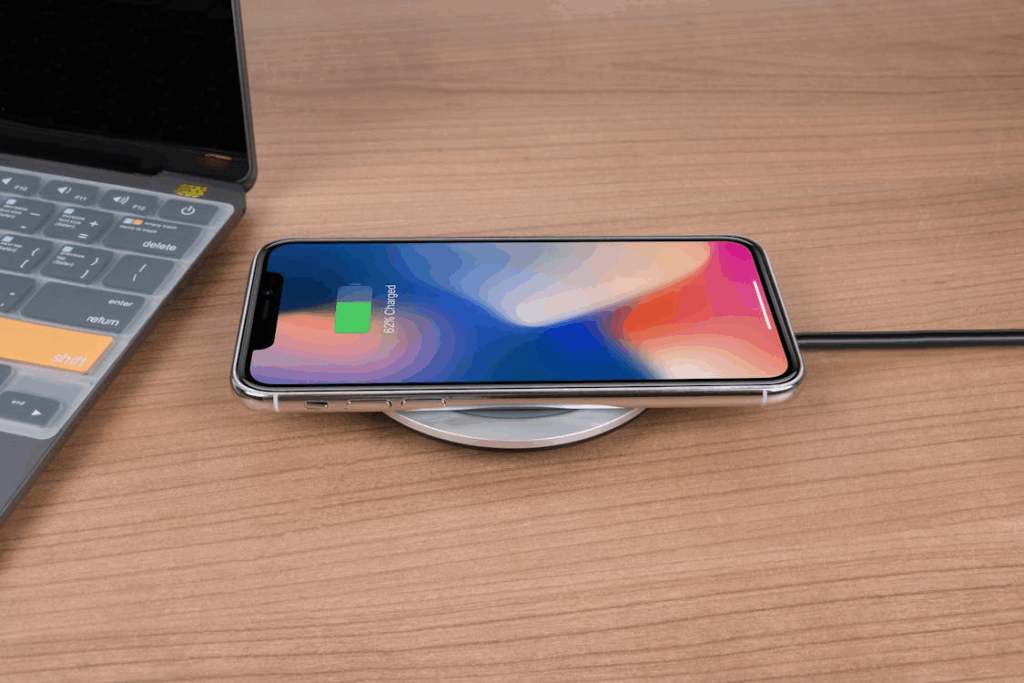
Several variables influence how quickly an iPhone battery replacement can be completed. Understanding these factors affecting iPhone battery replacement time helps repair businesses set realistic timelines and avoid overpromising turnaround speed.
iPhone Model Differences
Not all iPhones are built the same. Older models like the iPhone 6, 7, and 8 are generally easier to open and reassemble. Their internal layout is simpler, and the battery adhesive is less aggressive, which speeds up removal.
Newer models, from the iPhone X through the iPhone 14 series, are more complex. Face ID components, tighter internal spacing, and stronger adhesive increase handling time. Screen removal must be done carefully to avoid cable or sensor damage.
Key model-related factors
- Strength and placement of battery adhesive
- Internal cable routing and component density
- Additional precautions for Face ID and sensors
Battery Type Used
The type of replacement battery also affects timing. A genuine Apple battery or high-quality OEM replacement usually fits more precisely, reducing installation issues. Poorly manufactured batteries can cause alignment problems and require extra adjustments.
Consistency matters at scale. iPhone batteries with pre-installed adhesive save time by eliminating manual adhesive placement. This small detail can significantly reduce per-device handling time in busy repair environments. The following battery-related factors impact the replacement time:
- Fit accuracy and connector alignment
- Adhesive quality and placement
- Post-install testing consistency
Tools and Technician Experience
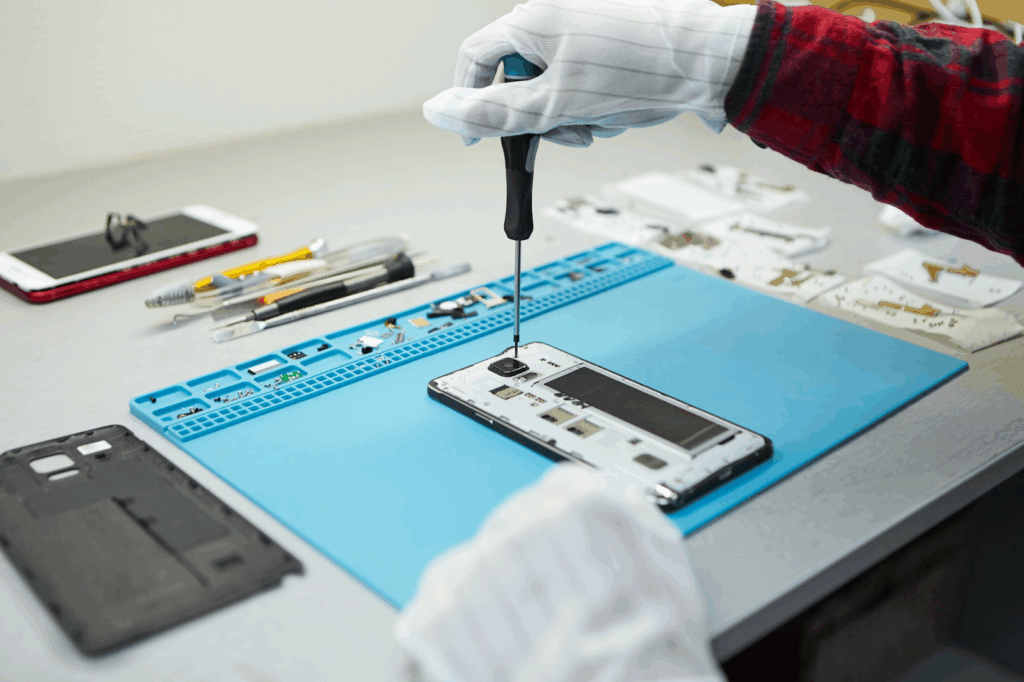
Professional tools make a measurable difference. Proper heat mats, suction tools, and torque-controlled drivers speed up disassembly and reduce errors. Basic toolkits often slow the process and increase the risk of mistakes.
Experience is just as important. Skilled technicians work confidently and spot issues early, avoiding unnecessary backtracking. Inexperienced handling often leads to rework, which extends total replacement time.
An experienced technician will ensure the following:
- Faster error detection and correction
- Lower risk of connector damage
- Smoother reassembly and testing
Additional Repairs Discovered During Replacement
Sometimes, battery replacement uncovers other issues. For instance, a swollen battery requires slower removal for safety reasons. Moreover, damaged connectors or flex cables can pause the repair entirely.
Screen removal problems also add time, especially if the adhesive tears unevenly or the display lifts at an angle. These unexpected findings turn a quick replacement into a longer repair.
Common delays include:
- Battery swelling or leakage
- Connector or cable damage
- Screen adhesion complications
For repair businesses, accounting for these variables is key to accurate time estimates and customer trust.
Is It Worth Replacing an iPhone Battery?
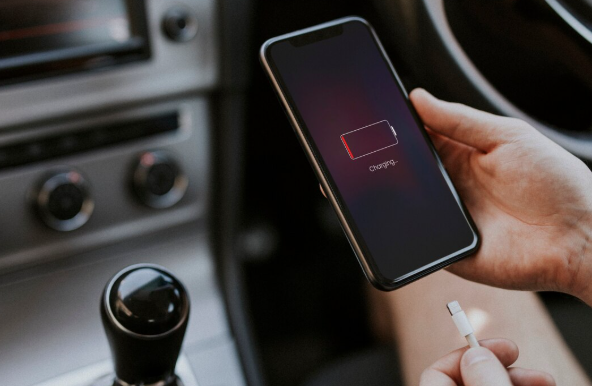
There is no one-size-fits-all approach. Whether it is worth replacing an iPhone battery depends on the device’s condition, battery health, and overall performance. For many users, a new battery can restore reliability and extend the phone’s usable life. For repair businesses, this decision affects customer trust, service recommendations, and long-term value.
Signs Battery Replacement Is Worth It
There are a ton of indicators that an iPhone battery needs replacement.
- Battery health: Battery health is the clearest indicator. When the maximum capacity drops below 80%, lithium-ion batteries struggle to deliver the necessary peak power. This often triggers performance management protections designed to prevent unexpected shutdowns.
- Sudden shutdowns: If an iPhone powers off during normal use, even with the battery still present, the battery may no longer support peak performance. In many cases, replacing the battery immediately stabilizes the device.
- Performance throttling: On the battery health screen, users may see messages indicating that performance management has been applied. After a battery replacement, these limits are removed, allowing the iPhone to return to full performance.
For many iPhone models, including the iPhone X, XR, XS, and Pro Max variants, a new battery delivers noticeable improvements in battery life and daily responsiveness.
When Battery Replacement Is NOT Worth It
Battery replacement is not always the right solution. If the device has logic board damage, power-related issues may persist even with a new battery. In such cases, replacement adds cost without solving the root problem.
Model age also matters. Very old devices, such as early-generation iPhone models, may not justify the expense if software support is limited or parts availability is declining. Performance gains are often modest compared to newer models.
Cost versus resale value is another deciding factor. If the combined cost of battery replacement and labor approaches the phone’s market value, upgrading may be the smarter choice. This is especially true when customers are considering a new device with longer battery life, updated features, and better long-term support.
Simply put, battery replacement doesn’t make sense in the following situations:
- Hardware damage beyond the battery
- Severely outdated iPhone models
- Poor cost-to-value ratio
For repair shops and refurbishment centers, clear evaluation ensures honest recommendations. Replacing the battery should add meaningful life to the device, not delay an inevitable upgrade.

Cost vs Time – What Repair Shops Should Tell Customers
If you manage a repair shop, always explain the cost and time together. Customers often focus on price, but turnaround time plays a major role in perceived value. Being clear upfront helps manage expectations and builds trust.
Managing expectations starts with honest timelines. While an iPhone battery replacement is fairly quick, factors such as model type, battery condition, and other issues can affect completion time. Explaining this early prevents frustration and last-minute objections at pickup.
How time impacts customer experience
Time efficiency should be positioned as a benefit, not a shortcut. Customers value knowing their phone will be ready the same day without compromising performance or battery health. Emphasize that professional battery tools, trained technicians, and quality replacement batteries reduce errors and unnecessary delays.
Importance of clear communication
Clear communication reduces repeat inquiries. When customers understand why a replacement takes 30 minutes instead of 10, they are less likely to call for updates. Providing a realistic window reinforces professionalism and keeps front-desk staff focused on repairs rather than status checks.
The bottom line? For B2B-focused repair operations, aligning cost with time efficiency improves customer satisfaction, protects margins, and supports smoother daily workflow.
How Professional Replacement Batteries Reduce Repair Time
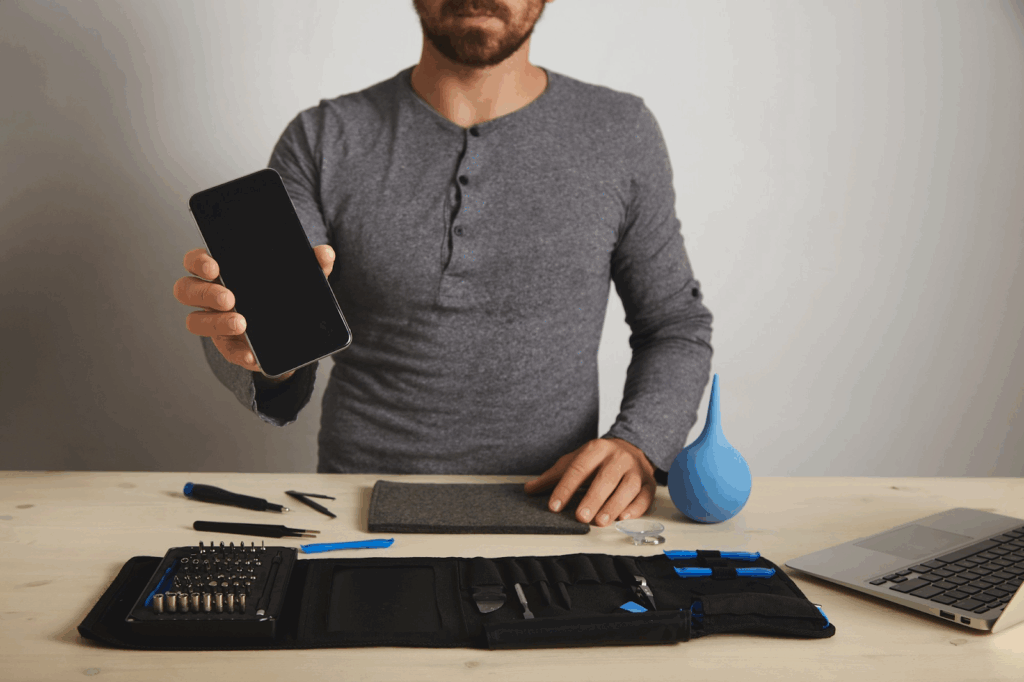
Using professional-grade replacement batteries can significantly streamline iPhone repairs. For repair shops, choosing the right battery affects both efficiency and customer satisfaction. High-quality iPhone batteries reduce unexpected issues and allow technicians to complete replacements faster and with fewer complications.
Consistent Adhesive
Professional batteries often come with pre-installed adhesive that matches the original Apple specifications. This eliminates the need for technicians to manually apply strips, saving valuable minutes during installation. Consistent adhesive also reduces the risk of uneven battery placement, which can affect performance management or trigger error messages after replacement.
Stable Cell Structure
High-quality batteries have uniform lithium-ion cells and reliable connections. This stability ensures predictable voltage delivery, which helps the iPhone maintain normal peak performance immediately after replacement. Technicians spend less time troubleshooting sudden shutdowns or abnormal readings, which can occur with low-quality or inconsistent batteries.
Lower Failure and Re-open Rates
Inferior batteries often lead to higher rework rates, including reseating, recalibration, or even replacement due to defects. Using professional batteries minimizes these interruptions, allowing repair shops to maintain smoother workflows and faster turnaround times.
Why Repair Shops Prefer High-Quality Batteries
For businesses, the choice isn’t just about cost. Reliable batteries save time, reduce repeat repairs, and protect the shop’s reputation. By investing in professional replacement batteries, repair centers can serve more customers efficiently, ensure full performance restoration, and maintain consistent quality across every iPhone battery replacement. Our advice? Choose a reputable mobile parts supplier like SQLCD.com.
FAQs About iPhone Battery Replacement Time
Can iPhone battery replacement be done in 15 minutes?
While some experienced technicians might complete a replacement in 15 minutes on older models like iPhone 6–8, this is rarely the norm. Most professional repairs take 20–45 minutes, factoring in careful screen removal, proper adhesive handling, and post-replacement testing.
Why do newer iPhones take longer?
Newer models, such as the iPhone X, XR, XS, and 14 series, are more complex internally. Tighter layouts, Face ID components, and stronger adhesive increase handling time. Extra care is needed to prevent connector damage, which can extend replacement times compared to older, simpler devices.
Does battery quality affect installation time?
Yes. High-quality or genuine Apple batteries fit precisely and often include pre-installed adhesive, reducing installation effort. Lower-quality or inconsistent batteries may require extra adjustments, increase error correction, and even lead to rework.
Is the data affected during battery replacement?
Battery replacement does not normally affect data. Technicians disconnect the battery safely while the phone is powered off, protecting internal storage and apps. However, it is always recommended to back up the device before replacement in case unexpected issues arise. This is especially true with old iPhone models.
How long before the phone can be used again?
After professional replacement, most iPhones are ready to use immediately. However, it’s advisable to allow a few minutes for diagnostic checks, battery calibration, and ensuring the device supports normal peak performance.
Conclusion – Time, Value, and Smart Battery Replacement Choices
Replacing an iPhone battery is generally quick and straightforward, with professional repairs averaging 20–45 minutes depending on the model, battery condition, and service method. Factors like iPhone model differences, battery type, adhesive strength, and technician experience all influence the total replacement time.
Using professional replacement batteries and proper tools reduces errors, lowers rework rates, and ensures the device maintains normal peak performance. For users, this means longer battery life and reliable daily use. For repair businesses, understanding these variables helps manage expectations, optimize workflow, and provide consistent, high-quality service that builds customer trust.