
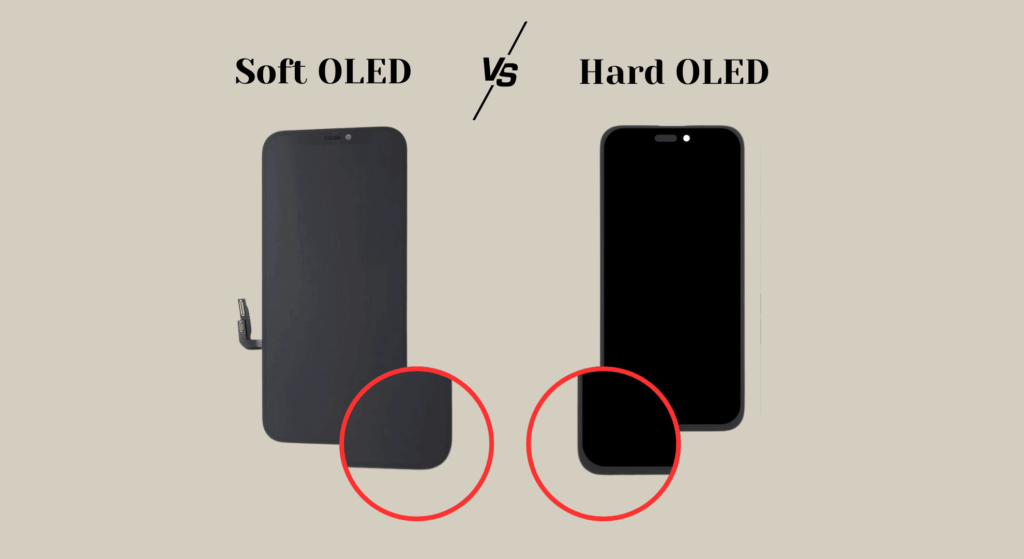
When it comes to iPhone screen replacement, one question comes up in almost every repair shop: hard OLED vs soft OLED, which is the better choice? On paper, both use OLED technology and deliver better quality than LCD screens, but in real-world use, the differences affect durability, brightness, price, customer satisfaction, and return rates.
For technicians, wholesalers, and parts buyers, choosing between a hard OLED and a soft OLED screen isn’t just about cost. It’s about fit, flexibility, long-term performance, and how well the display performs across models like the iPhone X and newer devices.
This guide breaks down the real difference between hard and soft OLED, helping repair professionals make the right choice for their business and customers.
What are Hard OLED and Soft OLED?
Before comparing hard OLED vs soft OLED, it’s important to understand how these OLED screens are built and why the underlying materials affect durability, price, and repair outcomes for an iPhone screen replacement.
Definition of Soft OLED
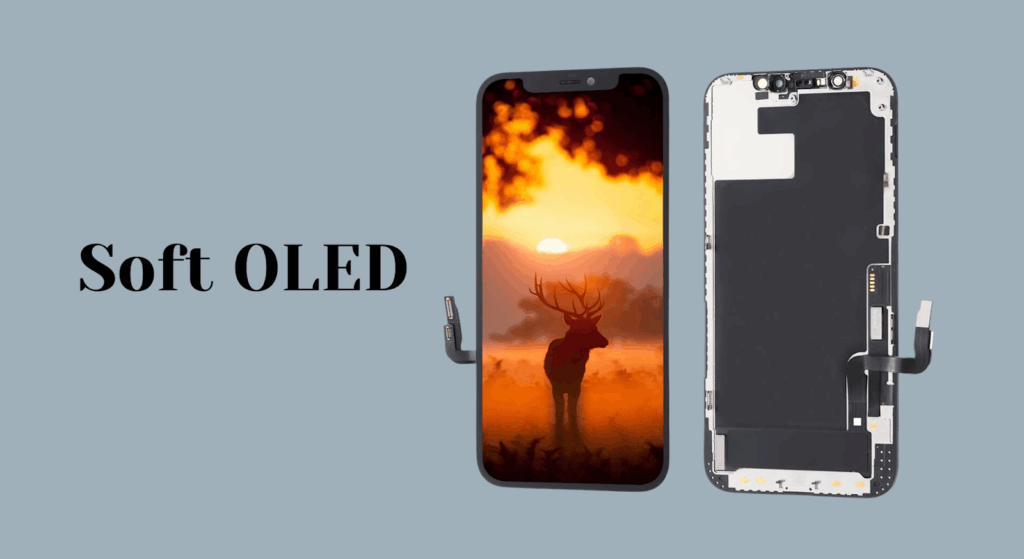
A soft OLED screen uses a flexible plastic substrate rather than a rigid glass one. This design is closer to the original Apple display used in the iPhone X and later models.
Because the panel can bend slightly, soft OLED supports curved edges, smaller display sizes, and better resistance during installation. For repair shops, this flexibility reduces the risk of cracking and improves long-term durability, touch accuracy, and overall display quality.
Definition of Hard OLED
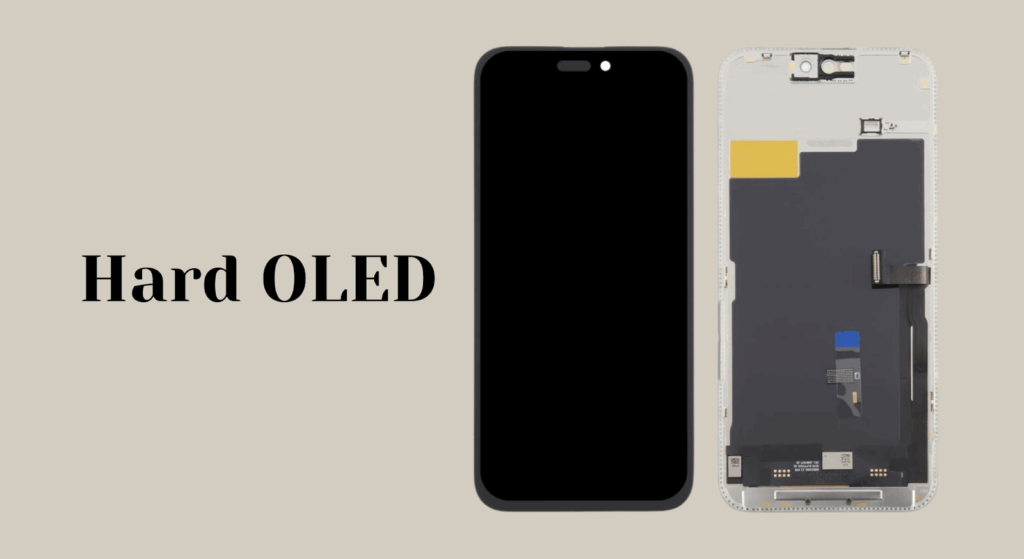
A hard OLED uses a rigid glass substrate instead of a flexible one. It still relies on OLED technology and organic light-emitting diode (OLED) pixels, so color and contrast remain strong.
However, hard OLED is thicker, less flexible, and more prone to damage under pressure. The main advantage is price; hard OLED displays are cheaper to manufacture, making them a popular option for budget repairs and cost-sensitive customers.
Difference Between Hard OLED and Soft OLED (Side-by-Side Comparison)
For repair shops and wholesalers, the difference between hard OLED and soft OLED comes down to materials, flexibility, and long-term reliability. Both use OLED (organic light-emitting diode) technology, but the choice of substrate affects how the screen behaves during installation and daily use.
Soft OLED panels use a flexible plastic substrate, making them closer to an OEM screen in feel and fit, while hard OLED panels use rigid glass, which lowers price but increases the risk of cracking during repair. Below is a clear, technician-friendly comparison to help you choose based on repair volume, customer expectations, and warranty risk:
| Feature | Soft OLED | Hard OLED |
| Substrate | Flexible plastic substrate used in original Apple displays, allowing the panel to bend slightly without damage | Rigid glass substrate that does not flex, making it more prone to cracking during installation or drops |
| Thickness | Thinner overall profile, closer to OEM screen thickness and frame fit | Slightly thicker panel, which can create minor fit or bezel alignment issues on some iPhone models |
| Durability | Higher durability in daily use due to flexibility and impact absorption | Moderate durability; glass structure makes it more fragile under pressure or impact |
| Color Accuracy | Better color reproduction, deeper blacks, and a closer match to the original iPhone screen quality | Good color quality, but slightly less accurate compared to soft OLED under side angles |
| Flexibility | High flexibility, suitable for curved-edge iPhone screens like iPhone X, XS, and newer models | Low flexibility; does not conform well to curved frames |
| Repair Difficulty | Lower installation risk for technicians, fewer breakages during fitting | Higher installation risk; the panel can crack if uneven pressure is applied |
| Wholesale Cost | Higher cost due to flexible materials and more complex manufacturing | Lower cost, making it attractive for budget repairs and high-volume shops |
| Customer Satisfaction | Higher satisfaction due to better display quality, touch response, and longevity | Medium satisfaction; acceptable for budget customers, but higher return risk |
Quick takeaway: Soft OLED offers better fit, durability, and satisfaction for premium iPhone screen repairs, while hard OLED is a cheaper option suited for budget repairs where cost matters more than flexibility.
Hard OLED vs Soft OLED for iPhone Screen Replacement
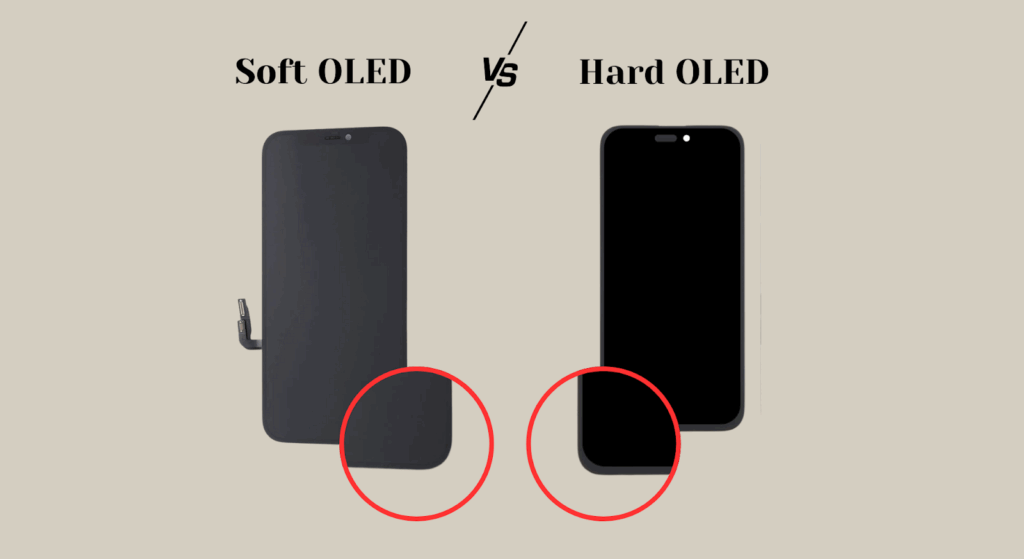
When choosing between hard OLED vs soft OLED for iPhone screen replacement, repair shops must balance price, durability, installation risk, and customer expectations. While both OLED screens use organic light-emitting diode technology, their real-world performance during repair and daily use differs significantly.
Compatibility with iPhone Models
Both soft OLED and hard OLED screen options are widely used for iPhone X through iPhone 12, where aftermarket demand remains strong. However, models with curved edges benefit more from a flexible screen, making soft OLED a closer fit to the original Apple display.
In contrast, hard OLED, built on rigid glass, may cause slight frame gaps on curved models if not seated perfectly.
Installation Differences for Technicians
From a repair standpoint, soft and hard OLEDs behave very differently during installation. Soft OLED screens are thinner, more flexible, and easier to handle, resulting in fewer breakages during fitting.
Hard OLED screens, while cheaper, require careful handling. Their rigid glass structure makes them more prone to cracking under pressure, increasing installation risk for less experienced technicians.
Customer Return Rates (Industry Trend)
Industry feedback shows hard OLED repairs generate more returns due to brightness inconsistency, touch issues, or fit complaints. Soft OLED, on the other hand, delivers more stable brightness, better touch response, and lower return rates, making it the preferred option for long-term customer satisfaction.
Hard OLED vs Soft OLED — Which Is Better?
Choosing between hard OLED vs soft OLED depends on repair priorities, customer expectations, and business margins. There is no single “best” option; the right choice depends on how the screen will be used, sold, and supported after installation.
For Premium Repairs → Soft OLED
For high-end repairs, soft OLED screens are the closest match to the original Apple display. They use a flexible plastic substrate, which allows a better curved-edge fit on models like iPhone X, XS, and iPhone 11.
Soft OLED delivers better brightness, color accuracy, touch response, and long-term durability, making it ideal for customers who expect near-OEM quality and are willing to pay a higher price.
For Budget Repairs → Hard OLED
Hard OLED screens are a practical choice when cost is the main factor. They use a rigid glass substrate, which makes them cheaper to manufacture and easier to price competitively. Repair shops often choose hard OLED for customers who want the cheapest repair, refurbished phone resale, or high-volume jobs where profit margin matters more than perfect flexibility.
For B2B Wholesalers → Stock Both
For wholesalers and distributors, the smartest strategy is to offer both. Hard OLED supports high-volume, price-sensitive markets, while soft OLED serves premium repairs with higher margins. Demand varies by region, device model, and customer type, so stocking both options allows B2B sellers to cover the full market without limiting sales opportunities.
Price Comparison: Soft OLED vs Hard OLED
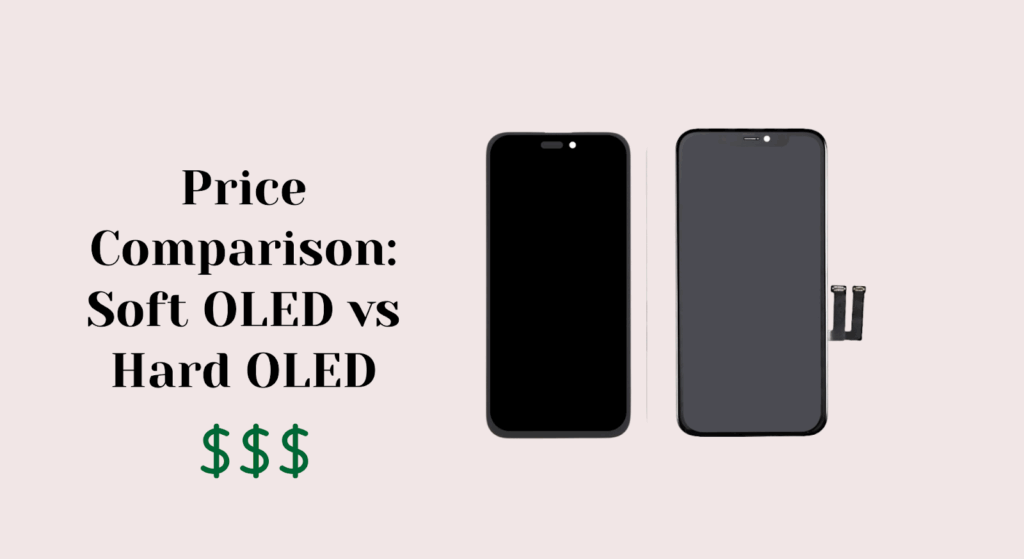
When sourcing OLEDs for iPhone screen replacements, one of the biggest decision points for repair shops and parts wholesalers is price vs performance. The cost per unit you pay affects your retail repair price, profit margin, and overall inventory value.
Typical Wholesale Price Ranges (as of 2025)
Current wholesale price examples from major parts suppliers and aftermarket listings show a clear pattern: soft OLED screens cost more than hard OLED screens, reflecting their construction differences and display performance.
| iPhone Model | Hard OLED Screen (Wholesale) | Soft OLED Screen (Wholesale) |
| iPhone 12/12 Pro | ~$29.59 | ~$39.99 |
| iPhone 13/13 Pro | ~$32.59–$43.99 | ~$41.99–$55.99 |
| iPhone 14/14 Plus | ~$33.99–$47.99 | ~$42.99–$56.99 |
| iPhone 14 Pro | ~$79.99 | ~$92.99 |
| iPhone 14 Pro Max | ~$112.99 | ~$123.99 |
| (All prices approximate and based on common wholesale offerings) | ||
This shows a consistent trend. Soft OLED screens are approximately 10–15% more expensive than equivalent hard OLED screens at the wholesale level, largely due to the flexible plastic substrate and closer resemblance to OEM screen quality.
What does This Mean for Repair Shop Margins?
For repair shops, the choice between soft OLED and hard OLED directly affects pricing strategy, return rates, and overall profit. Understanding how each screen type performs in real repair scenarios helps shops balance quality with margin expectations.
Soft OLED Screens (Higher-Quality)
Soft OLED screens offer visual quality and touch performance closest to the original iPhone display. They offer better brightness, thinner construction, and superior flexibility, which typically lead to higher customer satisfaction and fewer complaints after repair.
The trade-off is a higher wholesale cost, which can slightly reduce margins if shops keep retail prices competitive. For example, purchasing a soft OLED screen for an iPhone 14 Pro Max at around $123.99 and charging $200–$250 for the repair typically delivers a gross margin of roughly 38–48%, depending on labor and overhead.
Hard OLED Screens (Cost-Efficient)
Hard OLED screens, on the other hand, appeal to shops focused on cost efficiency and volume repairs. Their lower purchase price improves profit per job while still offering OLED-level image quality compared to LCD screens.
Although hard OLED panels are slightly thicker and less flexible, many budget-focused customers accept this trade-off. A hard OLED screen priced near $112.99 can often be sold at a similar repair rate, allowing shops to gain a few extra margin points when customers prioritize lower cost over a premium display feel.
Value Proposition for Bulk Buyers (B2B)
For parts wholesalers and repair shops with high order volumes, the price difference adds up quickly:
- Bulk discounts reduce per-unit cost further, especially for larger orders (50–200+ units)
- Soft OLED inventory allows premium pricing tiers, appealing to customers willing to pay more for quality
- Hard OLED inventory drives sales in cost-sensitive segments and can be stocked in higher quantities
A balanced inventory, stocking both soft and hard OLED screen options, lets you segment your pricing strategy, offer upsells (e.g., “premium OLED option”), and meet diverse customer priorities without jeopardizing margins.
Durability, Flexibility, and Touch Performance
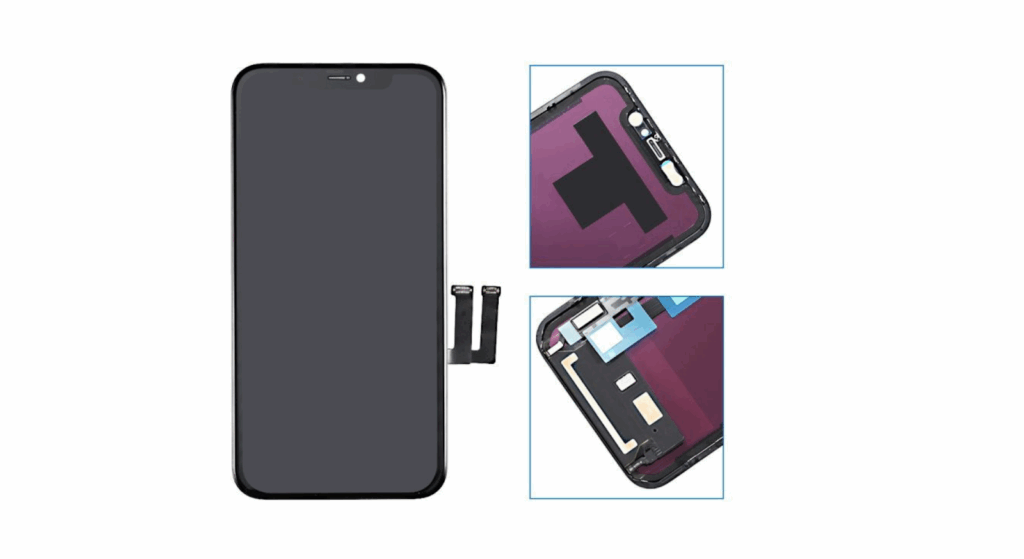
Beyond price and installation, long-term performance matters for both repair shops and customers. Durability, flexibility, and touch response directly affect return rates, warranty claims, and overall customer satisfaction.
Drop Resistance
Soft OLED screens use a flexible substrate that allows the display to absorb impact, making them more resistant to drops. Hard OLED screens rely on rigid glass, which makes them more prone to cracking under similar stress.
Touch Sensitivity
Soft OLED offers more accurate and consistent touch response, closer to the original iPhone screen experience. Hard OLED screens can occasionally show reduced sensitivity or uneven touch performance.
Lifespan
Soft OLED generally delivers a longer usable life, which is important for customers expecting stable performance over time. This reliability helps repair shops reduce callbacks and repeat complaints.
How SQLCD Tests OLED Screens (Quality Control Process)?
To reduce return rates and ensure consistent performance, SQLCD follows a structured quality control process designed specifically for B2B repair shops and wholesalers.
- IC Function & Power Test
Each OLED screen is tested for IC stability, power draw, and signal response to confirm proper communication with the iPhone logic board.
- Brightness & Display Uniformity Check
Screens are inspected for brightness consistency, dead pixels, color shift, True Tone functionality, and light bleed to ensure a clean OLED output across the full display.
- Frame Fit & Alignment Test
Every screen is test-fitted to verify correct frame alignment, thickness tolerance, and edge fit, reducing installation issues for technicians.
- Touch & 3D Touch Verification
Touch sensitivity, gesture response, and multi-touch accuracy are tested to prevent ghost touch or lag complaints.
- Aging & Final Inspection
Screens undergo a 2–to 4-hour aging test under load, followed by a final visual inspection before being securely packaged and shipped.
Why Repair Shops & Wholesalers Choose SQLCD?
Repair shops and B2B buyers choose SQLCD because reliability matters more than price alone in the OLED screen market. Consistent supply and strict quality control help reduce delays, returns, and warranty issues.
- Stable supply chain with consistent stock availability
- OEM-grade hard OLED and soft OLED screens for all major iPhone models
- Supports both premium repairs and budget screen replacement options
- Competitive bulk pricing to protect margins at scale
- Customized packaging for wholesalers and distributors
- Professional technical support for repair technicians
- Lower return rate compared to market averages due to strict QC testing
This combination allows repair businesses to scale confidently while maintaining quality and customer trust. Contact SQLCD for bulk orders and to get a quote.
Frequently Asked Questions
Does soft OLED break easily?
Soft OLED is more flexible and generally more resistant to drops than hard OLED, making it less prone to cracking during daily use.
Can hard OLED damage the frame?
Hard OLED uses a rigid glass substrate so improper installation can increase the risk of frame gaps or stress damage on some iPhone models.
Why is there a price difference between hard and soft OLED?
Soft OLED costs more because it uses a flexible plastic substrate and more advanced OLED technology, closer to the original Apple screens.
Which option has better brightness?
Soft OLED typically delivers better brightness and color accuracy, while hard OLED still offers solid OLED quality at a lower price.
What is the best choice for refurbished iPhones?
Hard OLED works well for budget refurbishments, while soft OLED is preferred for higher-grade or premium refurbished devices.