
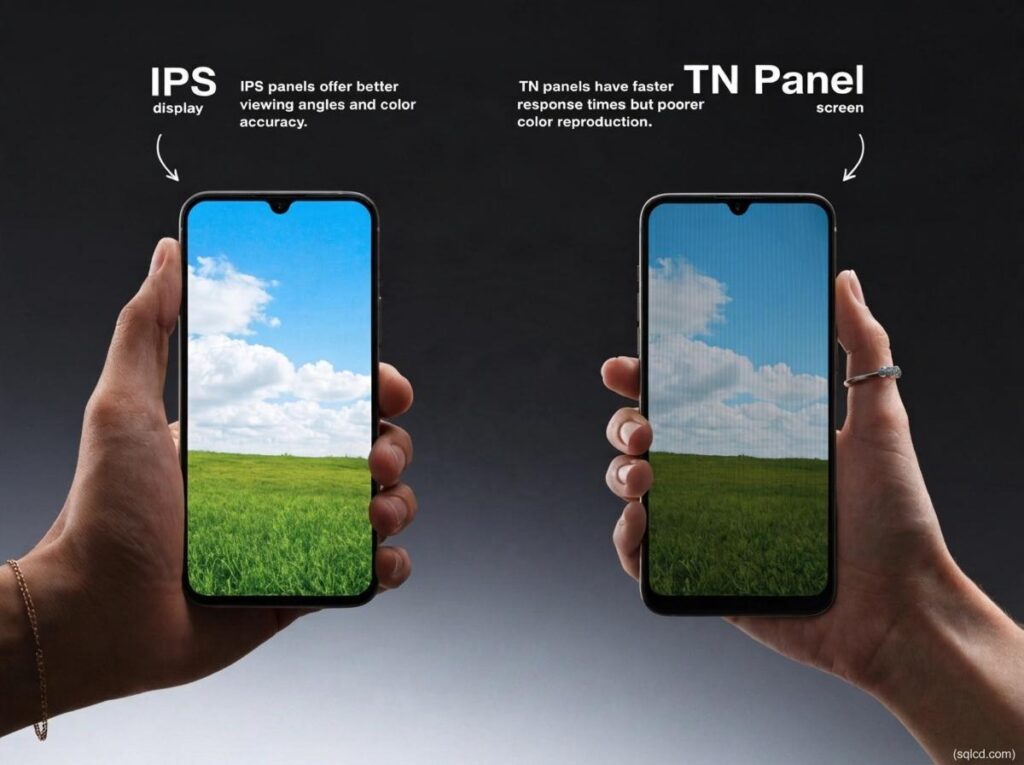
You are choosing between two LCD panel technologies that solve for opposite things. IPS keeps your colors consistent from every viewing angle. Meanwhile, TN gives you faster pixel switching at a lower price per unit.
Most consumers in 2026 will find IPS to be better than TN panels. IPS panels have dominated the market in smartphones, shared monitors, tablets, and screen replacement units owing to their better angle of view than faster response times.
TN still has a place. Competitive gaming monitors, fixed-view industrial controls, and cost-sensitive readouts are all legitimate TN applications. The panel is not extinct; it just had its market refined.
| IPS Panel | TN Panel | |
| Viewing Angles | Wide, stable from all sides (178 degrees typical) | Narrow, color shifts off-axis (160 degrees typical) |
| Response Time | Fast on modern panels (5-8 ms typical) | Fastest LCD option (1-3 ms typical) |
| Best For | Phones, creative work, shared screens | Esports monitors, fixed-view industrial displays |
| Unit Cost | Higher | Lower |
What Is IPS Display Technology?
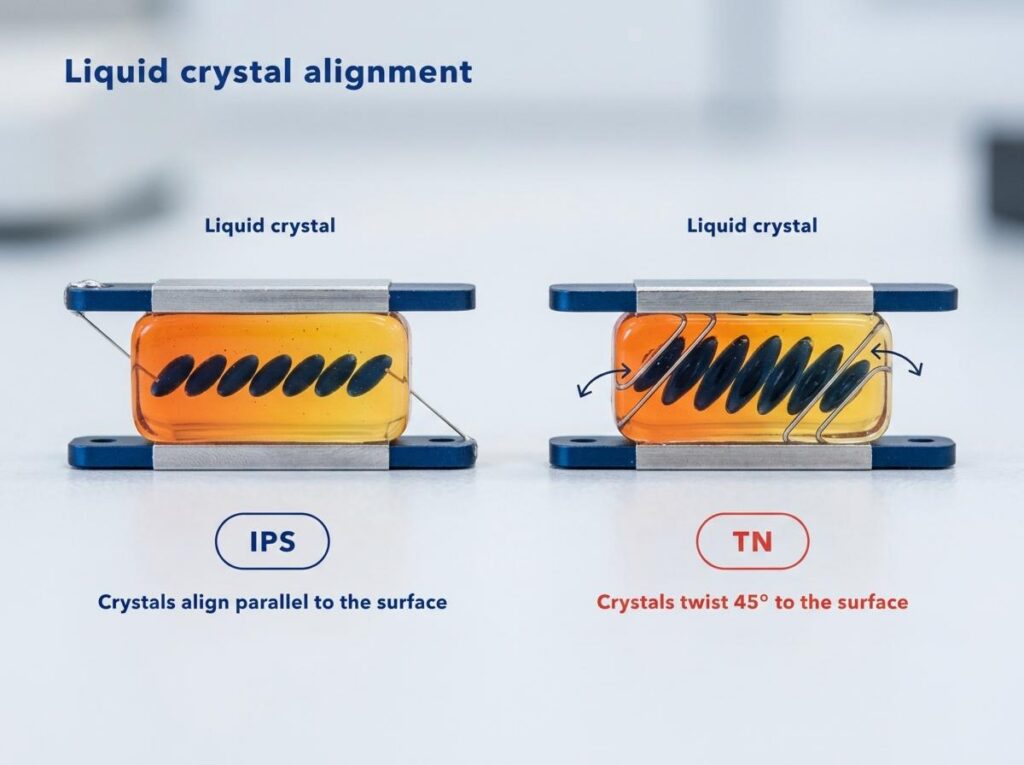
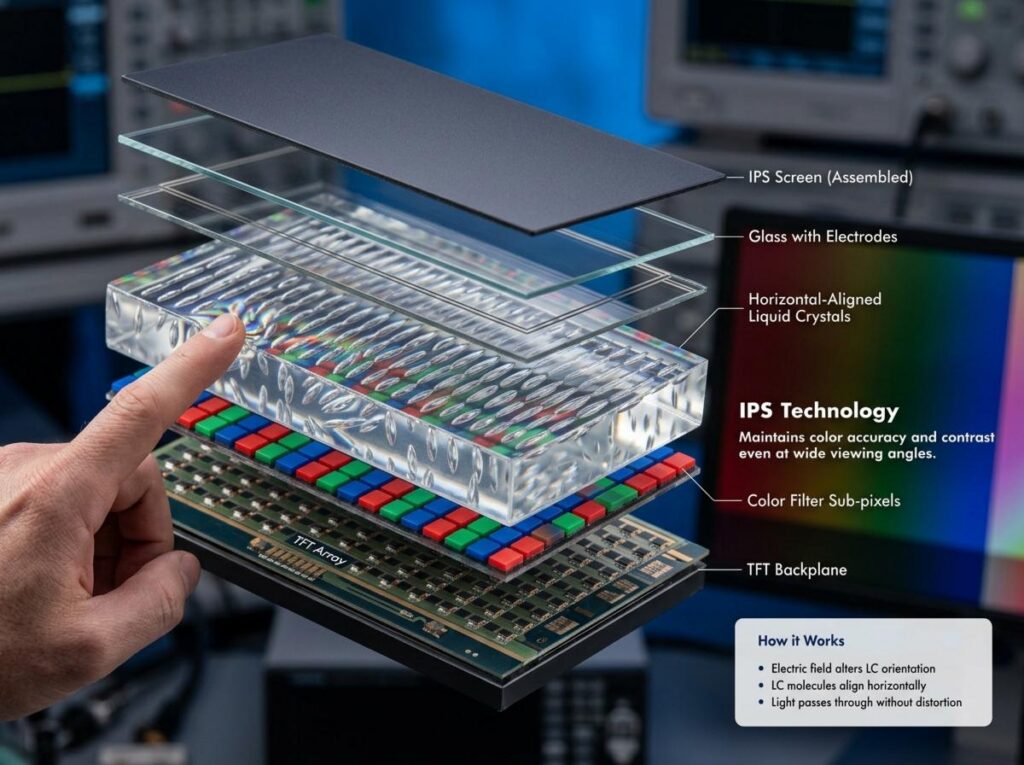
IPS stands for In-Plane Switching. When you apply voltage, the liquid crystals rotate parallel to the glass surface instead of tilting upright. Merck, the company that manufactures the liquid crystal mixtures used in these panels, describes IPS crystals as arranged horizontally to the glass plates in its technology documentation.
That horizontal rotation is the key. Because the crystals stay in-plane, light leaves the LCD panel at a consistent angle regardless of where you are sitting. Side, above, below. Colors hold.
How IPS Panels Are Built
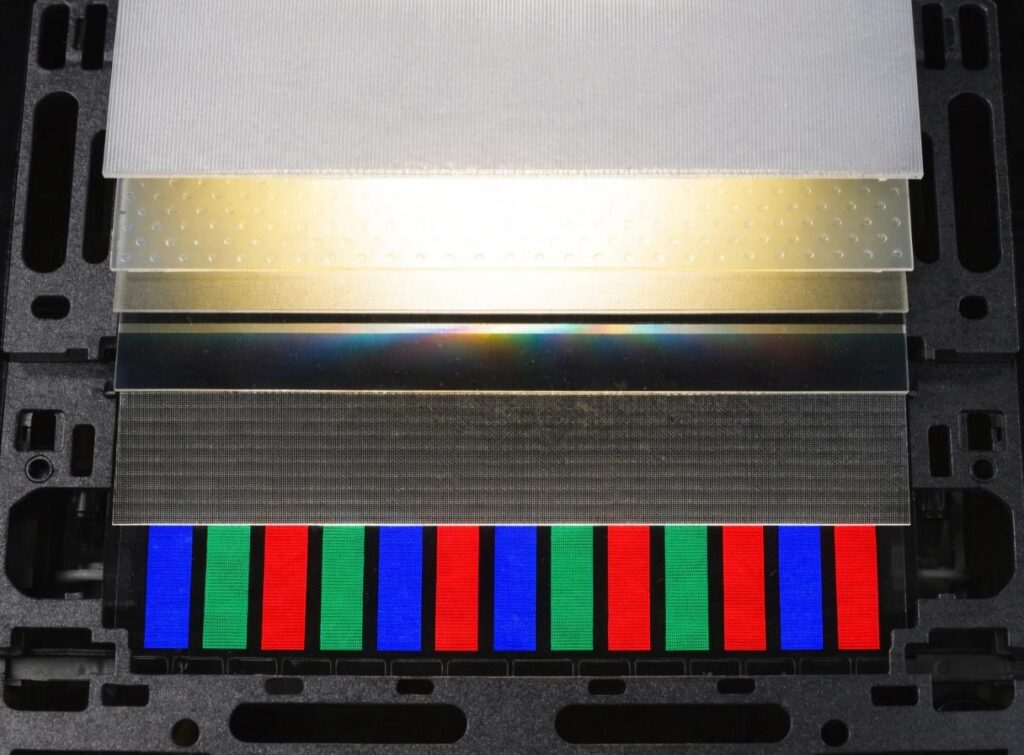
Like all LCDs, an IPS panel does not generate its own light. You need an LED backlight behind the stack, polarizers on each side, liquid crystals in between, thin-film transistors to switch each subpixel, and color filters to separate red, green, and blue. The difference between IPS and other LCD types is only in the crystal alignment layer.
We cover the full IPS structure in our guide to what an IPS display is.
IPS Strengths and Trade-Offs
| Strength | Detail |
| Wide viewing angles | Typically 178 degrees horizontal and vertical, with minimal color shift |
| Color accuracy | Better sRGB coverage and consistency than TN, suitable for photo and video work |
| Display brightness uniformity | Even brightness across the panel surface in most units |
| Smartphone dominance | Default LCD mode in phones, tablets, and mid-range monitors since 2000 |
Trade-offs exist. IPS costs more to manufacture than a comparable TN panel. Some units show faint corner glow in dark rooms. Certain designs draw marginally more power. Commercial IPS production started in 1996, reached phones around 2000, and has been the standard LCD mode for handheld devices since.
What Is TN Display Technology?
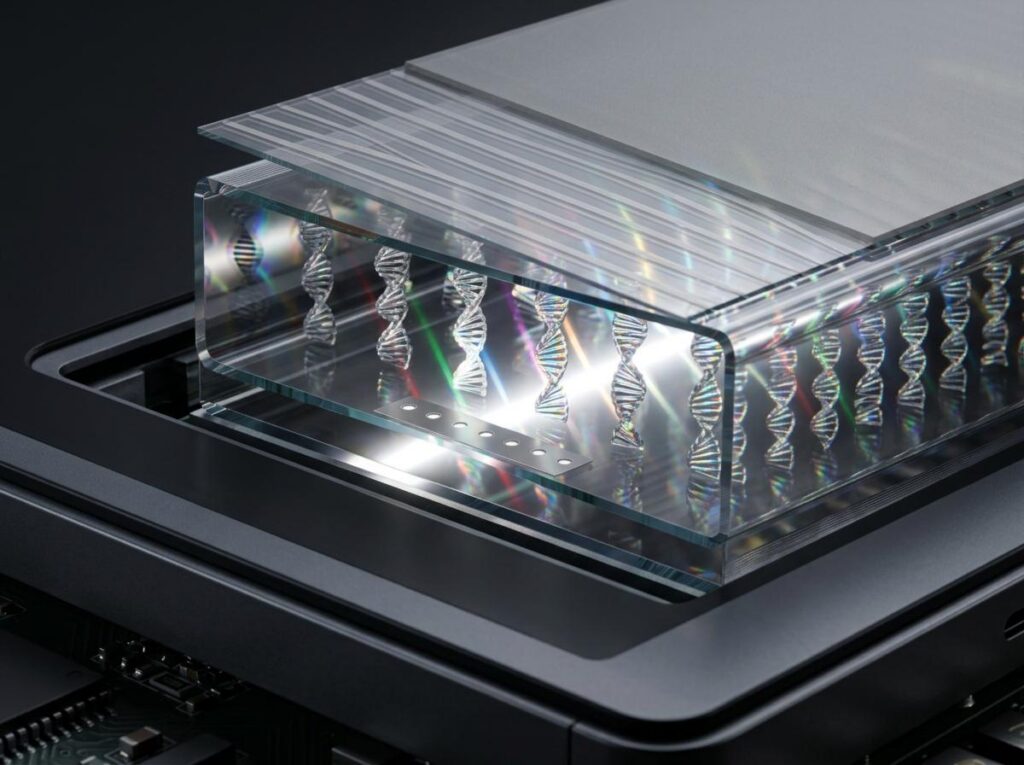
TN stands for Twisted Nematic. Between two glass panels coated with transparent electrodes, a thin liquid crystal layer sits twisted 90 degrees when no voltage is applied. Merck’s technical overview puts the thickness of this layer at only four to eight micrometers. The cell dates back to 1971, developed by James Fergason, Martin Schadt, and Wolfgang Helfrich.
When you apply voltage, the crystals untwist fast. That speed is TN’s core advantage.
How TN Panels Differ in Structure
The shared LCD structure is identical: backlight, polarizers, crystals, transistors, color filters. What changes is the crystal alignment. TN crystals twist through the full depth of the cell rather than rotating in-plane. That twist creates a geometry problem. Light exits at different angles depending on your viewing position. Colors wash out or invert, especially in the vertical direction. That is why a TN laptop screen looks wrong when you adjust the lid angle by fifteen degrees.
TN Strengths and Limitations
TN is simpler to manufacture. Fewer process steps, higher yields at comparable sizes. The cost gap has shrunk over two decades but has not disappeared. For applications where one user sits directly in front of the LCD screen at a fixed position, TN delivers acceptable image quality at a lower price per unit than any other panel mode.
The limitation is always angles. Move your head, and the image degrades. For any device that gets viewed from multiple positions, TN is not the right fit.
IPS vs TN Panel: Key Differences
You should treat this table as a reference starting point. Individual modules vary. A well-built TN can outperform a low-grade IPS on display brightness or uniformity, so test your actual samples before committing to a batch.
| Feature | IPS | TN |
| Viewing angles | Wide and stable (178°) | Limited, worst vertically (160°) |
| Color accuracy | High, consistent off-axis | Moderate, shifts off-axis |
| Contrast ratio | Good (typically 1000:1) | Lower |
| Response time | Fast on modern panels (5-8 ms) | Fastest (1-3 ms) |
| Refresh rate support | Up to 360 Hz on gaming models | Up to 360 Hz+ |
| Display brightness | Even across panel | May darken toward edges |
| Cost per unit | Higher | Lower |
| Smartphone LCD use | Standard | Rare in modern phones |
| Industrial displays | Common | Common |
| Best fit | Phones, shared screens, creative work | Esports, fixed-view industrial panels |
1. Angles of View and Color Reproduction
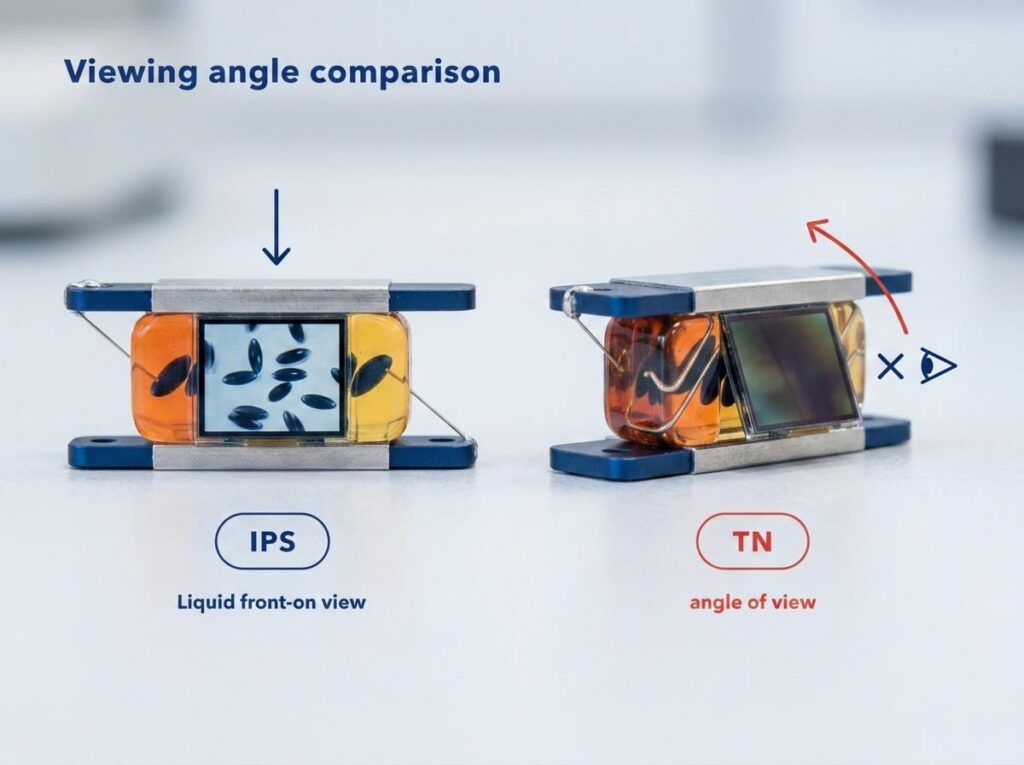
That is where IPS wins hands down. You have consistent color and contrast even as you change your angle of view. It is relevant for smartphones, tablet computers, kiosks, POS devices, and displays that would ever be looked at by a second person. The chapter on in-plane switching from Springer handbook cites in-plane crystal alignment as the reason behind the large angles of view.
TN prefers only one viewer looking from right in front. Perfect for a stationary control console or bench top instrument. But it is unrealistic for the display of your phone in your hand.
Color critical work gets better with IPS. It does not guarantee color accuracy by itself. Calibration, backlight spectrum, color filter quality, and panel binning all still factor in.
2. Image Uniformity and Black Levels
IPS tends to keep brightness more even across the panel. Some units show faint corner glow in dark rooms, sometimes called IPS glow. Backlight bleeding can occur both in IPS and TN panels as a result of light leakage through the edges caused by manufacturing pressure or improper sealing.
Sometimes TN displays are darker at the top than at the bottom. The viewing angle of the display is different for every part of the screen.
3. Response Time and Refresh Rate
Two specs. Often confused. Refresh rate tells you how many times per second the display draws a new frame. Response time tells you how quickly a single pixel finishes transitioning from one color to another.
TN wins on response time. The untwisting motion settles faster than IPS’s in-plane rotation, so you see less trailing behind fast-moving objects. TFTCentral’s work on response time testing documents how much the measurement approach itself changes the result, which makes comparing published specs across LCD manufacturers difficult.
Modern IPS panels have closed most of the practical gap for office work, video, browsing, and phone use. Competitive gaming at 240 Hz or above is where TN’s speed advantage still shows.
| Spec | What It Measures | Who Cares Most |
| Refresh Rate (Hz) | How often the screen redraws per second | Everyone (higher = smoother) |
| GtG Response (ms) | Pixel transition speed, gray to gray | Gamers, fast-motion video viewers |
| MPRT (ms) | Perceived motion blur including eye tracking | Competitive esports players |
4. Cost, Power, and Lifespan
TN costs less per unit to manufacture. But for a business buying in volume, a lower unit price is not the same as a lower total cost.
We have seen buyers save a few cents per LCD screen and lose it three times over in warranty claims within one quarter. Returns, repeat labor, batches that drift from the approved sample. Unit price is one line in the calculation, not the whole spreadsheet.
On power, TN may draw slightly less in a directly comparable design. But screen size, display brightness setting, resolution, refresh rate, backlight efficiency, and driver design move the number more than panel mode does.
Research published in Nature Scientific Reports has examined low-frequency driving of IPS cells as a route to lower power consumption, which suggests the picture is more complicated than a blanket IPS-uses-more rule.
Lifespan is roughly a wash. Backlight aging, heat, operating hours, and build quality determine service life. Crystal alignment is not typically the limiting factor for either type.
IPS vs TN for Smartphones
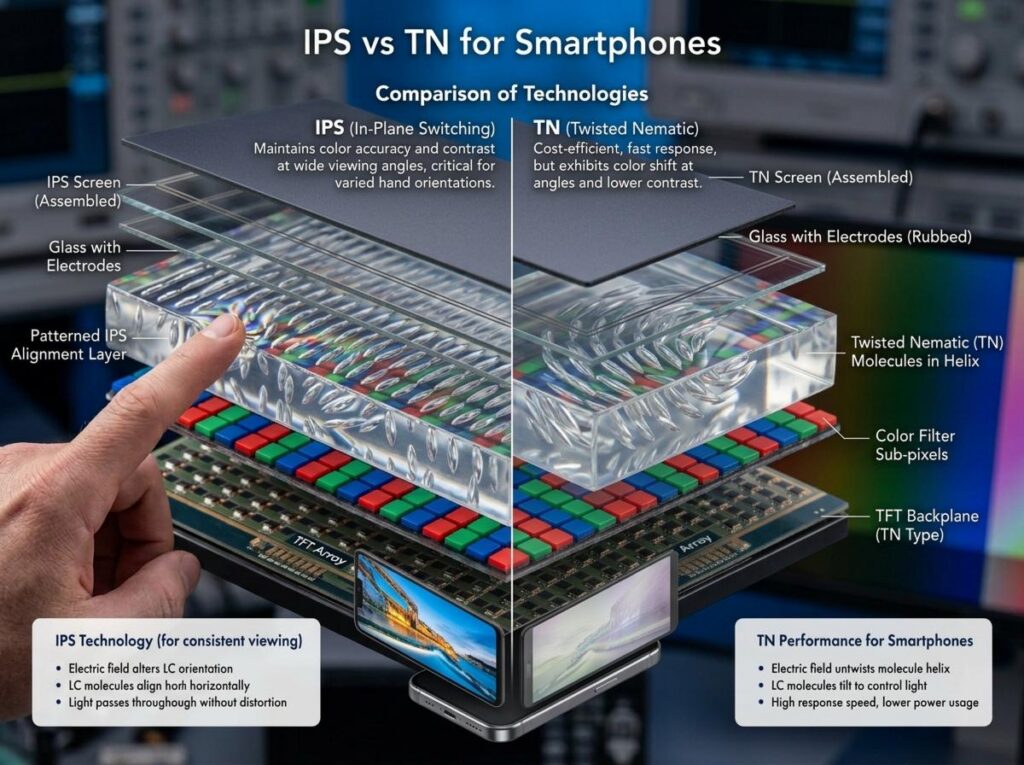
You tilt your phone, rotate it, hand it across a table, use it one-handed at an angle. Every one of those scenarios is a case TN handles poorly.
TN’s speed advantage adds almost nothing on a smartphone LCD. Users notice washed-out color or poor outdoor visibility long before they notice a few extra milliseconds of pixel response.
OLED captured the premium tier. IPS became the working LCD option across mid-range devices, older flagships, and the bulk of the replacement screen market. If you source for Apple devices, our guide to iPhone display types for repair shops breaks the model ranges down by panel technology.
Touch, Brightness, and Power on Phones
You cannot judge touch performance from an IPS label. Touch runs through a completely separate layer: the digitizer, the touch controller, and the flex cable.
Weak bonding, a cheap controller IC, or a marginal flex can give you dead zones, ghost touches, input lag, and poor edge sensitivity on a panel that is technically IPS. We see it regularly in incoming samples from different display suppliers.
Outdoor visibility depends on backlight output, polarizer quality, anti-reflective treatment, and the bonding method between layers. Two IPS replacement screens built for the same phone model can behave completely differently.
IPS vs TN for Phone Repair Shops
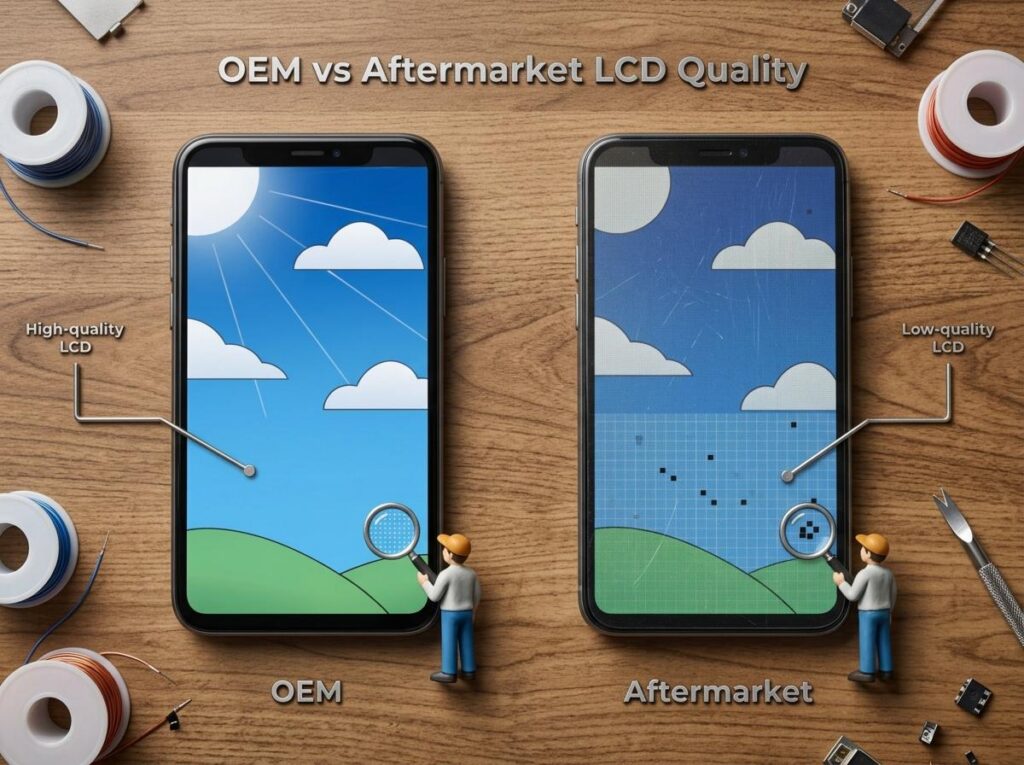
1. OEM vs Aftermarket LCD Quality
OEM display panels follow the phone manufacturer’s original specifications. Aftermarket LCD replacements come from third-party companies and range from near-OEM quality to noticeably poor. The difference shows in display brightness, color temperature, touch responsiveness, and durability under drops.
You will find that quality varies widely across part grades, even when both screens carry an IPS label.
For repair shops, the practical question is not IPS vs TN. Almost every replacement smartphone LCD on the market is IPS. The question is which grade of IPS and from which display supplier.
2. What to Inspect Before a Bulk Order
Before placing any bulk orders, ensure that all the specifications like the model, connector configuration, frame type, resolution, brightness levels, touchscreen capabilities, and sensors are correct. Determine whether the touchscreen layer and the display layer are in-cell or bonded separately because this will affect the repair process.
Push back on grade labels. Terms like “original quality” and “AAA” have no shared definition across LCD manufacturers. Ask for measurable specs: nit rating, color temperature target, touch report rate.
Then the test. A workable incoming-inspection routine takes about five minutes per unit:
- Place side by side next to an already tested screen at the same brightness
- Show white and mid-gray full-screen images for backlight bleeding and evenness problems
- Trace a single line on all four sides to find touch dead zones
- Multi-touch with three fingers, then check for ghost input
- Place a call and cover the proximity sensor
3. Batch Consistency and Supplier Reliability
Batch consistency is the part most buyers underestimate. One good sample means little if the third production run drifts. Get lead times, warranty terms, and packaging commitments in writing before the first shipment goes out.
Our guide on how to fix an LCD screen on a phone covers why sourcing from a stable display supplier matters as much as the screen itself for long-term repair business profitability.
Which Display Technology Is Better?
The answer depends on the application. Neither panel is universally better.
| Application | Recommended Panel | Why |
| Smartphones | IPS | Constant viewing-angle changes in normal handheld use |
| Creative monitors (photo, video, design) | IPS | Stable color accuracy from multiple positions |
| Shared office monitors | IPS | Multiple viewers need consistent image |
| Competitive gaming (240 Hz+) | TN | Fastest pixel transitions reduce ghosting |
| Fixed-view industrial controls | TN | Single operator, low cost, simple readout |
| Replacement screens (phone repair) | IPS | Matches OEM spec, lower return risk |
| Kiosks and POS terminals | IPS | Public-facing, viewed from varied positions |
| Budget measurement devices | TN | Simple readout, fixed position, cost priority |
Selection Checklist
Match your panel to the application. Before ordering, work through these:
- Exact device model and replacement part number
- Normal viewing position and screen orientation
- How much color accuracy the end user will actually notice
- Motion and response-time requirements, if any
- Touch design, sensor support, and bonding method
- Ambient light conditions and minimum display brightness needed
- Power budget and backlight efficiency
- Budget, lead times, and supplier warranty terms
IPS vs OLED, VA, TFT, AMOLED, and LTPS
IPS, TN, and VA all describe how liquid crystals move inside an LCD panel. They are sub-categories of the same base technology. OLED is fundamentally different. Each OLED pixel generates its own light.And, no backlight is involved. AMOLED adds an active-matrix transistor control layer to that self-emitting OLED structure.
VA panels usually produce deeper blacks and stronger contrast than IPS. IPS usually delivers wider viewing angles and steadier color than VA.
OLED gives you true blacks, very fast response, and thinner assemblies. It also costs more to replace and can develop image retention over time. Our comparison of TFT vs OLED vs LCD covers that trade-off in detail.
| Term | What It Actually Describes | Relationship to IPS |
| TFT | Thin-film transistor (pixel switching method) | IPS is a type of TFT LCD |
| TN | Twisted nematic crystal alignment | Alternative crystal mode to IPS |
| VA | Vertical alignment crystal mode | Alternative to IPS, deeper blacks |
| OLED | Organic light-emitting diode (self-emitting) | Different technology, no backlight |
| AMOLED | Active-matrix OLED | OLED with TFT control layer |
| LTPS | Low-temperature polysilicon backplane | Can sit under IPS or OLED |
Why IPS LCD Still Matters
IPS-LCD still holds its place because of the following reasons: better picture quality than TN, no problem of burn-in as in the case with OLED, availability for older and mid-range phones and moderate price between budget LCD and premium OLED screens.
For repair businesses, that price tier is often where the margin lives. You can read our guide to mobile display types for a wider view of common phone screen technologies.
FAQs
1. Is IPS better than TN?
For most uses, yes. You get wider viewing angles, steadier color, and more consistent display brightness. TN wins on raw pixel speed and unit cost, but those advantages apply to a narrower set of applications.
2. Why do smartphones use IPS instead of TN?
You hold a phone at different angles constantly. TN’s color shift becomes obvious the moment you tilt the screen. IPS keeps the image steady through normal handheld use, which is why nearly every LCD smartphone on the market uses it.
3. Are TN panels outdated now?
Not obsolete, but specialized. TN still serves competitive gaming displays, simple industrial panels, and fixed-view products where cost or speed matters more than wide viewing angles.
4. Do IPS or TN panels use more power?
TN may draw slightly less in an otherwise identical design. But display brightness, resolution, refresh rate, backlight efficiency, and driver design all affect total consumption more than the panel mode does by itself.
5. Which panel lasts longer?
Neither, in any meaningful way. Backlight aging, operating temperature, running hours, and build quality are what decide service life. Crystal alignment is rarely the weak link.
6. Is IPS worth the extra cost?
When image quality affects a customer’s judgment of the repair result, yes. When an LCD screen shows basic numbers from one fixed angle, the premium buys you very little.
7. What are the disadvantages of TN panels?
Narrow viewing angles. Visible color shift when you move off-axis. Weaker image consistency across the screen. All three make TN a poor fit for handheld devices and shared displays.
8.Do professionals use IPS or TN?
Creative and office professionals almost always use IPS. Some competitive esports players still choose TN when motion clarity outranks everything else.
Choosing the Right Panel for Your Next Order
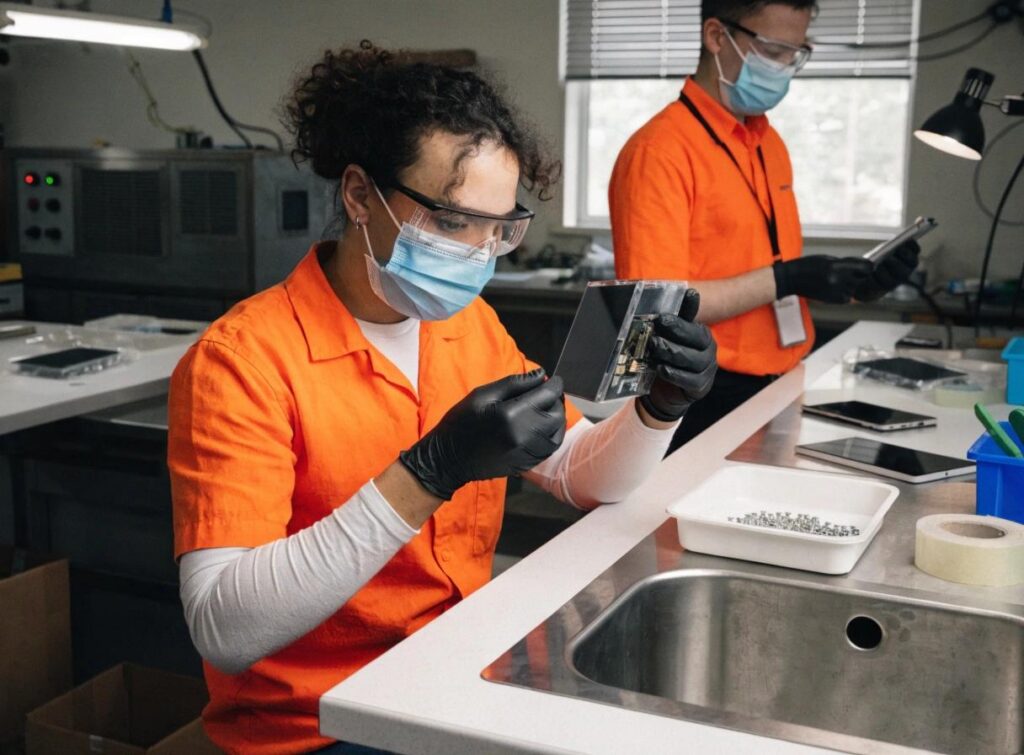
Panel type sets the ceiling. Module quality determines whether the screen gets there. For phones and replacement displays, IPS is the practical default. For a fixed-position industrial readout or a high-refresh gaming monitor, TN still has a role. Match the decision to the application, not the spec label.
If you are sourcing replacement LCDs, your next step is building a repeatable inspection routine and confirming your display supplier can hold a standard across batches. That protects your margin better than any panel-type decision will.
Super Quest has built mobile phone LCD modules and batteries in Guangzhou since 2009. We supply repair shops, wholesalers, and brand owners across the Americas. Our outgoing pass rate sits above 99.5%. We accept orders from 50 units on LCDs and offer full OEM and ODM customization on specs, packaging, and branding.
Request a quote or download our product catalog to review current model coverage and lead times.